
California Extends Charity Filing Deadlines Through August 2026
April 27, 2026
Hawaii Offers Nonprofits an Amnesty Window
July 24, 2026South Carolina Expands Charitable Solicitation Disclosure Requirements for Nonprofits


South Carolina has expanded its charitable solicitation disclosure requirements. Effective May 18, 2026, charitable organizations, professional solicitors, commercial co-venturers, and others soliciting charitable contributions in the state must now disclose the legal name and purpose of the charitable organization at the initial time of solicitation.
The law also increases charitable registration exemption thresholds and modifies registration requirements for commercial co-venturers.
Organizations fundraising in South Carolina may wish to review these changes and evaluate how they affect their fundraising activities.
What Must Nonprofits Now Disclose During Fundraising?
Under the amended Solicitation of Charitable Funds Act, charitable organizations, professional solicitors, commercial co-venturers, and others soliciting charitable contributions must disclose:
- The legal name of the charitable organization
- The purpose of the charitable organization
The law requires these disclosures to be provided at the initial time of solicitation.
Previously, South Carolina’s disclosure requirement primarily applied to professional solicitors. The amended law expands the requirement to charitable organizations and others involved in fundraising activities.
Organizations may wish to review fundraising emails, online donation pages, direct mail appeals, text-to-give campaigns, and other solicitation materials in light of the new disclosure requirement.
For nonprofits that rely heavily on online fundraising, the change may prompt a review of donation pages and digital fundraising campaigns.
Managing Disclosure Requirements Across Multiple States
South Carolina’s new requirement is one example of how charitable solicitation disclosure laws continue to evolve across the country.
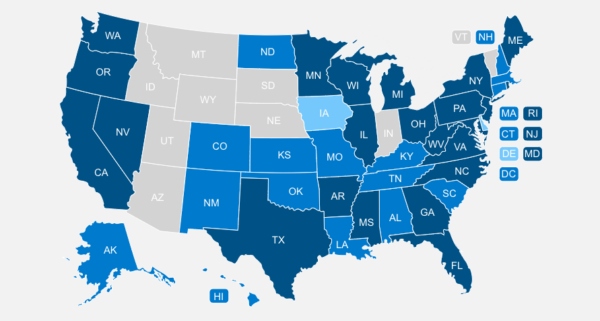
Today, 25 states require charitable disclosure statements in certain fundraising activities, including donation webpages, online solicitations, and donor communications. As requirements change, maintaining current disclosure language can become increasingly challenging for organizations fundraising in multiple states.
Labyrinth’s Dynamic Disclosures® service helps nonprofits manage state-specific fundraising disclosures through a single website implementation. The service dynamically displays disclosure language on donation pages based on an organization’s registration status and applicable state requirements.
Organizations can also export disclosure language for use in fundraising emails, newsletters, appeals, and other donor communications, helping reduce the administrative burden associated with monitoring and updating disclosure statements.
South Carolina Raises Charitable Registration Exemption Thresholds
The law also increases the thresholds that determine whether certain organizations qualify for charitable registration exemptions.
| Exemption Type | Previous Threshold | New Threshold |
| Small Organization Exemption | $7,500 | $10,000 |
| Volunteer-Run IRS-Exempt Organization Exemption | $20,000 | $25,000 |
The amended law also changes how exemption eligibility is measured.
Previously, these thresholds were based on charitable contributions received during a calendar year. The amended law now measures eligibility using gross revenue during an organization’s fiscal year.
This means that revenue beyond charitable contributions may be considered when determining whether an organization qualifies for an exemption.
Under the amended law, organizations that exceed the applicable threshold during the fiscal year are required to register within 30 days.
Organizations that are uncertain about their charitable registration obligations may wish to review their fundraising activities, revenue sources, and registration status. Labyrinth offers charitable solicitation registration services to help nonprofits manage registration and renewal requirements nationwide.
Commercial Co-Venturer Registration Is Now Threshold-Based
South Carolina also modified its requirements for commercial co-venturers.
Previously, commercial co-venturers generally had to register before conducting charitable sales promotions. Under the amended law, registration is required only if the co-venturer intends to solicit, collect, earn, or receive more than $10,000 in charitable contributions during a solicitation campaign.
The same threshold generally applies to:
- Registration requirements
- Contract filing obligations
- Joint financial reporting requirements
Under the amended law, a commercial co-venturer that initially expects to remain below the threshold but later exceeds $10,000 in charitable contributions during a campaign is required to register within 30 days.
The change may reduce administrative requirements for smaller charitable sales promotions while maintaining oversight of larger campaigns.
Considerations for Organizations Fundraising in South Carolina
Organizations fundraising in South Carolina may wish to review the following items in light of the law change:
- Donation pages and fundraising communications that may be affected by the new disclosure requirement.
- Charitable registration exemption eligibility under the revised revenue thresholds.
- Fiscal-year gross revenue calculations used to determine exemption status.
- Commercial co-venturer relationships and fundraising campaign projections.
Organizations conducting multistate fundraising activities may also wish to review how charitable solicitation disclosures are managed across fundraising channels as state requirements continue to evolve.
How Dynamic Disclosures® Can Help
South Carolina’s new law serves as a reminder that charitable solicitation disclosure requirements can change over time.
For nonprofits fundraising online, maintaining current disclosure language across multiple states can become increasingly complex as new legislation and regulatory updates are enacted.
Labyrinth’s Dynamic Disclosures® service helps organizations simplify this process by dynamically maintaining state-specific fundraising disclosures on donation webpages and providing exportable disclosure language for fundraising communications.
By reducing the need for manual updates, organizations can spend less time monitoring disclosure requirements and more time advancing their mission.
Learn more about Dynamic Disclosures® and how it can help your organization manage charitable solicitation disclosure requirements.