
North Carolina Adopts New Nonprofit Annual Report Requirement: What Nonprofits Need to Know
October 1, 2026Your Giving Tuesday Donate Button Doesn’t Stop at Your State Line


Asking for donations in another state can mean registering there first. Here’s what to check before December 1.
GivingTuesday happens once a year. This year, it falls on December 1, 2026.
On that day, thousands of nonprofits ask for donations at the same time, and donors give from every state in the country. That's great for fundraising. It can also create a compliance problem. Asking for donations that reach another state usually counts as soliciting there, and most states want you registered before you ask, not after the gift arrives.
This doesn't apply if you only ask for donations from people in your home state, or if you're already registered everywhere your campaign reaches. A Giving Tuesday campaign rarely stays in one state.
Does Asking for Donations Online Count as Solicitation in Other States?
In most states, yes. Charitable solicitation is the legal term for asking the public for money, and the rule looks at the ask, not the gift. A state doesn't care whether you got paid. It cares whether you asked.
A "Donate" button counts as asking. So does an email, a social post, or a Giving Tuesday landing page. Each one reaches donors wherever people see it. On a national giving day, that can be all 50 states at once, even if your organization is based in only one of them.
Which States Require Registration Before You Solicit?
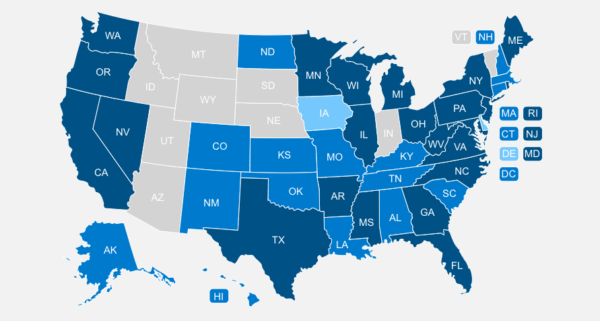
Forty states plus D.C. require nonprofits to register before asking for donations. Only ten states require nothing at all: Delaware, Idaho, Indiana, Iowa, Montana, Nebraska, South Dakota, Utah, Vermont, and Wyoming.
That means most states require registration. If your campaign reaches donors nationwide, it almost certainly reaches states where you need to register.
The rules aren't the same everywhere. New York, for example, only requires registration once you receive more than $25,000 from New York donors in a year. But that threshold counts every dollar from New York, including gifts from a national campaign like Giving Tuesday.
What Happens If You Solicit Without Registering?
States can penalize an organization for asking for donations without registering first. Penalties can include:
- Fines and late fees from the state charity office
- Legal action against an organization's officers and directors
- Loss of tax-exempt status in that state
- A ban on soliciting in that state going forward
- Bad publicity if the case becomes public
- Lost donations or grants, if a funder won't work with an unregistered charity
States rarely catch a single missed filing quietly. They notice when an organization solicits publicly and visibly, and a national campaign like Giving Tuesday is about as visible as fundraising gets.
What This Means for Your Organization
Registration takes time. In some states, approval can take several weeks. That's why now, not the week before Giving Tuesday, is the time to check your coverage.
This doesn't mean you shouldn't run a Giving Tuesday campaign. It means your registration should be planned as early as the campaign itself.
If you already fundraise nationally and you're registered everywhere, you're covered. There's nothing to do.
If your fundraising has grown your email list, increased your social followers, and you've made your first national push, check your registrations now. The sooner you start, the better your odds of being covered by December 1.
How Labyrinth Can Help
Checking every state by hand is a lot of work. Labyrinth's 50-State Fundraising Compliance Guide lists the rules, deadlines, and thresholds for every state. Our managed registration service handles filings and renewals for you year-round, not just once.
Contact us today to get covered before December 1, while there's still time to register, wait, and get approved.