
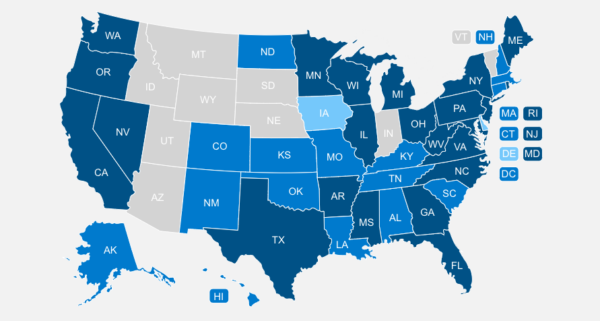

Cause Marketing and Commercial Co‑Venture by State: Essential Registration Requirements Guide
Cause-Marketing and Commercial Co-Venture in Alabama: Essential Registration Requirements Guide
At a Glance
Alabama requires commercial co-venturers to register with the Attorney General’s Office, file contracts before campaigns begin, and submit closing statements within 90 days after campaigns end. Registration costs $100.00 annually and expires on September 30 each year regardless of when you register. Businesses must also maintain a surety bond.
Definition and Legal Role of a Commercial Co-Venturer in Alabama
Understanding the legal framework for commercial co-ventures in Alabama starts with a clear definition of who qualifies under state law. Alabama has established specific criteria and regulations that distinguish commercial co-venturers from other fundraising entities. These regulations exist primarily to protect charitable organizations and donors through transparency and accountability.

What qualifies as a commercial co-venturer under Alabama law
Under Alabama’s legal code, a commercial co-venturer (CCV) is defined as “any person who for profit or other commercial consideration conducts, promotes, underwrites, arranges, or sponsors a sale, performance, or event of any kind which is advertised, and which will benefit, to any extent, a charitable or religious organization.” This broad definition encompasses various business arrangements where commercial entities conduct promotions that benefit nonprofits.
Furthermore, the definition contains an important exception: if a business benefits only in goodwill and the collection and distribution of proceeds are supervised by the benefiting charitable organization, then that business is not considered a commercial co-venturer.
You generally qualify as a commercial co-venturer if you meet any of these criteria:
- You have a working partnership between your for-profit business and a nonprofit organization
- Your business raises funds for a charitable cause supported by a nonprofit
- You use a nonprofit’s name and likeness in your advertising or marketing efforts
- You operate in states with specific CCV requirements, such as Alabama
Notably, performing even one of these activities can classify your business as a CCV under Alabama law.
Difference between CCVs and professional fundraisers
Although both entities work with charitable organizations, commercial co-venturers and professional fundraisers serve fundamentally different roles. A professional fundraiser is “any person who for compensation or other consideration plans, conducts, manages, or carries on any drive or campaign in this state for the purpose of soliciting contributions for or on behalf of any charitable organization.”
The primary distinction lies in their business models. Professional fundraisers specifically engage in soliciting donations as their primary activity, whereas commercial co-venturers are businesses that primarily conduct for-profit activities that secondarily benefit charities. Another key difference involves compensation structure—professional fundraisers typically receive direct payment for their fundraising services, often computed based on funds raised. In contrast, commercial co-venturers benefit through enhanced brand reputation and increased sales from the charitable promotion.
Applicable statutes: Title 13A-9-71 and related codes
Title 13A-9-71 of the Alabama Criminal Code serves as the primary statute governing commercial co-venturers in the state.
Under Alabama law, a commercial co-venturer must register with the Attorney General before conducting activities, as outlined on the Alabama Attorney General’s CCV registration page. State law also requires that contracts between commercial co-venturers and charitable organizations be in writing, with a copy filed with the Attorney General.
Alabama also requires commercial co-venturers to post a surety bond with the Attorney General. The statute further requires financial transparency through detailed recordkeeping and reporting. Commercial co-venturers must maintain accurate and current records of their activities and must file a closing statement disclosing gross receipts and expenditures within 90 days after campaign termination.
Initial Registration Requirements for Alabama CCVs
To initiate your commercial co-venture activity in Alabama, you must complete a formal registration process with the state’s Attorney General’s Office. First and foremost, all commercial co-venturers must register before conducting any charitable solicitation activities in the state, as outlined on the Alabama Attorney General’s CCV registration page. Labyrinth supports businesses with state-specific CCV filings, helping ensure accurate compliance documentation that meets Alabama’s requirements.
Required information: business name, EIN, contact details
The registration application requires basic business and contact information as requested by the Alabama Attorney General’s online application.
Filing method: Online portal vs. mail
Registration is available online through the Alabama Attorney General’s CCV application portal.
Registration fee and payment process
The registration fee for commercial co-venturers in Alabama is $100.00, and the same fee applies to annual renewals. The registration remains valid until September 30 regardless of when you register. See the Alabama Attorney General’s CCV registration page for details.
Surety bond requirement: bond details
A distinctive feature of Alabama’s CCV registration process is the surety bond requirement. Commercial co-venturers must secure and maintain a surety bond and submit it with their registration application, per the Alabama Attorney General’s CCV registration page.
After completing the registration process, remember that you must still file each charitable contract and comply with financial reporting requirements, which we’ll explore in subsequent sections.
Contract Filing and Pre-Campaign Obligations
After completing your initial registration as a commercial co-venturer in Alabama, you must fulfill specific pre-campaign filing requirements before launching any charitable promotion. State law mandates clear documentation between your business and partner charity to ensure transparency throughout the fundraising process.
Timeline: before campaign start
You must file a copy of your contract with the Attorney General’s Office and comply with any filing timeframe or waiting period established by state law or the Attorney General’s instructions. See guidance on the Alabama Attorney General’s CCV registration page.
This means you should plan ahead when scheduling your charitable promotion to ensure all required filings are submitted in time.

Required contract elements: charity name, donation terms, campaign dates
The contract between your business and the charitable organization should contain key terms such as the parties’ names and contact information, a description of the promotion, the campaign dates, how the charity’s name will be used, how funds will be calculated and remitted, and the timing and manner of the charity’s benefit. We can help ensure contract elements meet state standards and include proper disclosure language that satisfies Alabama’s transparency requirements.
Filing method and accepted formats
In Alabama, contract filing is managed through the state’s online system used for registrations and charitable agreements. Once filed, maintain comprehensive records of all promotional materials and activities, since these will be necessary for the financial reporting requirements that follow campaign completion. Proper documentation throughout the process will facilitate the closing statement you must submit after the campaign ends.
Post-Campaign Financial Reporting Requirements
Once your charitable campaign concludes in Alabama, your commercial co-venture responsibilities shift toward comprehensive financial reporting. Alabama law strictly enforces post-campaign accountability to ensure transparency in charitable fundraising activities.
Closing statement form and required disclosures
After your commercial co-venture campaign ends, you must submit a detailed closing statement to the Alabama Attorney General’s Office. This document should include:
- A financial accounting of the promotion
- Documentation of charitable contributions made
- Verification of fulfillment of contractual obligations
Throughout the closing statement, you must clearly disclose the campaign’s financial impact, particularly focusing on how much money actually reached the charitable organization. The state requires this formal accounting to protect donors and ensure transparency in cause marketing relationships. See requirements on the Alabama Attorney General’s CCV registration page.
Deadline: 90 days after campaign ends
The closing statement must be filed within 90 days after the termination of your commercial co-venture contract.
Gross receipts and expenditure breakdown
Your closing statement should detail both the gross receipts and expenditures incurred during the campaign, consistent with Alabama’s requirement to disclose gross receipts and all expenditures.
Remember that proper financial documentation serves both compliance purposes and helps build trust with partner charities and consumers for future cause marketing initiatives in Alabama.
Annual Renewal and Ongoing Compliance
Maintaining compliance as a commercial co-venture in Alabama requires attention to regular renewal deadlines alongside fulfilling your campaign-specific obligations. After completing your initial registration, you’ll need to follow a standard renewal process to continue operating legally. See renewal guidance on the Alabama Attorney General’s CCV registration page.
Renewal deadline: September 30
All Alabama commercial co-venturer registrations expire on September 30 each year, regardless of when you initially registered. This fixed expiration date means your renewal application should be submitted before this cutoff to avoid interruption in your ability to conduct charitable promotions.
Renewal form and fee details
Renewal is filed through Alabama’s online portal. The renewal fee matches the initial registration cost at $100.00.
Beyond the fee, you should provide updated information about:
- Current business contact details
- Any changes in ownership or management
- Ongoing charitable partnerships
- Financial results from previous campaigns
Maintaining bond and registration status
Your surety bond must remain active throughout your registration period. Renewal typically includes paying the annual fee and maintaining any required bond so that your registration remains in good standing. Labyrinth helps track renewal deadlines and coordinate multi-state requirements for businesses operating in multiple jurisdictions.
Conclusion
Navigating Alabama’s commercial co-venture requirements demands careful attention to multiple filing deadlines and regulatory obligations. Throughout this guide, you have learned essential components of compliance, from initial registration to post-campaign reporting.
First and foremost, your journey as a commercial co-venturer begins with proper registration through the Attorney General’s Office, accompanied by the required surety bond. This foundation establishes your legal standing before any charitable promotion can commence.
Additionally, contract filing represents a crucial pre-campaign step. Remember that these contracts must be in writing and filed with the Attorney General, and you should allow adequate lead time to meet any filing timeframe or waiting period that may apply.
Following campaign completion, your responsibility shifts toward financial accountability. The closing statement due within 90 days provides comprehensive transparency regarding funds raised and distributed to the charitable organization. This reporting maintains the integrity of your cause marketing efforts while protecting consumer confidence.
Last but certainly not least, annual renewal by September 30 ensures your continued ability to conduct commercial co-ventures in Alabama. Failing to meet this deadline can require halting charitable promotions until registration renewal.
While the registration process may seem demanding, expert guidance on state CCV requirements can streamline compliance and reduce administrative burden. These regulations ultimately serve to protect all stakeholders in the charitable fundraising ecosystem. Armed with this knowledge, you can confidently pursue cause marketing campaigns that benefit both your business and worthwhile charitable causes throughout Alabama.

Frequently Asked Questions
