
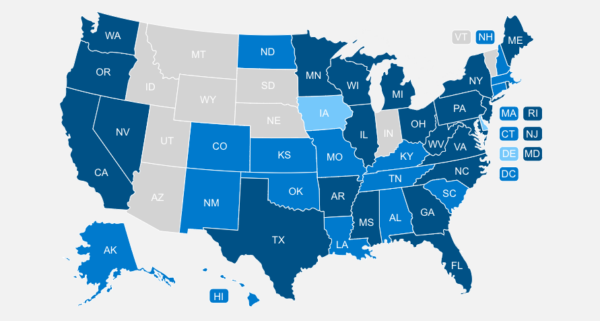

Cause Marketing and Commercial Co‑Venture by State: Essential Registration Requirements Guide
Cause-Marketing and Commercial Co-Venture in Alaska: Essential Registration Requirements Guide
At a Glance
Alaska does not require commercial co-venturers to register at the state level, unlike paid solicitors who must register annually. However, businesses conducting charitable sales promotions must still follow federal advertising regulations, maintain written agreements with nonprofit partners, and ensure transparent disclosure of donation amounts in all marketing materials.
Commercial co-ventures represent an opportunity for businesses to boost sales while supporting charitable causes in Alaska. When you partner with a nonprofit organization for promotional campaigns, you’re entering a regulated space with specific compliance requirements. Alaska regulates charitable solicitations and requires registration for charitable organizations and paid solicitors, but it does not require commercial co-venturers to register at the state level.
Specifically, you should understand filing requirements for paid solicitors, contractual obligations, and advertising responsibilities before launching a cause marketing campaign. By following applicable regulations, you protect both your business reputation and your nonprofit partner from potential legal complications.
Understanding Commercial Co-Ventures in Alaska
The business-charity partnerships that help fund nonprofit missions differ from other fundraising methods. Understanding these arrangements in Alaska requires examining both legal definitions and regulatory frameworks.

Definition of a Commercial Co-Venturer under Alaska Stat. § 45.68.900
Commercial co-venturers are for-profit businesses that advertise that the purchase or use of their goods or services will benefit a charitable organization or purpose. In practice, this often takes the form of a retail store pledging to donate a percentage of purchase prices or a specific amount per unit sold to a charitable organization. Although Alaska Stat. § 45.68.900 does not explicitly define commercial co-venturers, it does define “charitable organizations” as nonprofit organizations that either:
- Operate for the relief of poverty, distress, or other condition of public concern in Alaska, or
- Are determined by the Internal Revenue Service to be tax-exempt under 26 U.S.C. 501(c)(3); see the Alaska Department of Law consumer protection brochure.
Moreover, Alaska law defines “solicitation” to include the sale of, or attempt to sell, an item by requesting support for a charitable purpose or by stating that all or part of the sale proceeds will benefit a charity (see the Alaska Department of Law consumer protection brochure).
Charitable Sales Promotion vs. Traditional Fundraising
In contrast to traditional fundraising—where a charity directly solicits donations—charitable sales promotions involve a business entity that normally doesn’t raise funds. These promotions typically occur when a business advertises that purchasing its products will support a specific charity. Additionally, these arrangements benefit both parties: the charity receives funding, and the business often sees increased sales and enhanced brand image (see IRS guidance on unrelated business income tax).
Regulatory Oversight in Alaska (No CCV Registration)
Alaska does not currently have a traditional registration requirement for commercial co-venturers at the state level. However, commercial co-venturers still need to follow other regulations before and after fundraising events.
The primary reason for regulating these activities—even without formal registration—is consumer protection. Since charitable sales promotions combine commerce with charitable giving, they create opportunities for misrepresentation. Accordingly, maintaining transparent business practices remains essential even without explicit registration requirements.
Despite the absence of state-level registration requirements in Alaska, any commercial co-venturer should adhere to general legal principles including honest advertising, accurate disclosure of donation amounts, and careful contract development with partner charities.
Initial Registration Requirements for CCVs in Alaska
Navigating Alaska’s framework for cause marketing requires attention to detail, as requirements differ from many other states. Understanding what is—and isn’t—mandatory forms the foundation for proper compliance.
Commercial Co-Venturer Registration Form Overview
Alaska does not mandate traditional registration for commercial co-venturers at the state level. This differs from states that impose specific registration obligations on businesses conducting charitable sales promotions.
Even without formal registration requirements, your business should maintain proper documentation of all charitable promotions. This documentation helps demonstrate good faith compliance with consumer protection regulations that still apply to cause marketing campaigns throughout Alaska. For businesses operating multi-state CCV campaigns, we help ensure accurate compliance across all jurisdictions.
It’s essential to distinguish between commercial co-venturers and paid solicitors in Alaska law. A paid solicitor is a person or company hired by a charitable organization who solicits contributions for compensation (see the Alaska Department of Law charity registration page).
Surety Bond Requirement for Paid Solicitors
For paid solicitors (not commercial co-venturers), Alaska mandates a surety bond as part of the registration process. This bond must be submitted with the registration form to the Alaska Department of Law, Consumer Protection Unit. See the Alaska paid solicitor bond form.
The surety bond serves as financial protection for both the state and consumers, inuring to the Alaska Department of Law for the benefit of the State of Alaska and any person or entity with a cause of action against the principal for violations of obligations under Alaska law (per the Alaska paid solicitor bond form).
This bond is a continuing obligation; the liability of the surety for claims does not exceed the bond amount regardless of the number of years the bond remains in force or the number of claims filed (see the Alaska paid solicitor bond form).
Filing Timeline and Submission Process
For entities required to register (paid solicitors rather than commercial co-venturers), Alaska maintains a specific annual timeline. The registration period opens July 1 each year, and all registrations must be completed by September 1 (see the Alaska Department of Law charity registration page).
All registrations expire on September 1 regardless of when they were filed, necessitating annual renewal to maintain compliance. Organizations cannot legally solicit contributions until their registration is approved (see the Alaska Department of Law charity registration page).
The submission process for paid solicitors involves several steps:
- Review filing instructions provided by the Department of Law
- Complete online registration (after receiving a link in the payment confirmation email)
- Submit the surety bond
- Provide copies of written contracts with charitable organizations
- Include copies of all scripts used for fundraising
Contractual Obligations and Filing Rules
Written Agreement Requirement under Alaska Law
Alaska law does not specifically mandate written contracts for commercial co-ventures. While some states require CCV agreements by statute, in Alaska general contract principles apply, and having a written agreement is a best practice for clarity and accountability. See the Alaska Division of Community and Regional Affairs guidance on contracts and agreements.
Written contracts serve multiple purposes in the commercial co-venture context. First, they ensure both parties understand their respective obligations. Second, they provide documentation that an agreement has been made. Finally, they establish legal protection should disputes arise later. The concept of a “meeting of the minds” is the legal test for determining whether an enforceable contract exists—each party must fully understand and agree to all terms. Properly structured contracts also help streamline compliance when CCV campaigns extend across multiple states with varying requirements.

Required Contract Elements: Donation Amount, Duration, and Use of Charity Name
- Geographic scope – Clear delineation of where the promotion will take place
- Promotion timeframe – Specific start and end dates for the charitable campaign
- Charity name usage – Details on how the charity’s name and logo will appear in marketing
- Donation structure – Per-unit or dollar amount to be donated, including any maximum or minimum donation caps
- Financial arrangements – A clear statement of the financial arrangement between parties
Typically, these contracts should be signed by authorized representatives of both the business and charity. In some states, specific organizational officers must sign, though Alaska law doesn’t specify particular signatories.
The contract should also outline the charity’s cancellation rights. This includes a conspicuous statement regarding the charitable organization’s right to cancel, the cancellation period, and the address for sending cancellation notices.
Record Retention: Keep Comprehensive Records
Commercial co-venturers should maintain adequate records of their cause marketing campaigns. Even though Alaska doesn’t require formal registration, businesses should retain documentation related to charitable sales promotions.
- Copies of all contracts with charitable organizations
- Financial records showing donations collected and disbursed
- Marketing materials used during the promotion
- Documentation of when and how funds were transferred to the nonprofit
Disclosure and Advertising Compliance
FTC Act and Alaska Consumer Protection Statutes
The Federal Trade Commission Act serves as the primary federal statute regulating commercial co-ventures, empowering the FTC to prevent unfair or deceptive acts or practices in or affecting commerce (see the Federal Trade Commission Act).
Equally important, Alaska’s Unfair Trade Practices and Consumer Protection Act prohibits deceptive business practices, including using deception, fraud, or misrepresentation in the sale or advertisement of goods or services (see the Alaska Department of Law consumer protection brochure).
Violations can result in substantial penalties. The Alaska Attorney General can seek court orders to stop illegal conduct, require consumer refunds, and impose civil penalties up to $25,000 per violation (see the Alaska Department of Law charity registration page).
Donation Amount Disclosure in Advertisements
Commercial co-venturers must clearly disclose the specific financial benefit to charities. Your advertisements should state:
- The actual dollar amount or percentage per unit that will benefit the charity
- An estimated amount based on reasonable facts if exact figures aren’t determinable
- The duration of the campaign (e.g., the month of October)
- Any maximum or minimum contribution amounts
The disclosure must appear prominently in each advertisement for the charitable sales promotion. Burying important information in fine print or fleeting supers in television ads is insufficient—the FTC emphasizes that disclosures should be clear and conspicuous (see FTC guidance on clear and conspicuous disclosures).
Avoiding Misleading Claims in Cause Marketing
Avoiding deceptive practices requires absolute honesty about charitable contributions. The FTC actively monitors advertising and takes enforcement actions against entities engaged in deceptive practices (see FTC guidance on clear and conspicuous disclosures).
- Use clear, everyday language rather than legal terminology
- Place disclosures where consumers naturally look
- Ensure contrast and visibility
- Never imply donations are larger than they actually are
Alaska law prohibits misrepresentations in connection with sales or advertisements. If you have concerns, contact the Alaska Department of Law at 907-269-5100 or review the Alaska Department of Law consumer protection brochure.
Tax and Financial Reporting Considerations
Unrelated Business Income Tax (UBIT) Risk for Charities
Charities participating in commercial co-ventures face potential Unrelated Business Income Tax exposure when income is not substantially related to their exempt purpose (see IRS guidance on unrelated business income tax).
- The activity constitutes a trade or business operated in a commercial manner
- The activity is regularly carried on
- The activity is not substantially related to the organization’s exempt purpose
Charitable organizations must file Form 990-T if they generate $1,000 or more in gross income from unrelated business activities (see IRS guidance on unrelated business income tax).
IRS Guidelines on Acknowledgment vs. Advertising
The distinction between acknowledgment and advertising determines whether payments received by charities are taxable. The IRS defines qualified sponsorship payments as those made without the expectation of substantial return benefits other than name or logo acknowledgment (see IRS guidance on sponsorships versus advertising).
Conversely, advertising is defined as any message that promotes or markets a trade or business, service, facility, or product. Messages containing qualitative language, price information, or inducements to purchase are considered advertising, not acknowledgment (see IRS guidance on sponsorships versus advertising).
For commercial co-ventures, when a charity actively promotes a partner’s products rather than simply acknowledging support, the resulting income may become taxable. A single message containing both acknowledgment and advertising elements is entirely classified as advertising under IRS guidelines (see IRS guidance on sponsorships versus advertising).
Conclusion
Commercial co-ventures offer a valuable opportunity for businesses to support charitable causes while potentially increasing sales and enhancing brand reputation. Alaska does not require formal registration for commercial co-venturers at the state level. Nevertheless, strict attention to contractual documentation and disclosure requirements remains essential.
Although Alaska lacks specific registration mandates for co-venturers, your business should maintain comprehensive documentation of all charitable promotions. Written agreements between your company and nonprofit partners serve as the foundation for legally sound cause marketing campaigns. These contracts should clearly specify donation amounts, promotional timeframes, and rules governing charity name usage.
Transparency in advertising is critical. Under both federal FTC regulations and Alaska’s consumer protection laws, your marketing materials must accurately disclose the specific financial benefit to charities. Any misleading claims about charitable contributions could result in substantial penalties.
Additionally, both parties should consider the tax implications of commercial co-ventures. Charities face potential Unrelated Business Income Tax exposure, while businesses must properly structure payments as either charitable contributions or business expenses. For nonprofits participating in multi-state CCV campaigns, these activities may trigger charitable solicitation registration requirements in certain jurisdictions.
The success of a cause marketing campaign ultimately depends on meticulous attention to legal requirements. Despite Alaska’s comparatively relaxed registration approach, you still bear significant responsibilities regarding contractual documentation, financial record-keeping, and truthful advertising.

Frequently Asked Questions
