
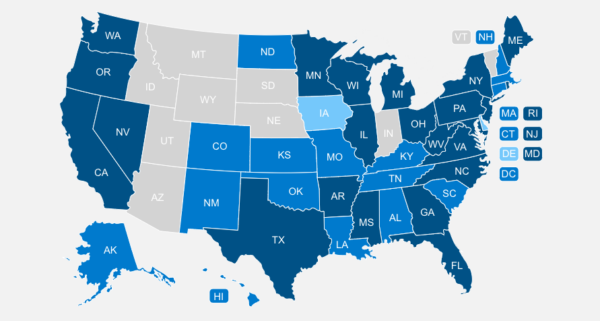

Cause Marketing and Commercial Co‑Venture by State: Essential Registration Requirements Guide
Cause-Marketing and Commercial Co-Venture in Arkansas: Essential Registration Requirements Guide
At a Glance
In Arkansas, commercial co-venturers must file a written contract with the Secretary of State before launching any charitable promotion. The contract must include specific terms such as donation amounts per unit and campaign timeframes, and all advertisements must clearly disclose exactly how much of each purchase benefits the charity. Arkansas does not require traditional annual registration for commercial co-venturers, but each distinct promotional campaign requires separate contract filing.
Are you planning a commercial co-venture to boost your business while supporting a worthy cause in Arkansas? Commercial co-ventures offer an exciting opportunity to align your brand with charitable causes, however, navigating the regulatory requirements can be challenging.
When your business promotes that purchases will benefit a charity, you’re specifically entering the world of commercial co-venturing—a marketing strategy that brings unique legal obligations in Arkansas. Understanding these state-level requirements is crucial before launching any promotion. Additionally, failure to comply can result in penalties and potential damage to your brand reputation. Managing CCV requirements effectively involves preparing required filings, reviewing contract elements, and ensuring disclosures meet state standards.
Throughout this guide, you’ll discover everything you need about initial registration, contract filing requirements, advertising obligations, and ongoing compliance responsibilities for commercial co-ventures in Arkansas. By following these guidelines, you’ll be equipped to create successful cause marketing campaigns while meeting all legal obligations under Arkansas law.
Who Qualifies as a Commercial Co-Venturer in Arkansas
Understanding exactly who qualifies as a commercial co-venturer in Arkansas requires examining specific legal definitions and business activities. This knowledge is fundamental for any business planning to promote that purchases or services will benefit a charitable organization.

Definition under AR Code § 4-28-401(3)
Arkansas law provides a specific definition of commercial co-venturers. According to AR Code § 4-28-401(3), a “commercial coventurer” is defined as:
“Any person who for profit or other consideration is regularly and primarily engaged in trade or commerce other than in connection with the raising of funds or any other thing of value for a charitable organization and who advertises that the purchase or use of his or her goods, services, entertainment, or any other thing of value normally sold without a charitable appeal will benefit a charitable organization during a charitable sales promotion”.
In essence, this definition encompasses businesses that:
- Operate primarily as for-profit entities
- Are not primarily in the fundraising business
- Advertise that purchases will benefit a charity
- Conduct these promotions as part of a charitable sales campaign
The key distinction lies in the business’s primary purpose—a commercial co-venturer must be “regularly and primarily engaged in trade or commerce” rather than fundraising activities.
Examples of qualifying business activities
Commercial co-venturers typically include businesses that run promotions where purchases benefit charities. Some common examples include:
- A retail store that pledges to donate a percentage of each purchase price to a charitable organization
- A business selling products with a specified amount per unit going to charity
- Companies that conduct, promote, or sponsor events advertised to benefit charitable organizations
- Businesses that sell special charity-branded merchandise with proceeds benefiting a cause
These arrangements serve dual purposes—the for-profit entity aligns itself with customer interests through social responsibility initiatives, and the charity receives financial support. Such partnerships create value for both the business and charitable organization, yet they bring specific legal obligations in Arkansas.
Distinction from professional fundraisers
Understanding the difference between a commercial co-venturer and a professional fundraiser is crucial since each faces different regulatory requirements.
Unlike commercial co-venturers, professional fundraisers in Arkansas are defined as persons who “for compensation or any other consideration, plans, conducts, or manages in this state the solicitation of contributions for or on behalf of any charitable organization”. The distinction centers on several key factors:
First, professional fundraisers receive direct compensation specifically for fundraising activities, whereas commercial co-venturers benefit primarily through increased sales and goodwill.
Second, fundraising is the professional fundraiser’s primary business activity, not an ancillary marketing campaign as with commercial co-venturers.
Third, the regulatory burden differs significantly. Professional fundraisers face stricter oversight, typically requiring annual registration, bonding, detailed reporting, and additional disclosures. Commercial co-venturers generally face fewer requirements.
Furthermore, Arkansas does not currently require a traditional registration filing for commercial co-venturers, though they must follow other specific regulations regarding contract filing and disclosure.
Initial Registration and Contract Filing Requirements
After determining your business qualifies as a commercial co-venturer, complying with Arkansas’ contract requirements becomes your next crucial step. Arkansas law establishes specific procedures for partnerships between businesses and charitable organizations.
Written agreement requirement before promotion
The law is straightforward about timing: no charitable sales promotion can begin without proper documentation in place. Arkansas Code requires that every charitable organization subject to registration requirements must obtain a written agreement from the commercial co-venturer prior to launching any promotional campaign. This timeline is non-negotiable—the contract must be executed and filed before any advertising or promotional activities commence.
Consequently, both parties need to plan ahead, allowing sufficient time for contract preparation, review, and submission to state authorities. This proactive approach prevents potential legal complications that might arise from premature campaign launches.
Mandatory contract terms under AR Code § 4-28-408(a)(2)
Arkansas law mandates that commercial co-venture contracts contain five specific elements:
- Details about goods or services being offered to the public
- Geographic scope and timeframe (start/end dates) of the offering
- Explanation of how the charitable organization’s name will be used, including representations about donation amounts per unit
- Provision for per-unit accounting to be provided to the charity, with specified date
- Information about when and how the benefit will be transferred to the charitable organization
These elements ensure transparency throughout the partnership and provide a clear framework for both parties. Moreover, they create accountability mechanisms that protect consumers and charitable interests alike. Expert guidance can help ensure these contract elements meet state standards and create compliant documentation.
Filing the contract with the Secretary of State
Once executed, the agreement must be filed with the Arkansas Secretary of State’s office (501-682-1010, sos.arkansas.gov). The filing process involves submitting:
- A completed Arkansas Secretary of State Notice of Sales Promotion with Commercial Coventurer (Form CR-04)
- A copy of the written agreement containing all required terms outlined above
All materials should be submitted via email to charities@sos.arkansas.gov. Incomplete submissions will not be accepted, therefore it’s essential to verify all required elements are present before filing.
Although some states impose waiting periods after filing (such as Alabama’s 15-day wait), Arkansas law does not specify a post-filing waiting period; promotions may commence once the required filing has been submitted, provided all requirements have been met.
Authorized signatures from both parties
The validity of the agreement depends on proper execution by authorized representatives. Arkansas law explicitly requires that “an authorized representative of the charitable organization and the commercial coventurer shall sign the agreement”. This dual signature requirement ensures that:
- Both parties have formally consented to the arrangement
- The signatories have proper authority to bind their respective organizations
- The terms have been reviewed and approved by both entities
Lacking proper authorization could invalidate the agreement and potentially lead to regulatory issues or even penalties. Therefore, verifying signatory authority is a critical step in the contract execution process.
Unlike some states that require annual registration or licensing fees for commercial co-venturers, Arkansas focuses primarily on the contract filing requirement. This makes proper contract preparation and submission especially important as the primary regulatory touchpoint for charitable sales promotions in the state.
Advertising and Disclosure Obligations
Transparent advertising forms a cornerstone of commercial co-venture compliance in Arkansas. Once you’ve filed your contract with the state, your next obligation involves how you communicate your charitable promotion to consumers.
Disclosure of donation amount per unit sold
Arkansas law imposes strict disclosure requirements for all commercial co-venture advertisements. In fact, these requirements directly protect consumers by ensuring they know exactly how much of their purchase benefits a charity.
Arkansas Code § 4-28-408(c)(1) explicitly states that a commercial coventurer shall disclose in each advertisement for a charitable sales promotion the amount per unit of goods or services purchased or used that is to benefit the charitable organization or purpose. This means every advertisement—whether print, digital, radio, or television—must contain this specific information.
The disclosure must appear in a conspicuous manner within the advertisement itself. Notably, vague language like “a portion of proceeds will be donated” fails to meet the legal requirement. Instead, your advertising must clearly state exactly how much money from each purchase goes to the charitable organization.

Dollar vs. percentage format in ads
Arkansas offers flexibility regarding how you format the donation disclosure. The state code specifically permits expressing the donation amount in one of two formats:
- As a specific dollar amount (e.g., “$1 from every purchase”)
- As a percentage of the value (e.g., “10% of each purchase price”)
Whichever format you choose, it must appear in each advertisement related to the charitable sales promotion.
If the amount that will benefit the charity varies, your advertising must still clearly disclose the amount or percentage per unit or the method by which it will be calculated, consistent with Arkansas Code requirements.
Use of charitable organization’s name in promotions
Your commercial co-venture agreement must specify exactly how the charitable organization’s name will be used in promotions. This includes any representations made to the public about the amount or percentage per unit that will benefit the charity.
Using a charity’s name and logo carries significant responsibility. Subsequently, your contract must outline specific parameters for their use, including:
- Where and how the charity’s name appears
- Size and prominence of the charity’s branding
- Context of the charity mention in marketing materials
- Duration of permission to use the charity’s name
Some states apply commercial co-venture laws even when businesses promote support for a general cause (like “cancer research”) without naming a specific charitable organization. Arkansas law primarily focuses on named charitable organizations, but best practice suggests being equally transparent about any cause-related marketing.
Additionally, the Better Business Bureau’s Wise Giving Alliance recommends disclosing the duration of the campaign and any maximum or minimum contribution amounts in your promotional materials. For instance, stating “$5 will go to ABC Charity for every product sold in October up to a maximum of $10,000” provides complete transparency to consumers.
Remember that proper disclosure isn’t just about legal compliance—it builds consumer trust and protects your brand reputation. Ultimately, clear and transparent advertising ensures your commercial co-venture benefits both your business and the charitable organization you’re supporting.
Accounting and Recordkeeping Responsibilities
Proper recordkeeping stands as a fundamental obligation for any commercial co-venture operation in Arkansas. These requirements ensure transparency and accountability throughout your charitable sales promotion.
Final accounting retention for 3 years
Arkansas law mandates specific timeframes for maintaining records of your charitable promotions. After completing your commercial co-venture campaign, you must preserve detailed financial records beyond the campaign’s conclusion. Under Arkansas Code, a commercial coventurer shall keep the final accounting for each charitable sales promotion for three (3) years after the accounting date. This retention period begins from the date of the final accounting—not the campaign’s end date.
The records must include comprehensive documentation of:
- Total units sold during the promotion
- Gross income generated through the campaign
- Donation amounts calculated per unit sold
- Net amount ultimately transferred to the charitable organization
Maintaining accurate and organized records serves as protection for both your business and the charitable organization. Plus, establishing a systematic approach to documentation from the outset helps avoid scrambling to reconstruct information should questions arise later.
Availability to Secretary of State and Attorney General
Beyond mere retention, your accounting records must remain accessible to state authorities upon request. Arkansas law specifically requires that these records shall be available to the Secretary of State and the Attorney General upon reasonable request. This provision grants regulatory bodies oversight to verify compliance with the terms outlined in your agreement.
The Arkansas Secretary of State charitable registration guidance notes that the office may inspect or copy these financial records at any time during the retention period. Accordingly, maintaining organized, easily accessible files becomes essential for prompt response to any regulatory inquiry.
Per-unit accounting requirement in contracts
Your commercial co-venture contract must contain explicit accounting provisions. State law requires that agreements include a provision for an accounting on a per unit basis to be given by the commercial coventurer to the charitable organization and the date on which it is to be made. This per-unit calculation approach ensures precise tracking of each transaction benefiting the charity.
The final accounting must reflect exactly how many units were sold and precisely how much money was generated for the charitable organization. Even more, the contract must specify the exact date when this accounting will be delivered to the charity. This date creates a clear deadline for fulfilling your reporting obligations.
Essentially, these recordkeeping requirements form the foundation of accountability in commercial co-ventures. Through proper documentation, you demonstrate good faith while protecting all parties involved in the charitable promotion.
Annual Renewal and Ongoing Compliance
Maintaining compliance for your commercial co-venture extends beyond the initial filing process. Understanding ongoing obligations helps you avoid potential issues with Arkansas regulatory authorities.
Renewal process for CCVs in Arkansas
Unlike several states that require annual registration or licensing for commercial co-venturers, Arkansas does not mandate traditional renewal registration. Nevertheless, charitable organizations involved in these partnerships must file reports with the Secretary of State. Act 137 of 2019 modified the due date for charitable organizations’ report filings from the previous August 1st deadline to 180 days after each organization’s fiscal year end, as outlined on the Arkansas Secretary of State charitable entities page.
For ongoing commercial co-ventures or new campaigns with the same charity, you must file a new Notice of Sales Promotion with Commercial Coventurer (Form CR-04) for each distinct promotional campaign. This requirement applies regardless of whether you’ve previously conducted a promotion with the same charitable organization. Managing multiple state requirements can be complex, particularly for multi-state campaigns where Labyrinth can help track varying requirements and deadlines across jurisdictions.
Changes to contract or campaign details
Should any aspects of your commercial co-venture change mid-campaign, prompt notification becomes necessary. Modifications requiring updated filings include:
- Changes to donation structure or amounts
- Extensions of campaign timeframes
- Alterations to the geographic scope
- Modifications in how the charity’s name appears in marketing
Submit revised documentation to the Secretary of State via email at charities@sos.arkansas.gov. The updated contract must again include all required elements outlined in AR Code § 4-28-408(a)(2) and bear signatures from authorized representatives of both parties.
Penalties for non-compliance or late filings
Arkansas law provides for enforcement actions for non-compliance; non-compliance still carries risks:
First, the Secretary of State may issue orders requiring immediate corrective action. Second, violations could trigger investigation by the Attorney General’s office. Third, repeated non-compliance might result in prohibitions against conducting future charitable sales promotions within the state.
Beyond regulatory penalties, non-compliance damages both your business reputation and the charitable organization’s standing. Ultimately, maintaining proper documentation, meeting deadlines, and following disclosure requirements protects all parties involved in the commercial co-venture relationship.
Conclusion
Commercial co-ventures offer a powerful way to simultaneously grow your business and support charitable causes in Arkansas. Throughout this guide, you’ve learned several essential components required for legally compliant cause marketing campaigns.
First and foremost, qualifying as a commercial co-venturer means your business primarily engages in trade or commerce while occasionally conducting charitable promotions—distinctly different from professional fundraisers. Subsequently, before launching any promotion, you must execute a written agreement with the charitable organization containing all legally mandated terms. This contract must then be filed with the Arkansas Secretary of State.
Transparency remains paramount during your promotional activities. Therefore, your advertisements must clearly disclose exactly how much money from each purchase benefits the charitable organization, either as a specific dollar amount or percentage. Additionally, proper accounting practices serve as the backbone of accountability, with records maintained for three years after the final accounting date.
Though Arkansas doesn’t require traditional annual registration renewal for commercial co-venturers, you must still file new documentation for each distinct promotional campaign. Certainly, any changes to your campaign details necessitate updated filings with the Secretary of State. For businesses running multi-state CCV campaigns, nonprofit partners may need charitable solicitation registration in various jurisdictions where the campaign activity occurs, and Labyrinth helps coordinate these varying requirements across states.
Failure to meet these requirements can result in regulatory action and damage to your brand reputation. Consequently, following the guidelines outlined in this article will help ensure your commercial co-venture benefits everyone involved—your business, the charitable organization, and Arkansas consumers who support your cause-based marketing efforts. We can assist with Arkansas CCV compliance, including contract preparation and state filing requirements.
As you prepare your next charitable sales promotion, remember that compliance isn’t merely about avoiding penalties but rather about building trust with consumers and creating meaningful partnerships with charitable organizations. After all, successful commercial co-ventures depend on a foundation of transparency, accountability, and good faith.

Frequently Asked Questions
