
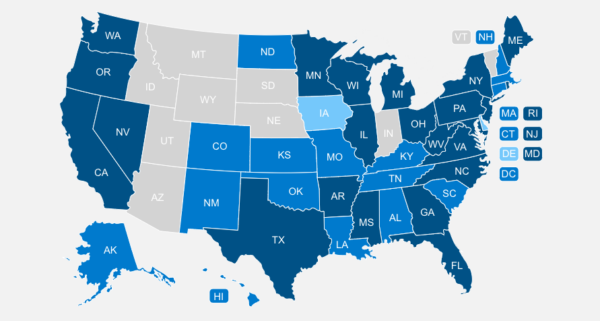

Cause Marketing and Commercial Co‑Venture by State: Essential Registration Requirements Guide
Cause-Marketing and Commercial Co-Venture in Colorado: Essential Registration Requirements Guide
At a Glance
Colorado commercial co-venturers are not required to register with the state, but must comply with specific advertising disclosure requirements when more than 50% of charitable sales promotion proceeds come from Colorado transactions. See the Colorado disclosure rules for charitable promotions.
These disclosures must include the exact dollar amount or percentage per purchase that benefits the charity. Out-of-state businesses conducting co-ventures may need to file as foreign entities and maintain a registered agent in Colorado.
Commercial co-ventures present opportunities for your business to boost sales while supporting charitable causes in Colorado. However, when you partner with a charity and promise to donate a portion of your sales, you’re entering a regulated activity with specific compliance obligations.
Colorado has established guidelines for commercial co-venturers to protect consumers and charitable organizations. These include advertising disclosure obligations tied to charitable sales promotions and, for any charity partner, registration, financial reporting, and annual renewal processes that must be navigated carefully. Additionally, understanding the distinction between commercial co-ventures and professional fundraising is essential to determine which regulations apply to your specific situation.
Throughout this guide, you’ll learn key requirements for commercial co-venture compliance in Colorado, from understanding when advertising disclosures are required to maintaining proper records. Managing these compliance requirements can be complex, but experienced guidance helps streamline the process and ensures accurate preparation of required disclosures and documentation.
Understanding Commercial Co-Ventures in Colorado
The legal framework surrounding charitable partnerships in Colorado establishes specific guidelines for businesses engaging in cause marketing activities. Understanding these regulatory parameters is essential before launching any campaign that promises charitable contributions from sales.

Definition of a Commercial Co-Venturer under Colorado Law
Colorado statutes define a commercial co-venturer as “a person who, for profit, is regularly and primarily engaged in trade or commerce other than in connection with soliciting for charitable organizations or purposes and who conducts a charitable sales promotion,” as summarized in the Colorado Secretary of State charitable filing FAQs. This definition covers for-profit businesses that incorporate charitable giving into their marketing campaigns while maintaining their primary commercial focus.
A “charitable sales promotion” refers to “an advertising or sales campaign which is conducted by a commercial coventurer and which represents that the purchase or use of goods or services offered by the commercial coventurer will benefit, in whole or in part, a charitable organization or purpose,” as described in the Colorado Secretary of State charitable filing FAQs.
- A specific amount or percentage of sales is donated to a charity
- The business underwrites or sponsors an event benefiting a charity
- The business advertises that purchasing its products supports a charitable cause
Colorado’s advertising disclosure requirement for commercial co-venturers applies when the co-venturer reasonably expects that more than half of all proceeds from a charitable sales promotion will be derived from transactions within Colorado. See the Colorado disclosure rules for charitable promotions.
Difference Between CCVs and Professional Fundraisers
Commercial co-venturers differ from professional fundraisers in both function and regulatory requirements. Unlike professional fundraisers who primarily solicit donations for charities, CCVs are businesses whose main activities involve selling products or services unrelated to fundraising.
Professional fundraisers typically operate as agents of charities, whereas commercial co-venturers maintain independent business operations while incorporating charitable elements into specific campaigns. Furthermore, professional fundraisers usually face more stringent registration requirements in many states, including Colorado.
While many states have laws governing commercial co-ventures, Colorado’s approach is relatively less burdensome. According to the Colorado Secretary of State disclosure guidance, commercial coventurers are not required to register, although they must comply with advertising disclosure requirements.
When a Sales Promotion Becomes a Regulated Activity
Your business activities become subject to commercial co-venture regulations when you represent that purchasing your products or services will benefit a charitable organization. The regulatory threshold for advertising disclosures is crossed once you make public claims about charitable contributions tied to sales and reasonably expect that more than 50% of all proceeds will come from transactions within Colorado (see Colorado disclosure rules).
For instance, if your retail store pledges to donate a percentage of each purchase to a specific charity, this qualifies as a charitable sales promotion. If more than half of the proceeds are expected from Colorado transactions, the disclosure requirements described below apply.
Despite not requiring registration, Colorado mandates specific disclosures in advertisements for charitable sales promotions when the above threshold is met. Specifically, you must disclose “the dollar amount or percent per unit of goods or services purchased or used that will benefit the charitable organization or purpose.” If the exact amount cannot be determined beforehand, you must provide a reasonable estimate based on all relevant facts known about the promotion. See the state’s disclosure rules for charitable promotions.
Initial Registration Requirements for CCVs
Establishing compliance for your commercial co-venture in Colorado begins with understanding which registrations apply. Since commercial co-ventures often involve out-of-state businesses partnering with Colorado charities, determine whether business entity filings or charity registrations are required in your situation.
Filing the Statement of Foreign Entity Authority
If your for-profit business will be transacting business in Colorado, you may need to register as a foreign entity by filing a Statement of Foreign Entity Authority (SOFEA) with the Secretary of State. Review the Colorado Foreign Entity Authority guidance before filing.
- Navigate to the Business Organizations page on the Secretary of State website.
- Select “File a business document.”
- Click “File a form to create a NEW record.”
- Select “Foreign entity” to complete the SOFEA form.
The SOFEA filing requires key information, including your entity’s true name (legal name in your home state), entity type, state of formation, principal office address, and the date you commenced or expect to commence business in Colorado. See the Foreign Entity Authority help for details. If your organization’s true name is unavailable in Colorado, you’ll need to select an assumed entity name for use within the state (see foreign entity FAQs for Colorado).
Registered Agent Requirement for Out-of-State Entities
Any entity that registers to do business in Colorado must designate a registered agent with a physical street address in the state. This agent serves as your point of contact for receiving legal documents and official correspondence. An individual registered agent must satisfy state eligibility requirements, and a registered agent’s street address cannot be a P.O. box. See Colorado registered agent requirements.
Your registered agent must be either:
- An individual who meets Colorado’s eligibility criteria and maintains a physical address in Colorado, or
- An entity in good standing with the Colorado Secretary of State that maintains a usual place of business in Colorado
Information Required for Initial Charity Registration
Colorado law requires charitable organizations (not commercial co-venturers) that solicit in the state or participate in charitable sales promotions to register online. Review the Colorado charity registration instructions and the Colorado charitable registration FAQs. The required information includes:
- Organization name and contact information
- Principal place of business (must be a physical street address, not a P.O. box)
- Legal form of the organization (e.g., nonprofit corporation, unincorporated nonprofit association)
- Financial information (can be estimated for new organizations, but must be updated with actual figures by the 15th day of the 8th month following the close of your fiscal year)
- Electronic signature from an authorized officer of the organization
Common reasons for registration rejection include listing a P.O. box instead of a street address, entering incorrect financial information, incorrectly stating the legal form of the organization, or having an unauthorized person sign the filing.
Contract Filing and Disclosure Obligations
Written contracts form the foundation of many commercial co-venture partnerships in practice. Once you’ve confirmed which registrations apply, understanding your ongoing statutory obligations becomes essential.
Contract Expectations for CCVs
Colorado does not require commercial co-venturers to register or to pre-file contracts; the statute focuses on advertising disclosures for charitable sales promotions. While parties commonly document their arrangements in writing, the “contract elements required by law” on the Secretary of State website apply to paid solicitors and professional fundraising consultants, not to commercial co-venturers (see Colorado SOS contract guidance).

Submission to the Colorado Secretary of State
Unlike some states that require filing contracts before campaigns begin, Colorado does not require commercial co-venturers to proactively file contracts. If the Secretary of State requests information in connection with a solicitation, they will provide instructions through their online system regarding how to respond (see charitable filing FAQs).
Disclosure Requirements in Advertising and Promotions
The most rigorous aspect of Colorado’s commercial co-venture regulations involves advertising disclosures. These requirements apply when you reasonably expect that more than 50% of all proceeds from a charitable sales promotion will come from transactions within Colorado. See the Colorado disclosure rules for charitable promotions.
- The specific dollar amount or percentage per unit of goods or services purchased that will benefit the charitable organization
- If the actual amount cannot be determined before the promotion ends, a reasonable estimate based on all relevant facts known to both parties
Colorado regulations also establish special disclosure requirements for certain other solicitation methods (for example, containers and telephone solicitations by paid solicitors). See the state disclosure rules.
Financial Reporting and Recordkeeping Duties
Proper financial reporting forms a critical component of charitable compliance in Colorado. After forming partnerships with charitable organizations, be aware of the reporting duties that apply to the charity and to any paid solicitor involved.
Annual Financial Report Submission Requirements
Charitable organizations must file a renewal and financial report on or before the 15th day of the fifth month after the close of each fiscal year in which they solicited in Colorado. Colorado’s system reflects an automatic three-month extension, but by law charities must still file by the fifth-month deadline unless the IRS authorizes a later Form 990 filing date. A second extension (for an additional three months) may be requested on or before the 17th day after the renewal due date. See the Colorado charity renewal instructions.
Paid solicitors must file a campaign financial report within 90 days of the completion of a solicitation campaign; fines apply for overdue campaign reports (see charitable program late fee and payment guidance).
Form 990 and Financial Statement Attachments
For charitable organizations, the Secretary of State may require you to provide a copy of the appropriate IRS Form 990 to meet state reporting requirements. The Secretary of State may also request corrections if inconsistencies are identified between a state filing and the organization’s IRS Form 990. See Current Colorado charitable solicitation rules (8 CCR 1505-9).
Record Retention Periods and Audit Readiness
Your recordkeeping practices should accommodate potential regulatory reviews. Maintain financial records and agreements in a manner that ensures accessibility and reliability throughout their retention period. Refer to the Denver General Records Retention Schedule as a helpful framework.
Annual Renewal and Compliance Monitoring
Renewal Timeline: 4.5 Months After Fiscal Year-End
Charitable organizations must renew by the 15th day of the fifth month after their fiscal year concludes; Colorado’s system shows an automatic three-month extension, with the option to request one additional three-month extension by the specified deadline. See the renewal instructions and the extension policy for charitable filings.
Filing the Periodic Report for Corporate Registration
If your business entity is registered with the Colorado Secretary of State, it must file an annual Periodic Report. The report can be submitted two months before or after your reporting month without incurring penalties, and filing occurs online through the state’s business portal. See the Colorado business periodic report FAQs and business filing instructions.
Late Fees, Extensions, and Suspension Risks
Late fees and fines may apply if required filings (such as charity renewals or paid solicitor reports) are not submitted on time. All applicable late fees must be paid before you can file a renewal, extension, amendment, solicitation notice, or reinstatement. See charitable program late fee and payment guidance.
Frequently Asked Questions

Conclusion
Commercial co-ventures offer your business a powerful way to combine marketing efforts with charitable support throughout Colorado. Nevertheless, these partnerships come with legal responsibilities that demand careful attention.
Understanding the distinction between commercial co-venturers and professional fundraisers remains essential for determining which regulations apply to your specific situation. While Colorado does not require commercial co-venturers to register, a for-profit that is transacting business in the state may need to file a Statement of Foreign Entity Authority and must designate a registered agent with a physical Colorado address as part of that business registration.
Written contracts form the practical cornerstone of compliant co-venture partnerships. While Colorado law does not require commercial co-venturers to pre-file contracts, your advertising must disclose exact donation amounts or percentages per purchase (or a reasonable estimate when applicable) when the statutory threshold is met, ensuring consumers understand how their purchases support charitable causes.
Financial transparency also matters within the regulatory framework. Charitable organizations must submit detailed state renewals and financial reports by specific deadlines tied to their fiscal year, and paid solicitors have campaign-specific reporting deadlines.
Lastly, maintaining ongoing compliance requires vigilant attention to renewal deadlines and entity status. Businesses registered with the Secretary of State must file periodic reports, and charities must renew their registrations according to established timelines.
Commercial co-ventures create meaningful opportunities to support charitable causes while boosting your business profile. Through thorough compliance with Colorado’s regulatory requirements, you can confidently develop cause marketing campaigns that benefit both your company and charitable partners while maintaining legal compliance and consumer trust. Labyrinth has helped organizations navigate these requirements for more than 35 years, ensuring accuracy and timeliness while reducing administrative burden for both businesses and nonprofits.
