
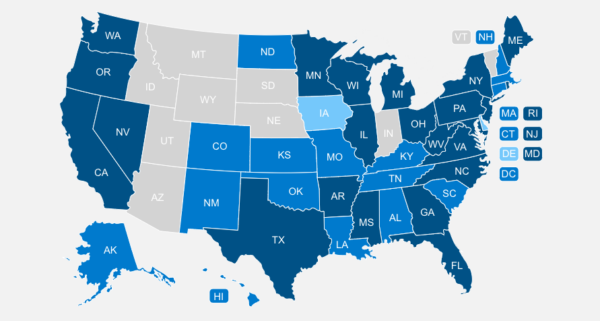

Cause Marketing and Commercial Co‑Venture by State: Essential Registration Requirements Guide
Cause-Marketing and Commercial Co-Venture in Florida: Essential Registration Requirements Guide
At a Glance
Florida doesn’t require direct registration for commercial co-venturers, but businesses must ensure their charity partners are properly registered with the Florida Department of Agriculture and Consumer Services before launching any charitable sales promotion. Written consent from the charity is required before the promotion begins, and detailed financial records must be maintained for three years following completion.
Commercial co-ventures offer an exciting way for your business to boost sales while supporting worthy causes. When you partner with a charity and promise to donate a portion of sales to them, you’re not just doing good—you’re also engaging in a regulated activity in Florida. However, many businesses jump into these partnerships without understanding the legal requirements, potentially facing fines or reputation damage.
Specifically, Florida has established clear registration protocols through the Department of Agriculture and Consumer Services that you need to follow before launching any charitable sales promotion. These include initial registration filings, written consent and post-promotion documentation, financial reporting, and recordkeeping obligations. Furthermore, understanding these requirements isn’t just about compliance—it’s about building trust with your customers who expect transparency when their purchases support charitable causes.
Throughout this guide, you’ll discover exactly what qualifies as a commercial co-venture in Florida, the essential registration steps you must complete, and how to maintain proper documentation for your charitable promotions. By following these guidelines, you’ll be able to create meaningful partnerships with charities while staying fully compliant with Florida’s regulations. Managing CCV requirements can be complex across different states, but expert guidance helps streamline the process through proper preparation of required filings, review of contract elements, and coordination of multi-state compliance requirements.
Understanding Commercial Co-Ventures in Florida
The term “commercial co-venture” might sound complex, but it represents a straightforward business arrangement that carries specific legal obligations in Florida. As a business owner considering charitable partnerships, grasping these fundamental concepts will keep you compliant and protect both your company and the charities you support.

What Qualifies as a Commercial Co-Venturer under Florida Law?
Florida law provides a precise definition for commercial co-venturers. According to Florida Statutes Section 496.404(4), a commercial co-venturer is defined as “a person who, for profit, regularly and primarily is engaged in trade or commerce other than in connection with solicitation of contributions and who conducts a charitable sales promotion or a sponsor sales promotion.” In plain terms, this means you’re a for-profit business whose primary activities aren’t fundraising, but you’re advertising that purchases of your products or services will benefit a charitable organization.
The companion concept, a “charitable sales promotion,” is defined in Section 496.404(3) as “an advertising or sales campaign conducted by a commercial co-venturer which represents that the purchase or use of goods or services offered by the commercial co-venturer are to benefit a charitable organization.” This creates the legal framework for your business-charity partnership.
How CCVs Differ from Corporate Sponsors
Commercial co-venturers differ significantly from traditional corporate sponsors in both structure and legal obligations. Unlike corporate sponsors who typically make direct donations to charities with minimal regulatory requirements, CCVs create share-of-revenue arrangements that trigger specific legal compliance duties.
As a commercial co-venturer, your company advertises that a portion of customer purchases directly supports a charity. Consequently, you’re subject to registration, contract filing, and financial reporting requirements in various states—including Florida. Corporate sponsors, conversely, generally make one-time donations without tying them to consumer purchases, thus avoiding most CCV regulations.
Additionally, many businesses with established corporate social responsibility programs are increasingly entering these partnerships for dual benefits: aligning their brand with customer values while providing financial support to worthy causes. Nevertheless, these arrangements require proper licensing and contractual documentation.
Common Examples of Charitable Sales Promotions
- Percentage-of-Purchase Donations: Your retail store pledges to donate a specific percentage of each sale to a designated charity during a promotional period.
- Per-Unit Contributions: Your business commits to donating a fixed amount for each product sold (e.g., $1 from each item purchased goes to a local Florida charity).
- Limited-Edition Products: Creating special merchandise where proceeds benefit a charitable organization, such as branded items with a portion of sales supporting hurricane relief efforts in Florida.
- Joint Promotional Events: Businesses partnering with charities to host fundraising events where a percentage of ticket sales or merchandise purchases supports the charitable cause.
Prior to launching any of these promotions in Florida, you must obtain written consent from the charitable organization whose name you’ll use during the campaign, as outlined by the Florida Department of Agriculture and Consumer Services (FDACS) solicitation renewal page.
Moreover, detailed recordkeeping is mandatory, as you must prepare a final accounting following the completion of the sales promotion and provide it to the charity within 10 days if requested.
Multi-state CCV campaigns require careful coordination to ensure all jurisdictions’ requirements are met, and nonprofit partners may need active charitable solicitation registrations in states where CCV activity is considered solicitation.
Initial Registration Requirements for Florida CCVs
Navigating the regulatory landscape for commercial co-ventures in Florida requires understanding specific filing obligations that protect both consumers and charitable organizations. Despite common misconceptions, Florida’s approach to commercial co-venture registration differs from many other states.
Florida Department of Agriculture and Consumer Services (FDACS) Jurisdiction
Unlike some states that directly license commercial co-venturers, Florida primarily regulates these partnerships through its oversight of the charitable organizations themselves. The Florida Department of Agriculture and Consumer Services (FDACS) (850-410-3800, fdacs.gov) maintains jurisdiction over charitable solicitations throughout the state, including those involving commercial co-ventures. Essentially, FDACS focuses on ensuring that charities properly document their commercial co-venture relationships rather than requiring separate registrations from the businesses.
Notably, although Florida doesn’t mandate traditional commercial co-venturer licensure at the state level, your business must still comply with other regulations before and after conducting charitable sales promotions. This regulatory approach places the primary registration burden on the charitable organization while still maintaining oversight of the co-venture relationship.
Required Forms: FDACS Form DACS-10100
The central filing requirement affecting commercial co-ventures comes through the charity’s registration process. Charitable organizations must file the Florida Charitable Organizations and Sponsors Registration Application (FDACS Form DACS-10100) with the Department of Agriculture and Consumer Services. This comprehensive form requires charities to:
- Disclose whether they utilize commercial co-venturers
- Provide the names, street addresses, and telephone numbers of any commercial co-venturers
- Include other information required by statute and the form
For your business, this means ensuring your charity partner has properly registered and identified your company on their filing. The registration documents require disclosure of whether a commercial co-venturer is utilized and identifying information for each one. This documentation becomes part of the public record, accessible through FDACS.
When Registration is Mandatory for CCVs
Although commercial co-venturers don’t register directly, understanding when your charity partner must register remains crucial. A charitable organization must file its registration statement before:
- Soliciting contributions in Florida by any means
- Having funds solicited on its behalf by any commercial co-venturer
- Participating in any charitable sales promotion
In fact, Florida law explicitly prohibits charities from soliciting contributions or having contributions solicited on their behalf by any commercial co-venturer until the department approves their registration statement. Ultimately, this means your business cannot launch a charitable sales promotion with an unregistered charity.
Some charitable organizations may qualify for exemptions, including organizations soliciting exclusively from their membership, divisions or chapters of federally chartered veterans’ service organizations, and certain small charities with less than $50,000 in total contributions that meet the statutory volunteer/no-compensation conditions.
The registration process includes varying fees based on contribution levels, ranging from $10 for organizations receiving less than $5,000 in contributions to $400 for those receiving $10 million or more. Verifying your charity partner’s registration status before finalizing any co-venture agreement provides essential protection for your business.
Contract Filing and Disclosure Obligations
In Florida, the paperwork aspects of commercial co-ventures represent crucial legal safeguards that protect both businesses and charities. Understanding these documentation requirements helps you avoid potential penalties while maintaining transparent relationships with your charitable partners.
Written Agreement Requirements under Florida Law
Florida mandates proper documentation of the relationship. Unlike some states that require filing contracts with regulatory agencies before launching promotions, Florida takes a different approach. The key statutory requirement is that the commercial co-venturer obtain the charitable organization’s written consent before the promotion begins and then prepare and retain a final accounting after the promotion.
Recommended Contract Terms: Donation Amount, Duration, and Scope
- Goods or services being offered in the promotion
- Manner in which the charity’s name will be used
- Geographic scope of the campaign
- Exact dates of the solicitation or campaign
- Amount or percentage of sales to be donated
- Maximum/minimum amount to be contributed
- Provision for final accounting
Florida statutes do not prescribe specific contract clauses for commercial co-venturers; the legal requirements are written consent before the promotion and post‑promotion accounting. Expert guidance can help ensure contract elements meet state standards and support compliant disclosure language.

Charity’s Written Consent Requirement
Perhaps the most fundamental requirement in Florida is obtaining explicit permission from the charity. Florida Statutes explicitly state that prior to the commencement of any charitable or sponsor sales promotion in this state conducted by a commercial co-venturer on behalf of a charitable organization or sponsor, the commercial co-venturer must obtain the written consent of the charitable organization or sponsor whose name will be used during the charitable or sponsor sales promotion. This written consent must be secured before any promotional activities begin.
Filing Timeline Before Promotion Launch
Even though Florida doesn’t require pre-filing of contracts with state agencies, the timing of documentation remains important. Written consent from the charity must be secured before any promotional activities commence. Subsequently, you must prepare for post-promotion obligations, as a final accounting for each charitable sales promotion must be prepared following the completion of the campaign.
After completing the promotion, this final accounting must be provided to the charitable organization within 10 days if they request it. Florida law mandates that these records be maintained for 3 years following the promotion, unless you and the charity mutually agree that the accounting should be kept by the charitable organization instead. Upon request from the Department of Agriculture and Consumer Services, you must provide a copy of the final accounting no later than 10 working days after receiving such request.
Financial Reporting and Recordkeeping Duties
After concluding your charitable sales promotion in Florida, your responsibilities as a commercial co-venturer continue with specific financial reporting and recordkeeping obligations. These requirements ensure transparency for both the charity and regulatory authorities.
Post-Promotion Financial Report Requirements
Once your charitable sales promotion ends, Florida law mandates that you prepare a final accounting document detailing the campaign’s financial results. This crucial documentation serves as verification that your business fulfilled its promised charitable contributions. Your final accounting must:
- Be prepared immediately following the completion of the sales promotion
- Be provided to the charitable organization within 10 days after they request it
- Be furnished to the Department of Agriculture and Consumer Services within 10 working days if requested
While Florida doesn’t specify a standard form for this report, your documentation should typically include details about merchandise sold, gross income generated, expenditures incurred, and the net amount provided to the charity. This level of detail allows both the charitable organization and state authorities to verify that promotions accurately benefited the intended causes. Accurate preparation and tracking of required documents helps ensure compliance while reducing administrative burden.
Retention Period for Sales and Donation Records
Florida statutes establish clear timeframes for maintaining commercial co-venture records. As a commercial co-venturer, you must keep the final accounting for a period of 3 years following the completion of the sales promotion. Separately, Florida law requires charitable organizations, sponsors, professional fundraising consultants, and professional solicitors to maintain true and accurate records of covered activities and to furnish them to the department within 10 working days upon request. Failure by those entities to properly document expenditures creates a rebuttable presumption that funds weren’t properly handled.
Joint Financial Report Obligations for Long-Term Campaigns
For charitable sales promotions that span multiple jurisdictions or extended periods, additional reporting may be required by other states. Florida’s statutes for commercial co‑venturers focus on written consent and post‑promotion final accounting; if you operate multi‑state or national campaigns, review the requirements of each applicable state before launch to ensure compliance with any interim or annual reporting obligations outside Florida.
Bonding, Renewals, and Exemptions in Florida
Beyond the initial paperwork and financial reporting, several administrative elements complete the regulatory framework for commercial co-ventures in Florida. These aspects often determine ongoing compliance requirements for your business partnerships with charitable organizations.
Is a Surety Bond Required in Florida?
Unlike certain other states, Florida stands apart in its bonding requirements for commercial co-venturers. Currently, Florida law does not mandate a surety bond for businesses engaged in charitable sales promotions. Other states may require bonds, so confirm requirements where your campaign runs.
Annual Renewal Process for Registered CCVs
Given that Florida operates without a direct registration system for commercial co-venturers, the renewal process primarily affects the charitable organizations you partner with. Your charity partners must renew their registrations annually, typically through online submissions or mail. The Florida Department of Agriculture and Consumer Services provides renewal statements at least 30 days before the renewal date, and charities face a $25 late filing fee for each month their renewal is delayed, as outlined on the FDACS solicitation renewal page. As a business partner, verifying your charity’s current registration status remains essential before launching or continuing any promotional campaign.
Exemptions for Certain Charities and One-Time Events
Particular charitable organizations enjoy exemption from standard registration requirements, thereby affecting your co-venture arrangements, as defined in Florida Statutes 496.406. These exemptions include:
- Organizations soliciting exclusively from their membership
- Divisions, departments, posts, or chapters of veterans’ service organizations with federal charters
- Small charities with less than $50,000 in total contributions whose fundraising is carried out by uncompensated volunteers, members, or officers and that meet the statutory no‑compensation conditions (including not paying funds to professional fundraisers or commercial co‑venturers)
Nonetheless, even exempt organizations must submit documentation to claim this status when applicable. Furthermore, if a small charity exceeds $50,000 in contributions, they must register within 30 days of reaching that threshold. Always verify a charity’s exemption status with FDACS before initiating any commercial co-venture partnership to avoid potential compliance issues.
Frequently Asked Questions

Conclusion
Commercial co-ventures offer Florida businesses a powerful way to combine marketing objectives with charitable causes. Throughout this guide, you’ve learned that while Florida doesn’t directly register commercial co-venturers, the state nevertheless maintains significant oversight through its regulation of charitable organizations.
First and foremost, your business must ensure partnership with properly registered charities through the Florida Department of Agriculture and Consumer Services before launching any promotion. Additionally, written agreements documenting donation amounts, campaign duration, and promotional scope provide essential protection for all parties involved.
Subsequently, your recordkeeping responsibilities continue long after the promotion ends. Florida law requires maintaining detailed financial records for three years, preparing comprehensive financial reports, and providing this documentation upon request within strict timeframes. These requirements, although detailed, ultimately safeguard your business reputation while protecting consumers who support your charitable initiatives.
Despite these regulatory considerations, commercial co-ventures remain worthwhile endeavors. When executed properly, these partnerships benefit your business, the charitable organization, and Florida consumers who appreciate supporting companies that give back to their communities. For businesses operating multi-state campaigns, expert guidance helps coordinate requirements across jurisdictions while ensuring nonprofit partners understand when CCV activity may affect their charitable solicitation registration obligations.
Above all, successful commercial co-venturing in Florida depends on transparency, proper documentation, and adherence to state regulations. By following the guidelines outlined in this article, you can confidently develop meaningful charitable partnerships that comply with Florida law while advancing your business objectives and supporting worthy causes.
