
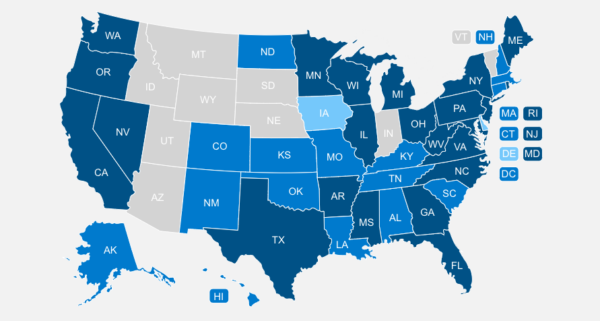

Cause Marketing and Commercial Co‑Venture by State: Essential Registration Requirements Guide
Cause-Marketing and Commercial Co-Venture in Hawaii: Essential Registration Requirements Guide
At a Glance
Hawaii does not require formal registration for commercial co-venturers, but you must file a written consent form at least 10 days before launching your charitable sales promotion. Your charity partner must be registered or exempt with the state, and you must provide financial accounting within 90 days after the campaign ends. All campaign records must be maintained for three years.
Understanding Commercial Co-Venturers in Hawaii
The term “commercial co-venturer” refers to a specific legal relationship in Hawaii’s charitable fundraising landscape. Understanding this status and its requirements helps ensure your business partnerships with nonprofits remain compliant with state regulations.

Definition under Hawaii Revised Statutes §467B-5.5
In Hawaii, a commercial co-venturer (CCV) is defined as a person or business “who, for profit, is regularly and primarily engaged in trade or commerce other than in connection with soliciting for charitable organizations or charitable purposes, and who conducts charitable sales promotions” as outlined on the Hawaii charity promotion filing portal. This means any business that partners with a charity to run a promotional campaign where a portion of sales benefits that charity falls under this classification.
Hawaii’s regulatory framework for CCVs is specifically outlined in §467B-5.5 of the Hawaii Revised Statutes. The statute establishes the legal foundation for how businesses can conduct charitable sales promotions within the state. Under these rules, commercial co-venturers must disclose their identity during all promotional activities. Furthermore, the law mandates obtaining written consent from the charitable organization before using their name in any promotional materials.
One important distinction in Hawaii law is that an entity meeting the definitions of both a commercial co-venturer and a charitable fundraising platform will be classified solely as a commercial co-venturer when conducting solicitations through an internet website for six or fewer recipient charities per calendar year. Conversely, entities conducting online charitable sales promotions for seven or more recipient charities annually will be regulated as charitable fundraising platforms instead.
How CCVs differ from professional fundraisers
Commercial co-venturers differ significantly from professional fundraisers in their primary business purpose. Professional fundraisers specifically operate to raise funds for charitable organizations, whereas commercial co-venturers are businesses whose primary purpose is commercial trade or commerce, not fundraising. According to the Hawaii charity promotion filing portal, commercial co-venturers in Hawaii face documentation and reporting requirements tied to specific campaigns rather than formal state registration.
Examples of charitable sales promotions in Hawaii
A notable example of a charitable sales promotion in Hawaii is Foodland’s “Give Aloha” program. During this month-long campaign, Maika’i members can donate up to $249.00 at checkout to participating nonprofit organizations, with Foodland matching a portion of each donation. The program includes features like customer donations of Maika’i points and round-up grocery purchases, with 100% of customer donations going directly to the selected organizations plus a portion of Foodland’s $250,000 matching gift.
Such programs exemplify how commercial co-ventures operate in Hawaii, creating mutually beneficial relationships between businesses, charities, and consumers. These partnerships allow companies to demonstrate social responsibility while helping worthy causes raise funds.
Throughout these charitable sales promotions, commercial co-venturers must maintain transparency about the campaign details, including the specific portion of proceeds that will benefit the charitable organization. Moreover, they must provide proper accounting and documentation both to the charity and, upon request, to the Hawaii Attorney General’s office.
Initial Requirements Before Launching a Campaign
Before launching a charitable sales promotion in Hawaii, understanding the preliminary requirements is crucial for both businesses and their nonprofit partners. Although Hawaii’s regulatory framework for commercial co-ventures is less demanding than some other states, certain essential steps must still be completed to ensure compliance.
No formal registration required for CCVs
Unlike several states that mandate comprehensive registration processes, Hawaii takes a more streamlined approach for commercial co-venturers. Notably, commercial co-venturers in Hawaii are not required to register or obtain a license at the state level. Rather, Hawaii focuses primarily on proper documentation of the relationship between the business and the charitable organization through specific filings related to each campaign. This approach allows businesses to initiate charitable partnerships with minimal bureaucratic obstacles while still maintaining appropriate state oversight.
Charity must be registered or exempt in Hawaii
Although commercial co-venturers don’t need to register, the charitable organization they partner with must have proper standing with the state. Specifically, for a commercial co-venture contract to be accepted, the charity must either be registered to solicit charitable contributions in Hawaii or have received an exemption from registration; see the Hawaii charitable registration exemption guidance.
- Charitable organizations that normally receive less than $25,000 in contributions annually, provided they don’t compensate any professional solicitor or professional fundraising counsel
- Religious organizations
- Parent teacher associations
- Accredited educational institutions
- Certain alumni associations and educational foundations
- Licensed hospitals
For organizations seeking an exemption based on the $25,000 threshold, they must provide evidence such as Forms 990, 990-EZ, or other documentation showing contribution amounts for each of the immediate preceding three years. This verification ensures that only truly small organizations benefit from this exemption.
Written consent form submission timeline
Prior to commencing any charitable sales promotion in Hawaii, a commercial co-venturer must obtain written consent from the charitable organization whose name will be used. Subsequently, this consent form must be filed with the department not less than 10 days before the promotion begins.
This written consent serves as the primary documentation and must be signed by authorized representatives from both the charitable organization and the commercial co-venturer. The consent form is submitted online through the state’s electronic filing system, with no filing fee required.
Failure to file this required written consent can result in penalties. Specifically, a late filing fee of $20 will be imposed for each day the violation continues, although the total amount cannot exceed $1,000. However, this fee may be waived if it can be demonstrated that the failure was due to reasonable cause.
Filing the Charitable Sales Promotion Consent Form
The consent form filing process represents a cornerstone of Hawaii’s commercial co-venture regulations. Once you’ve established your partnership with a registered charity, completing and submitting the proper documentation becomes your next critical step.
Details required in the consent form
The Hawaii Charitable Sales Promotion Consent Form demands specific information about your campaign. Both parties must include:
- A detailed description of goods or services being offered to the public
- The geographic area where the offering will be made
- The exact start and end dates of the promotion
- How the charitable organization’s name will be used, including representations about the amount or percentage per unit that will benefit the charity
- A provision for accounting on a per-unit basis to be given to the charitable organization
- The date when the final accounting will be provided (no more than 90 days after the promotion ends)
- The date and manner in which the benefit will be conferred on the charitable organization (within 90 days after the promotion ends)
For promotions lasting more than one year, you must also provide accounting and benefits within 90 days after each anniversary of the promotion’s commencement.

Filing method: Online submission process
Hawaii has streamlined the filing process through its electronic system. First, you’ll need to complete the official consent form, which can be accessed through the state’s Hawaii charity registration portal. The form requires electronic signatures from authorized representatives of both the commercial co-venturer and the charitable organization.
During the online submission, you’ll identify your role in the process—whether you’re submitting as the business CCV, the charitable organization, or a third party authorized to file on behalf of either entity—on the Hawaii charity promotion filing portal. The system will ask if you’re the person authorized to sign and review the form for the respective organizations.
Worth noting is that there is no filing fee associated with submitting the consent form, making this an accessible process for businesses of all sizes.
Deadline: At least 10 days before campaign start
Timing is crucial in the filing process. Hawaii law explicitly requires that the commercial co-venturer file the written consent with the department no less than 10 days prior to the commencement of the charitable sales promotion. The signed consent certifies that all statements made are true and correct to the best knowledge of both parties, subject to penalties imposed by section 710-1063 of Hawaii law. Consequently, providing accurate information is not just a regulatory requirement but also a legal obligation.
For long-running or recurring campaigns, remember that each distinct promotional period requires its own consent form filing. The Attorney General’s office may request the form be submitted electronically and may require the use of electronic signatures.
By fulfilling these form requirements precisely and meeting the 10-day deadline, you’ll establish a solid foundation for your commercial co-venture in Hawaii while maintaining compliance with state regulations.
Post-Campaign Financial Reporting Obligations
After completion of your charitable sales promotion, your commercial co-venture responsibilities continue with crucial financial reporting requirements. These post-campaign obligations ensure transparency and accountability to both the state and your charitable partner.
Final accounting requirements for CCVs
Once your campaign concludes, you must prepare a detailed financial accounting on a per-unit basis for the charitable organization. This accounting must thoroughly document all aspects of the promotion’s financial performance. The law mandates specific information be included:
- Complete breakdown of units sold during the promotion
- Gross income generated from the campaign
- Itemized expenditures incurred
- Net amount that will benefit the charitable organization
- Verification that funds were transferred as agreed in the consent form
This financial accounting serves as official documentation of your fulfillment of the promotional promises made to both consumers and the charitable organization. All records pertaining to the charitable sales promotion must be maintained for at least three years after campaign completion, as noted in the Hawaii AG campaign compliance FAQs. These records should include bank statements, receipts, bills, and any other relevant financial documentation that supports the accuracy of your reporting.
Submission to both Attorney General and charity
The final accounting report must be submitted to two separate entities. First, you must provide the complete financial accounting to your partner charitable organization as specified in your written agreement. Second, you must make this same accounting available to the Hawaii Attorney General’s office. While routine filing with the Attorney General is not mandatory, the statute explicitly states that a copy of an accounting shall be provided to the attorney general not more than twenty days after the copy is requested.
Deadline: Within 90 days after campaign ends
Timing remains critical even after your campaign concludes. Hawaii statutes establish a 90-day maximum deadline for providing financial accounting to the charitable organization and conferring the benefit. For campaigns lasting longer than one year, financial accounting must additionally be provided within 90 days after each anniversary of the promotion’s commencement, according to the Hawaii charity promotion filing portal. This ensures ongoing transparency throughout extended promotional periods.
Failing to comply with these reporting obligations can result in penalties. The Attorney General may impose an administrative fine not exceeding $1,000 for each violation, plus an additional penalty of up to $100 per day for continuing violations. These requirements protect consumers, charities, and legitimate businesses by maintaining integrity in charitable fundraising.
Recordkeeping and Disclosure Compliance
Maintaining proper documentation represents a vital component of commercial co-venture compliance in Hawaii. Beyond the initial filing and reporting, specific recordkeeping protocols and disclosure requirements protect all parties involved in charitable promotions.
Retention period for campaign records
Hawaii law mandates that all financial and campaign records be maintained for three years after the completion of your charitable sales promotion, as set forth in HRS §467B-5.5 (Charitable sales promotions). This requirement applies unless you and the charitable organization mutually agree in writing that the accounting should be kept by the charity instead of the commercial co-venturer.
These records must remain accessible for immediate inspection upon demand by the Attorney General. For campaigns involving ticket sales where tickets are donated for use by others, you must additionally maintain detailed documentation of the items below, per Hawaii Session Laws 2024, Act 205:
- The number of tickets purchased and donated by each contributor
- Names and addresses of all organizations receiving donated tickets
- Quantity of tickets received by each organization
Disclosure of CCV identity during promotion
Throughout your charitable sales promotion, all marketing materials must clearly disclose your company’s identity as the commercial co-venturer, consistent with HRS §467B-5.5 disclosure requirements. This transparency requirement ensures consumers understand exactly who is conducting the promotion and prevents potential confusion between the business entity and the charitable organization.
The disclosure must appear in all promotional materials including advertisements, product packaging, and point-of-sale displays that mention the charitable sales promotion.
Penalties for non-compliance under Hawaii law
Failure to meet Hawaii’s recordkeeping or disclosure requirements can trigger several penalties. The Attorney General may impose administrative fines up to $1,000 for each violation plus an additional $100 per day for continuing violations, under HRS §467B-5.5. Moreover, failure to file the required written consent form can result in a $20 per day late filing fee (maximum $1,000) unless reasonable cause can be demonstrated. For intentional violations, criminal penalties may also apply, as such actions can be classified as a misdemeanor under state law; see this Hawaii Attorney General enforcement document.
What to Remember About Hawaii CCV Requirements
Commercial co-ventures offer an excellent opportunity for your business to support worthy causes while engaging customers in Hawaii. Unlike many other states, Hawaii simplifies the process by eliminating formal registration requirements for commercial co-venturers. However, adherence to documentation, reporting, and disclosure requirements remains essential.
Remember that your charitable partner must be registered or exempt in Hawaii before launching any promotion. For multi-state campaigns, nonprofits should also verify they maintain required charitable solicitation registrations in other jurisdictions where the CCV activity may be considered solicitation. Filing the written consent form at least 10 days before your campaign begins serves as the cornerstone of Hawaii’s regulatory framework. This form must detail your promotion’s specifics, including geographic scope, timeline, and the exact benefit structure for the charity.
After your campaign concludes, you must provide comprehensive financial accounting to both the charitable organization and, upon request, to the Attorney General’s office. Hawaii allows up to 90 days for this reporting, and completing it within that timeframe demonstrates good faith and professional responsibility. Maintaining all campaign records for three years afterward protects you from potential compliance issues.
The penalties for non-compliance emphasize the importance of following these requirements. The Attorney General can impose significant fines—up to $1,000 per violation plus daily penalties—and issue cease and desist orders for serious infractions.
While Hawaii’s commercial co-venture regulations may appear straightforward compared to other states, they nonetheless require careful attention to documentation, timing, and reporting. Following these guidelines ensures your charitable sales promotion remains legally compliant while maximizing positive impact.

Frequently Asked Questions
