
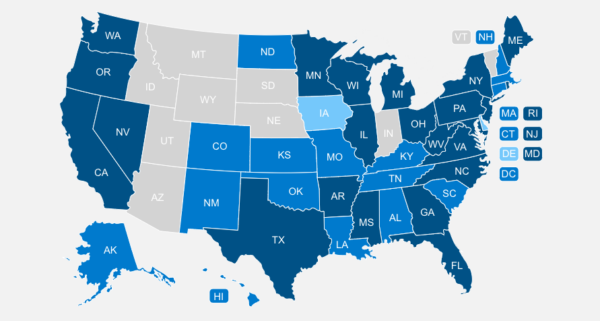

Cause Marketing and Commercial Co‑Venture by State: Essential Registration Requirements Guide
Cause-Marketing and Commercial Co-Venture in Idaho: Essential Registration Requirements Guide
At a Glance: Idaho does not require commercial co-venturers to register with the state, file contracts, post bonds, or submit post-campaign financial reports. However, businesses should maintain clear documentation of all charitable promotions and follow truthful disclosure practices. While regulatory requirements are minimal, proper record-keeping and transparency remain essential for ethical business conduct and consumer trust.
Looking to boost your business while supporting a good cause in Idaho? Commercial co-ventures offer an exciting opportunity to align your brand with charitable initiatives! However, before you launch that campaign promising donations from each purchase, you need to understand Idaho’s specific legal requirements.
When your business publicly announces that purchases will benefit a charity, you’re entering regulated territory that may come with obligations depending on the state. In Idaho specifically, there is no state-level commercial co-venturer (CCV) registration, contract filing, bonding, or post-campaign financial reporting requirement. Businesses should still keep clear documentation and follow truthful, non-deceptive disclosure practices. Throughout this guide, you’ll learn Idaho’s minimal state-level requirements (no registration, bond, or mandatory filings) and practical documentation and transparency practices that help support compliance when operating in multiple states.
Understanding Commercial Co-Venturer Status in Idaho
Commercial co-ventures represent a unique intersection of business and philanthropy in Idaho. Understanding the legal framework surrounding these partnerships is essential for proper compliance and successful implementation of cause marketing campaigns.
Definition of a Commercial Co-Venturer under Idaho Law
In essence, a commercial co-venturer (CCV) in Idaho refers to a for-profit business that conducts charitable sales promotions while primarily engaged in trade or commerce. These businesses typically announce that the purchase or use of their goods or services will benefit a charitable organization or purpose in some way. The fundamental characteristic of a CCV is that its primary business is not fundraising—rather, it temporarily leverages its commercial activities to support charitable causes.

A charitable sales promotion, consequently, is defined as an advertising or sales campaign conducted by a commercial co-venturer that represents that purchases will benefit, in whole or in part, a charitable organization. This might take the form of donating a specific percentage of sales or a fixed amount per unit sold to the designated charity.
Distinction Between CCVs and Professional Fundraisers
Commercial co-venturers differ fundamentally from professional fundraisers in several key aspects. First and foremost, CCVs are businesses whose primary purpose is commercial—selling products or services—not raising funds for charities. Professional fundraisers, conversely, are entities specifically in the business of soliciting contributions for charitable organizations.
Additionally, commercial co-venturers typically engage in charitable promotions for limited periods as part of their marketing strategy, whereas professional fundraisers continuously solicit donations as their main business activity. This distinction matters because the regulatory requirements for each category vary significantly across states, with professional fundraisers generally facing more stringent oversight.
When a Business Qualifies as a CCV
Your business qualifies as a commercial co-venturer in Idaho when it meets these criteria:
- It is primarily engaged in trade or commerce for profit
- It is not primarily in the business of soliciting for charitable organizations
- It conducts a promotional campaign stating that purchases will benefit a charitable organization
Notably, Idaho imposes minimal formal regulation on commercial co-ventures compared to some other states. While formal registration at the state level is not mandated, co-venturers should still adhere to best practices, including:
- Documenting partnerships through detailed written agreements
- Maintaining accurate accounting records of all promotion-related activities
- Avoiding deceptive practices in promotional materials
- Providing appropriate disclosures to consumers
Furthermore, if your business does not receive any proceeds from the sales benefitting the charitable organization—with proceeds going directly to the charity instead—you might not technically qualify as a commercial co-venturer, potentially exempting you from certain regulations.
Unlike some states that require commercial co-venturers to register, file contracts, post bonds, or submit campaign financial reports, Idaho has relatively minimal requirements. Nevertheless, maintaining proper documentation and transparency remains crucial for ethical business conduct and maintaining consumer trust.
Initial Registration Requirements for CCVs in Idaho
Unlike many states that impose extensive regulatory burdens, Idaho takes a more streamlined approach to commercial co-ventures. Understanding what is—and isn’t—required can save your business valuable time and resources when planning charitable promotions.
Required Information for Registration
The most important fact to grasp about commercial co-venture requirements in Idaho is that formal registration at the state level is actually not mandatory. This stands in stark contrast to many other states that demand detailed registration processes.
Although state-level registration isn’t required, your business should maintain thorough documentation of all charitable promotions. This includes keeping records of:
- Complete written agreements with partner charitable organizations
- Accurate accounting of all funds collected and distributed
- Marketing materials used during the promotion
- Timeline documentation of the campaign
Essentially, even without formal registration requirements, maintaining proper documentation serves as a prudent business practice that protects both your company and the charitable organization.
Filing Method: Online vs. Mail
Since Idaho does not mandate commercial co-venturer registration, there are no prescribed filing methods to follow at the state level. Accordingly, businesses planning charitable promotions in Idaho don’t need to concern themselves with online portals or mail-in forms typically associated with state registrations.
Despite this regulatory simplicity, your business should establish internal filing systems to track charitable promotion activities. Such systems help demonstrate good faith efforts toward transparency should questions arise regarding your commercial co-venture activities.
Primarily, your focus should be on maintaining records that can be produced if needed, even though there’s no requirement to submit them to state authorities. These records protect your business interests and help demonstrate compliance with general business regulations that apply to all commercial activities in Idaho.
Surety Bond Requirement: None for CCVs
Idaho does not impose a surety bond requirement specifically for commercial co-venturers. Without this requirement, CCVs in Idaho face fewer initial costs when launching charitable promotions. Businesses may still consider voluntary bonding or insurance as a best practice to protect both the business and partnering charity.
In summary, Idaho offers a relatively unrestrictive environment for commercial co-ventures compared to other states. This doesn’t mean businesses can operate without any oversight—it simply shifts the responsibility to businesses to self-regulate and follow ethical promotional practices that accurately represent the charitable component of their marketing campaigns.
Filing and Executing Contracts with Charities
Proper documentation forms the backbone of any commercial co-venture relationship. Even with Idaho’s minimal regulatory framework, establishing clear contractual agreements remains a crucial step before launching your charitable sales promotion.
Timing: 15 Days Before Campaign Start
Timing is critical when planning your commercial co-venture in Idaho. As a general best practice, your contract with the charitable organization should be finalized and executed at least 15 days before your promotional campaign begins. This timeframe provides adequate preparation for both parties and aligns with standard practices across multiple states.
Many states specifically require contracts to be filed 10–15 days prior to beginning any charitable sales promotion. Even though Idaho does not explicitly mandate this timeline, adopting this standard helps ensure your commercial co-venture remains compliant if your promotion extends into other states. Moreover, this buffer period allows sufficient time to resolve any contractual issues before public announcements are made. For businesses managing multi-state CCV campaigns, Labyrinth can help coordinate these varying state requirements and ensure contracts meet all necessary standards.
Required Contract Elements: Duration, Scope, and Beneficiary
For your commercial co-venture contract to be legally sound, it must contain several essential elements:
- Clear Duration Parameters – Specify exact start and end dates of the promotion to establish concrete timeframes for all parties.
- Comprehensive Scope Definition – Include a detailed description of the promotion, outlining which goods or services are involved and how purchases will benefit the charitable organization.
- Beneficiary Details – Clearly identify the specific charitable organization that will receive proceeds, avoiding vague references to general charitable categories.
- Financial Terms – Outline the exact percentage or fixed amount that will be donated from each sale, along with any minimum or maximum donation amounts.
- Accounting Provisions – Include requirements for providing financial accounting to the charity after the promotion concludes.
Indeed, the contract should also include signatures from authorized representatives of both your company and the charitable organization. Some states even require signatures from two officers of the charitable organization, so incorporating this requirement serves as a prudent measure regardless of location.

Where to Submit Contracts in Idaho
Unlike many other states, Idaho does not currently require commercial co-venturers to submit contracts to any state agency prior to beginning a charitable sales promotion.
This stands in stark contrast to states like Arkansas, Connecticut, Massachusetts, Mississippi, New Hampshire, New Jersey, and Tennessee, all of which require contract submission before promotions begin. For example, New Jersey requires filing an online contract form and copy of the contract at least 10 days before the promotion begins in the state.
Notwithstanding the absence of formal filing requirements, your business should maintain complete documentation of all contracts with charitable organizations. These records should be kept readily available in case of consumer inquiries or regulatory questions. Additionally, keeping detailed records demonstrates your commitment to transparent business practices and helps protect your reputation in the marketplace.
Financial Reporting Obligations After Campaigns
After completing your charitable promotion, the financial reporting process may begin depending on the states where you operated. In Idaho, there is no state-mandated post-campaign filing for CCVs. Post-campaign documentation can still serve as a cornerstone of transparency between your business and the charity.
Closing Statement Requirements
Upon completion of your commercial co-venture campaign in Idaho, preparing a comprehensive closing statement is a best practice rather than a legal requirement. This document can summarize the financial outcomes of your charitable promotion, including the promotion’s duration, participating locations, and the charitable organization that benefited from your campaign.
The primary purpose of this document is accountability—ensuring that all parties have clear visibility into how funds were collected, managed, and distributed. Within this context, a properly executed closing statement protects both your business reputation and the charitable organization’s interests. Fundamentally, this documentation demonstrates your commitment to transparent business practices.
Disclosure of Gross Receipts and Expenditures
If you prepare a closing statement, it typically includes:
- Total gross receipts collected during the promotion
- Itemized expenditures incurred in executing the campaign
- Net amount ultimately provided to the charitable organization
- Merchandise sold and quantities of each item
- Breakdown of sales figures by location or product category
This level of financial transparency allows charitable organizations to verify that they received the promised contributions from your promotional efforts. Given these points, maintaining detailed financial records throughout your campaign simplifies the reporting process later, especially if your promotion spans other states that do require financial reporting.
Deadline: No Idaho State Deadline (No Filing Required)
Following the conclusion of your commercial co-venture campaign, Idaho does not set a state deadline for submitting financial documentation because no post-campaign filing is required at the state level for CCVs. If your promotion includes other jurisdictions, check those states for any applicable deadlines and joint reporting requirements that may apply there.
Even in states with minimal formal requirements, maintaining proper financial documentation represents an industry best practice that protects your business interests.
Annual Renewal and Ongoing Compliance
Maintaining good standing for your commercial co-venture requires understanding ongoing obligations. In Idaho, there is no state-level CCV registration to renew and no associated state renewal fee.
No State Renewal or Fee in Idaho
Because Idaho does not require state-level CCV registration, there is no annual renewal filing or fee due to Idaho. If you operate CCV campaigns that reach other states, verify whether those jurisdictions require annual renewals or fees. For multi-state operations, Labyrinth can help track various state requirements and deadlines to ensure your campaigns remain compliant across all jurisdictions.
Surety Bond Not Required for Idaho CCVs
Idaho does not require a surety bond for commercial co-venturers. If you choose to obtain voluntary bonding or insurance for risk management, maintain documentation with your campaign records.
Penalties for Non-Compliance or Deceptive Practices
While Idaho does not impose CCV-specific filing or renewal obligations, the Idaho Charitable Solicitation Act prohibits false, deceptive, misleading, unfair, or unconscionable acts in charitable solicitations. Ensure your promotional materials and practices accurately represent how purchases benefit the charitable organization. It’s worth noting that when CCV campaigns involve partner nonprofits operating across multiple states, those organizations may need to maintain active charitable solicitation registrations in various jurisdictions where the campaign is considered solicitation activity.
Frequently Asked Questions

Conclusion
Commercial co-ventures in Idaho present a unique opportunity to combine business growth with charitable support. Unlike many states, Idaho offers a relatively streamlined regulatory environment for these partnerships. This approach allows your business to focus more on creating meaningful campaigns and less on navigating complex bureaucratic processes.
Despite the minimal state-level registration requirements, documentation remains essential for your commercial co-venture success. Your business should still maintain comprehensive records of all contracts, financial transactions, and promotional materials related to charitable campaigns. Additionally, following best practices such as finalizing contracts ahead of campaign launch helps ensure smooth operations and builds trust with partner charities.
Financial transparency stands as the cornerstone of effective commercial co-ventures. Therefore, preparing detailed closing statements that outline gross receipts, expenditures, and net contributions to charitable organizations demonstrates your commitment to ethical business conduct. While Idaho does not mandate post-campaign reports, producing them as a best practice can support accountability and reputation management, especially for multi-state promotions.
The relative simplicity of Idaho’s regulatory framework certainly doesn’t diminish the need for ongoing vigilance. Your business must still avoid deceptive practices and fulfill all promised charitable contributions. Otherwise, enforcement under Idaho’s Charitable Solicitation Act could impact both your finances and public standing.
Commercial co-ventures, at their core, thrive on mutual benefit and transparent operations. Your business gains marketing advantages and goodwill while charitable causes receive much-needed support. This symbiotic relationship works best when built on clear communication, detailed documentation, and honest representation of how purchases translate to charitable contributions.
Throughout your commercial co-venture journey in Idaho, remember that ethical practices and thorough record-keeping often matter more than regulatory compliance alone. Your customers and charity partners will appreciate your commitment to transparency, regardless of what state law minimally requires. Accordingly, your commercial co-venture can deliver meaningful impact for charitable causes while simultaneously strengthening your brand’s market position and reputation.
