
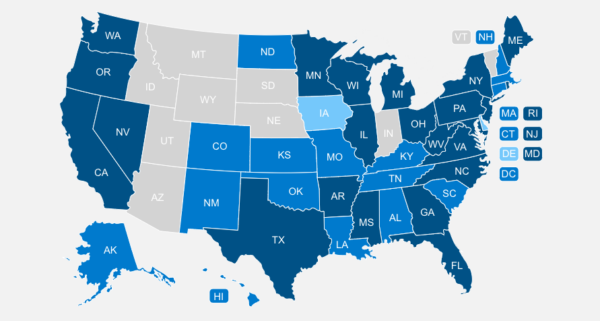

Cause Marketing and Commercial Co‑Venture by State: Essential Registration Requirements Guide
Cause-Marketing and Commercial Co-Venture in Illinois: Essential Registration Requirements Guide
At a Glance
Illinois doesn’t explicitly define commercial co-ventures in its statutes, but the state regulates these arrangements through existing charitable solicitation and trust laws. Charitable organizations typically must register using Form CO-1 with a $15 filing fee, while certain arrangements involving professional fundraisers require contract filing and surety bonds. Annual reporting through Form AG990-IL is due within six months of your fiscal year end with a $15 renewal fee.
Planning a commercial co-venture in Illinois? You’re about to engage in one of the most effective ways to boost your brand while supporting charitable causes! However, before launching your promotion, understanding the state’s specific registration requirements is absolutely essential. When businesses and charities team up in Illinois, they must navigate a detailed regulatory framework designed to protect consumers and charitable organizations alike.
As you prepare to partner with a nonprofit organization, you’ll need to familiarize yourself with several key requirements. First, you must complete the initial registration process, which includes filing the proper forms with the Illinois Attorney General’s Office. Additionally, you’ll need to submit a written agreement between your business and the charitable organization. Furthermore, you must adhere to specific financial reporting obligations and possibly meet bonding requirements, especially if you’ll be handling donated funds directly.
Throughout this guide, you’ll discover everything you need to know about commercial co-venture compliance in Illinois, from registration processes to contract requirements and reporting obligations. Managing these CCV requirements can be complex, but Labyrinth supports businesses and nonprofits with state-specific CCV filings, compliant disclosure language, and contract guidance. By the end, you’ll be well-equipped to launch your charitable promotion while staying fully compliant with state regulations, making nonprofit compliance straightforward for both your business and partner organization!
Understanding Commercial Co-Ventures in Illinois
Commercial co-ventures represent a unique intersection of for-profit business activities and charitable fundraising. The regulatory landscape for these arrangements in Illinois has some distinct characteristics compared to other states, requiring careful attention from both businesses and nonprofits.

Definition of a Commercial Co-Venture under Illinois Law
Unlike many states, Illinois’ charitable solicitation laws do not explicitly define the term “commercial co-venture” in its statutes or existing forms.
Essentially, a commercial co-venture typically refers to an advertising or sales campaign conducted by a for-profit business that represents that the purchase or use of goods or services will benefit a charitable organization or purpose. These arrangements are also commonly referred to as “charitable sales promotions” or “cause-related marketing” campaigns, as outlined in the Illinois Attorney General charity laws guidance (PDF).
Who Qualifies as a Commercial Co-Venturer?
To qualify as a commercial co-venturer in Illinois, you must be:
- A person or business primarily engaged in trade or commerce for profit (see the Illinois Charitable Trust solicitation guidance (PDF))
- Conducting a charitable sales promotion or advertising campaign
- Representing that purchases will benefit a charitable organization (see the Illinois charitable organization instructions (PDF))
Notably, Illinois has taken a unique regulatory approach. Rather than creating a separate commercial co-venturer category, the state addresses these arrangements through its existing charitable solicitation and trust laws. Depending on how a campaign is structured (for example, if charitable funds are solicited or held or a professional fund raiser is used), registration and reporting obligations with the Attorney General can apply; see the Illinois Attorney General charity registration page.
This distinction is important because it affects how your business must register and comply with reporting requirements in Illinois.
Charitable Sales Promotions vs. General Donations
Charitable sales promotions differ significantly from general donations in both structure and regulatory treatment. A charitable sales promotion specifically links consumer purchases to charitable contributions—for instance, advertising that a percentage of each sale will go to a designated nonprofit, as described in the Illinois Attorney General charity laws guidance (PDF).
In contrast, general donations involve direct contributions to charities without being tied to consumer purchases. This distinction matters because charitable sales promotions can trigger specific regulatory requirements in Illinois and other states.
Although beneficial, these arrangements require careful documentation. Both parties should understand their obligations under Illinois law to avoid penalties.
Initial Registration Requirements for Co-Venturers
Illinois adopts a unique regulatory approach to commercial co-ventures. Even though neither Illinois’ statutes nor registration forms explicitly mention commercial co-ventures, the Attorney General’s office addresses these arrangements under the state’s existing charitable solicitation and trust laws; some campaigns can trigger registration obligations with the Attorney General. For more, see the Illinois Attorney General charity registration page.
Form CO-1: Charitable Organization Registration Statement
Charitable organizations that must register with the Illinois Attorney General complete Form CO-1 (Charitable Organization Registration Statement) (PDF). This document serves as the foundation of registration with the Attorney General’s office. According to state regulations, this form requires detailed information about your organization, including:
- Corporate or organizational structure
- Contact information for key personnel
- Financial details regarding charitable activities
- Disclosure of any professional fundraising relationships
Moreover, Form CO-1 must be accompanied by supporting documentation. For corporations, you need to submit articles of incorporation and bylaws. Unincorporated associations must provide their constitution and byllaws, meanwhile trusts must submit the instrument creating the trust.
Additionally, Form CO-1 requires information about your tax-exempt status. If your organization has received tax-exempt determination from the IRS, you must attach a copy of your determination letter.
Filing Fee and Submission Process
The registration process involves several fees and specific submission procedures. Primarily, initial registration requires a $15.00 filing fee made payable to the “Illinois Charity Bureau Fund.” In the event you conduct solicitations prior to registration, you face a $200.00 late registration fee. See the Illinois charitable organization instructions (PDF) for details.
To submit by mail, send your completed forms to:
Office of the Illinois Attorney General
Charitable Trust Bureau
100 West Randolph Street, 11th Floor
Chicago, Illinois 60601-3175
Updates and Changes
Beyond initial registration, any registered organization must notify the Attorney General within 10 days of any changes to submitted information. Failing to maintain current registration can result in penalties, including the $200 re-registration fee required after cancelation. Refer to Form CO-1 (PDF) and the Illinois charitable organization instructions (PDF).
For commercial co-venturers specifically, documentation requirements can depend on whether a professional fund raiser is involved or charitable funds are handled. In those cases, additional filings may apply; see the Illinois Attorney General charity registration page.
Contract Filing and Disclosure Obligations
Contract requirements form the backbone of any commercial co-venture arrangement in Illinois. The state imposes specific obligations regarding written agreements, contract terms, and filing procedures that both businesses and nonprofits must understand.
Written Agreement Requirements under Illinois Law
All commercial co-ventures in Illinois require formal written agreements between the business and charitable organization. Even though Illinois laws don’t explicitly mention commercial co-ventures in their statutes, the state enforces contract requirements administratively. Written agreements serve as the foundation for transparency and accountability in these partnerships.
Initially, these contracts protect both parties by clearly outlining expectations and responsibilities. Plus, properly documented agreements help ensure consumer donations reach their intended charitable destinations. In general, the Illinois Attorney General’s office treats these contracts as essential documentation that must be maintained throughout the fundraising relationship. Labyrinth assists with organizing contracts, filing materials, and post-campaign records, helping partners stay compliant and audit-ready.

Mandatory Contract Terms for Commercial Co-Ventures
For a commercial co-venture contract to be valid in Illinois, it should contain several elements:
- A detailed description of the goods or services involved in the promotion
- Clear start and end dates for the fundraising campaign
- Specific information about the charitable purpose being supported
- The geographic scope of the promotional activities
- A statement of the financial terms, including either a percentage or fixed amount that will benefit the charity
- Any applicable minimum or maximum donation amounts
- A provision requiring an accounting to the charity at the promotion’s conclusion
Filing Contracts with the Illinois Attorney General
Where a professional fund raiser is engaged, Illinois requires that a copy of each professional fund raiser contract with a charitable organization be filed with the Attorney General prior to conducting any fundraising campaign, and an annual $25 filing fee applies for each active contract; see the Illinois Attorney General charity laws guidance (PDF).
Office of the Illinois Attorney General
Charitable Trust Bureau
100 West Randolph Street, 11th Floor
Chicago, Illinois 60601-3175
Any subsequent contracts for new campaigns that use a professional fund raiser must similarly be filed. Failure to file required contracts appropriately may result in penalties, including potential fines or loss of registration status.
By and large, these contract requirements aim to protect consumers who make purchases based on charitable claims. The mandatory disclosures ensure that businesses clearly communicate to consumers exactly how their purchases will benefit charitable causes.
Financial Reporting and Bonding Obligations
Maintaining proper financial records and reports forms a critical component of Illinois commercial co-venture compliance. After initial registration, your focus must shift toward ongoing financial obligations to the state.
Form CO-2: Financial Information Form
The CO-2 Financial Information Form serves as a critical document for new charitable organizations operating in Illinois. Organizations that have been in operation for less than one year must complete this form as part of their registration process. See the CO-2 Financial Information Form (PDF).
The form requires detailed financial disclosures about your organization, including:
- Gross receipts to date (contributions, gifts, grants, program revenue)
- Total assets (cash, accounts receivable, inventory, investments)
- Expected annual gross receipts threshold (whether exceeding $10,000)
Annual Financial Report Submission Guidelines
Following initial registration, registered charitable organizations must submit annual financial reports to maintain compliance. These reports are due within six months after the organization’s fiscal year end (or by June 30 for calendar-year organizations). A complete annual report package includes the AG990-IL form, a $15.00 annual filing fee, applicable IRS returns, and audited financial statements if contributions exceeded $500,000. See the AG990-IL instructions (PDF).
If you fail to file by the deadline, a $100.00 late report filing fee becomes mandatory. You may request a 60-day extension through written submission prior to your due date; refer to the Illinois Attorney General charity registration page.
Reporting obligations are tied to the registrant’s fiscal year and filing category; promotion-specific reports are not prescribed separately by statute for commercial co-venturers.
Surety Bond Requirement for Fundraisers Handling Funds
Professional fund raisers who control or possess charitable funds must secure a surety bond as part of their registration. This requirement primarily applies to those directly handling donor funds rather than all commercial co-venturers. The bond serves as security for donors and the state should a registrant violate regulations or mishandle funds.
Renewals, Penalties, and Compliance Tips
Staying compliant with Illinois regulations requires ongoing attention to renewal deadlines and reporting obligations. As your campaign continues, understanding the renewal process and potential penalties becomes crucial for long-term success.
Annual Renewal Process and Deadlines
Registered charitable organizations in Illinois must renew annually by submitting Form AG990-IL (Illinois Charitable Organization Annual Report). This renewal is due six months after the end of your fiscal year (or by June 30 for calendar-year organizations). For more information, see the Illinois Attorney General charity registration page.
The renewal package must include:
- Completed AG990-IL form
- $15.00 renewal fee
- Required financial documentation
You may request a 60-day extension by sending a written request before your due date; see the Illinois Attorney General charity registration page.
Penalties for Non-Compliance with Illinois CCV Laws
Failing to comply with Illinois regulations can result in serious consequences. Late renewals incur a mandatory $100.00 late filing fee. Continued non-compliance may lead to registration cancelation. The Attorney General can pursue injunctive relief, removal of trustees, and court proceedings against non-compliant organizations. Courts may impose civil penalties ranging from $500.00 to $1,000.00. See the Illinois Attorney General charity laws guidance (PDF).
Best Practices for Maintaining Legal Compliance
- Calendar all filing deadlines and set early internal reminders.
- Maintain detailed records of all promotion activity for at least three years.
- Document a clear written agreement between your business and charitable partners.
- Provide prompt financial accounting to charities and state authorities upon request.
- Verify that partner charities are properly registered before launching promotions.
Conclusion
Navigating the regulatory landscape for commercial co-ventures in Illinois certainly requires attention to detail and thorough preparation. Throughout this guide, you’ve learned that while Illinois doesn’t explicitly define commercial co-ventures in its statutes, the state nevertheless maintains oversight through its charitable solicitation and trust laws.
First and foremost, registration requirements depend on the specifics of your campaign. Charitable organizations that must register file Form CO-1 with a $15.00 filing fee and supporting organizational documentation.
Written agreements between your business and the charitable organization stand as the cornerstone of compliant co-ventures. When a professional fund raiser is involved, contracts must include specified terms and be filed with the Illinois Attorney General before launching any campaign, with a $25 per-contract filing fee for active contracts.
Financial accountability further extends to reporting requirements. Form CO-2 provides baseline financial information for new organizations, while annual reports (AG990-IL) must be submitted within six months after your fiscal year end. Professional fund raisers who directly handle charitable funds must also secure a surety bond.
The state maintains its regulatory authority through a system of penalties for non-compliance. Late renewals trigger a $100.00 fee, and continued violations could lead to registration cancelation or court proceedings with civil penalties ranging from $500.00 to $1,000.00.
Successful commercial co-ventures ultimately depend on your commitment to meeting these regulatory requirements. By establishing a compliance calendar, maintaining detailed records, and verifying partner charity registrations, you can confidently pursue cause-related marketing initiatives. Labyrinth assists with organizing contracts, filing materials, and post-campaign records, helping partners stay compliant and audit-ready. As a result, both your business and chosen charitable causes can thrive through properly structured partnerships that maintain public trust while delivering meaningful impact.

Frequently Asked Questions
