
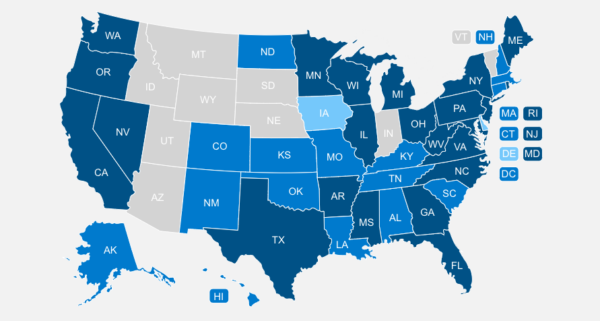

Cause Marketing and Commercial Co‑Venture by State: Essential Registration Requirements Guide
Cause-Marketing and Commercial Co-Venture in Kansas: Essential Registration Requirements Guide
At a Glance
Kansas does not explicitly regulate commercial co-venturers but may require registration as a professional fundraiser depending on your activities. If your promotional activities involve significant fundraising responsibilities beyond donating a portion of sales, you must register with the Kansas Attorney General before soliciting and renew annually by June 30. Many organizations qualify for exemptions, including those raising less than $10,000 annually with only unpaid volunteers.
Are you planning to boost your business while supporting a charitable cause through a commercial co-venture in Kansas? This exciting marketing approach allows you to align your brand with meaningful causes, but there’s more to it than simply promising donations based on sales.
Before launching your charitable sales promotion in Kansas, you need to understand the specific registration requirements that govern these partnerships. Indeed, commercial co-ventures in Kansas are subject to state regulations that protect both consumers and charitable organizations from potential fraud. These include initial registration processes, contract filings, financial reporting requirements, and annual renewal procedures that must be carefully followed.
Throughout this guide, you’ll discover exactly what qualifies as a commercial co-venture under Kansas law, which activities may be exempt from registration requirements, and the step-by-step procedures you must follow to maintain compliance. Additionally, you’ll learn about the necessary forms, fees, and deadlines that apply when your business partners with a charity for promotional purposes.
Definition of Commercial Co-Venture in Kansas
Understanding the legal framework for commercial co-ventures in Kansas requires familiarity with specific statutory definitions and their practical applications in the marketplace.

Kansas Statute §17-1760 Definition of Solicitation
Kansas law provides specific definitions relevant to commercial co-ventures through Statute §17-1760. Although Kansas does not explicitly define “commercial co-venturer” in its statutes, it establishes related concepts through definitions of charitable organizations and solicitation.
Under Kansas Statute §17-1760(f), “solicitation” encompasses “any request or appeal, either oral or written, or any endeavor to obtain, seek or plead for funds, property, financial assistance or other thing of value, including the promise or grant of any money or property of any kind or value for a charitable purpose”. This definition forms the foundation for understanding commercial co-venture activities in the state.
The statute also defines a “charitable organization” as “any person who engages in the activity of soliciting funds or donations for, or purported to be for, any fraternal, benevolent, social, educational, alumni, historical, humane, public health or other charitable purpose”. Furthermore, “charitable purpose” refers to “any purpose which promotes, or purports to promote, directly or indirectly, the well-being of the public at large or any number of persons”.
What Qualifies as a Commercial Co-Venture
Despite the absence of specific terminology in Kansas statutes, a commercial co-venture generally refers to an arrangement where a for-profit business represents that the purchase or use of its products or services will benefit a charitable organization. Most states define a commercial co-venturer as a person or business primarily engaged in commerce for profit that conducts a charitable sales promotion.
- A for-profit company partnering with a nonprofit organization
- A portion of sales or revenue being donated to the charity
- An arrangement that supports charitable causes while generating commercial goodwill
- A written agreement between both parties outlining the terms
Consequently, commercial co-ventures exist whenever a business advertises that purchasing their products or services will benefit a charitable organization in some way. Notably, Kansas does not currently maintain a traditional registration requirement for commercial co-venturers, though other regulations may apply to fundraising events.
Examples of Charitable Sales Promotions
“Friday Donut Sales to Support Local Shelter” promotions where a percentage of specific product sales goes to a designated charity, as outlined in the Kansas Attorney General charitable organization FAQs.
Restaurant campaigns advertising that a portion of proceeds will benefit a local food bank are likewise popular, consistent with guidance in the Kansas Attorney General charitable organization FAQs.
Another prominent example is the long-running partnership between Apple and (RED), where Apple sells red-colored products and donates a percentage of proceeds to the charity.
In some cases, commercial co-ventures can even exist between two charitable nonprofits that jointly sell something and agree to direct a percentage of sales to one of the organizations. The essential element remains the advertised benefit to a charitable organization through consumer purchases.
For these arrangements to remain compliant with state regulations, businesses must ensure proper disclosures in advertising and maintain appropriate documentation of the partnership, regardless of the specific promotional format chosen. When structuring multi-state campaigns, Labyrinth helps track varying requirements across all relevant jurisdictions.
Exemptions from Registration in Kansas
Kansas law provides several key exemptions from registration requirements for commercial co-ventures, allowing certain organizations and activities to proceed without formal registration. Knowing these exemptions can save time and resources for qualifying entities.
Revenue Threshold: Under $10,000 Annual Contributions
The most straightforward exemption applies to charitable organizations that neither intend to receive nor actually receive contributions exceeding $10,000 during their tax period. This threshold specifically applies if all fundraising functions are conducted by persons who are unpaid for such services. However, if contributions surpass this $10,000 threshold, the organization must register with the Attorney General within 30 days after the end of the tax period. See the Kansas Legislature bill text for details: Kansas Legislature SB 293 (2020).
This exemption particularly benefits small-scale commercial co-ventures with modest fundraising goals. As of February 2024, the Attorney General reported 558 registered charitable organizations, according to a Kansas Legislature fiscal note (HB 2685).
Unpaid Fundraising Activities
Organizations that utilize only unpaid volunteers for fundraising efforts may qualify for exemption. First, all fundraising activities must be conducted by individuals receiving no compensation, either directly or indirectly. Secondly, this exemption often works in conjunction with other qualifying criteria, such as the revenue threshold mentioned above. Relevant provisions appear in Kansas Legislature SB 293 (2020).
Solicitations for Named Individuals
Campaigns requesting contributions for specific individuals named at the time of solicitation qualify for exemption under certain conditions. The collected contributions must be turned over to the named beneficiary, with only reasonable expenses for costs of banquets or social gatherings deducted. Moreover, all fundraising functions must be carried out by unpaid persons.
Exempt Organization Types (e.g., Religious, Educational)
- Religious organizations: Any corporation, trust, or organization established for religious purposes is exempt from registration. This includes organizations affiliated with, operated by, or supervised by religious corporations.
- Educational institutions: State educational institutions under the control of the state board of regents, unified school districts, educational interlocals, and accredited educational institutions confining solicitations to their student body, alumni, faculty, and trustees are exempt.
- Membership-based groups: Fraternal, patriotic, social, educational, and alumni organizations are exempt when solicitations are confined to their membership.
- Specific named organizations: Certain organizations receive explicit exemptions, including Boy Scouts and Girl Scouts of America; YMCA and YWCA; organizations receiving allocations from United Way; and Junior League organizations.
Most importantly, these exemptions apply to charitable organizations only, not to professional fundraisers. See the Kansas Attorney General charitable organization FAQs. Commercial co-venturers working with exempt charities should therefore verify whether their specific activities might still require registration despite the charity’s exempt status. When partnering with nonprofits for CCV campaigns, it’s worth noting that some charitable organizations may need to maintain active charitable solicitation registrations in other states where the campaign operates, even if they qualify for Kansas exemptions.
In conclusion, co-venturers can avoid unnecessary regulatory hurdles by partnering with exempt organizations or structuring campaigns to meet specific exemption criteria.
Initial Registration Requirements for Co-Venturers
Navigating the registration process for commercial co-ventures in Kansas involves understanding specific requirements established by state law. While certain regulatory frameworks exist, the exact requirements differ based on how your promotional activities are structured.
Required Forms: Kansas Professional Fund Raiser Application
Intriguingly, Kansas does not currently maintain a traditional registration requirement specifically for commercial co-venturers. This differs from many other states that explicitly regulate commercial co-venture arrangements. Instead, Kansas focuses on registering professional fundraisers, which may include some commercial co-venture activities depending on their structure.
If your commercial co-venture activities fall under professional fundraising definitions, you’ll need to submit the “Professional Fund Raiser Application”. Under K.S.A. 17-1760(d), a professional fundraiser is defined as “any person who is retained under contract or otherwise compensated by or on behalf of a charitable organization primarily for the purpose of soliciting funds”. This includes those who “plan, manage, advise, consult, or prepare material for solicitations”.
Essentially, if your co-venture involves significant fundraising responsibilities beyond simply donating a portion of sales, the professional fundraiser registration might be required. The application must be made under oath, per guidance from the Kansas Attorney General charitable organization FAQs. Labyrinth can help determine whether your specific activities trigger these registration requirements and ensure accurate preparation of required documents.
Filing Location: Kansas Attorney General
Unlike most states where fundraising registrations are handled by the Attorney General’s office, in Kansas, professional fundraiser applications must be filed with the Kansas Attorney General (785-368-6757, ag.ks.gov) Licensing & Inspections Section – Charitable Organization Registration Unit. This is a key distinction for businesses accustomed to filing such documents with the Secretary of State.
For general business registration purposes not related to fundraising activities, entities like LLCs, corporations, LLPs, or LPs must register with the Kansas Secretary of State. For more information, visit the Kansas Business Center — Register a business. Nevertheless, commercial co-venture registrations specifically fall under the Attorney General’s jurisdiction when required.

Registration Fee and Payment Methods
The registration fee for professional fundraisers in Kansas is $25.00 (K.S.A. 17-1764(c)(1)). The factual information does not explicitly outline acceptable payment methods, yet most state agencies typically accept checks or money orders made payable to the specific department.
All applications must be submitted by mail rather than electronically. Unlike some states transitioning to mandatory online filing systems, Kansas maintains a paper-based system for these registrations.
Timeline for Submission Before Promotion Begins
Timing is critical for compliance with Kansas fundraising regulations. Professional fundraiser registrations must be completed and approved before any solicitation activities commence (K.S.A. 17-1764(a)); see the Kansas Attorney General charitable organization FAQs.
Furthermore, professional fundraiser registrations expire on June 30 each year and must be renewed annually (K.S.A. 17-1764(b)). For charitable organizations themselves, registrations expire on the last day of the sixth month after the end of the charity’s fiscal year (K.S.A. 17-1763(d)).
In addition to initial registration, professional fundraisers must file an annual written report with the attorney general as required by K.S.A. 17-1764(c)(2). See the Kansas Attorney General charitable organization FAQs.
Even when formal registration isn’t required for commercial co-venturers, prudent practice suggests maintaining complete documentation of all charitable sales promotions, including written agreements with partner charities and financial records detailing contributions made.
Given these nuanced requirements, businesses planning commercial co-ventures in Kansas should carefully evaluate whether their activities might classify them as professional fundraisers, thereby triggering registration obligations beyond those typically associated with commercial co-ventures in other states.
Contract Filing and Notification Obligations
Commercial co-ventures in Kansas must follow specific contract filing and notification protocols to maintain legal compliance. These requirements ensure transparency and accountability between businesses and charitable partners.
Written Agreement Requirement with Charitable Organization
The foundation of any commercial co-venture in Kansas begins with a written contract between the business and the charitable organization. This formal agreement serves as the cornerstone of the partnership. While many jurisdictions regulate the contents of such agreements, Kansas statutes do not specifically define or regulate “commercial co-venturers” by contract. If a party acts as a professional fund raiser, the registration and solicitation disclosure requirements in K.S.A. 17-1764 and 17-1766 apply. Labyrinth can help ensure contract provisions meet disclosure standards and coordinate requirements across multiple states for broader campaigns.
Submission of Contract Before Promotion Starts
Kansas does not prescribe a pre-campaign contract filing for commercial co-venturers. However, professional fund raisers must be registered with the attorney general before beginning any solicitation activities in the state (K.S.A. 17-1764(a)).
Retention Period for Contracts: 3 Years
Kansas law does not specify a contract retention period for commercial co-venturers. Maintaining adequate records is a prudent practice; note that the attorney general has authority to request and examine documentary material in investigations (K.S.A. 17-1767).
Disclosure of Sales Promotion Terms
Kansas law requires specific disclosures at the point of solicitation by professional solicitors (K.S.A. 17-1766). Disclosures include: the name, address, and telephone number of the charitable organization; the organization’s registration number; the professional solicitor’s registration number (if applicable); and a statement that the organization’s annual financial report is on file with the attorney general. Kansas statutes do not enumerate contract content requirements specific to commercial co-ventures.
Financial Reporting and Renewal Procedures
Annual Report Filing Requirements
Professional fundraisers operating charitable promotions must file an annual written report with the attorney general as required by K.S.A. 17-1764(c)(2). Charitable organizations’ solicitation licenses expire on the last day of the sixth month following the close of their fiscal year (K.S.A. 17-1763(d)). Labyrinth can help ensure these reports are prepared accurately and submitted on time to maintain good standing.
Renewal Form and Fee Structure
Professional fundraiser registrations expire annually on June 30 and must be renewed. The renewal fee is $25.
Recordkeeping Obligations for Sales and Contributions
Kansas statutes do not set a specific record retention period for commercial co-ventures. Retain documentation sufficient to substantiate solicitations and contributions, and be aware the attorney general may compel production of records during an investigation (K.S.A. 17-1767).
Penalties for Non-Compliance
Violations of Kansas charitable solicitation laws may be investigated and prosecuted by the attorney general, county, or district attorneys. Courts may grant injunctive relief, suspend or revoke registrations or licenses, and order appropriate relief including recovery of damages and investigation costs (K.S.A. 17-1767; 17-1768).
Conclusion
Throughout this guide, you’ve discovered the essential regulatory landscape governing commercial co-ventures in Kansas. While the state doesn’t explicitly define commercial co-venturers in its statutes, you must still navigate specific requirements when partnering with charitable organizations for promotional purposes.
Understanding whether your activities qualify for exemptions represents a critical first step. Organizations operating below the $10,000 annual contribution threshold or utilizing only unpaid volunteers may avoid registration altogether. Similarly, religious institutions, educational organizations, and certain named entities benefit from statutory exemptions under Kansas law.
Proper documentation stands as the cornerstone of compliant commercial co-ventures. Although Kansas does not impose a specific contract filing requirement for commercial co-venturers, parties acting as professional fund raisers must register with the attorney general before soliciting (K.S.A. 17-1764) and ensure required solicitation disclosures are made (K.S.A. 17-1766).
Financial transparency likewise remains paramount. You’ll need to maintain comprehensive records of all transactions related to your charitable sales promotion. Annual reporting obligations apply if your activities classify you as a professional fundraiser, necessitating renewal of your registration each year by June 30, accompanied by the requisite $25 fee.
Failure to comply with these requirements can lead to enforcement actions, including injunctions and other remedies under Kansas law (K.S.A. 17-1767; 17-1768). Therefore, meticulous attention to registration status, disclosures, and recordkeeping proves essential.
Before launching any commercial co-venture in Kansas, carefully evaluate whether your promotional structure triggers registration as a professional fundraiser. Though the state offers certain flexibility compared to other jurisdictions, you must still adhere to applicable registration, disclosure, and reporting obligations. For multi-state campaigns, working with Labyrinth can help coordinate compliance requirements across all relevant jurisdictions while ensuring your nonprofit partners maintain any necessary charitable solicitation registrations.
Ultimately, successful commercial co-ventures balance marketing objectives with regulatory compliance. By following the guidelines outlined in this article, you can effectively partner with charitable organizations while avoiding potential legal pitfalls. This approach ensures your promotion not only benefits worthy causes but also enhances your business reputation through responsible corporate citizenship.

Frequently Asked Questions
