
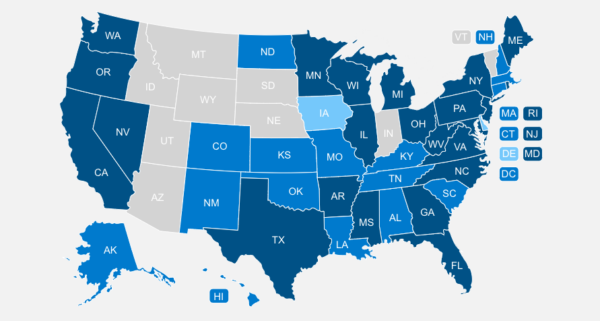

Cause Marketing and Commercial Co‑Venture by State: Essential Registration Requirements Guide
Cause-Marketing and Commercial Co-Venture in Kentucky: Essential Registration Requirements Guide
At a Glance
Kentucky does not require formal registration for commercial co-venturers, unlike many other states. However, your nonprofit partner must register with the Kentucky Attorney General under charitable solicitation laws before launching any campaign. If professional solicitors are involved, contracts must be filed at least 14 days before services begin.
Commercial co-ventures, partnerships between businesses and charities where a portion of sales benefits the nonprofit, represent one of the most powerful marketing strategies available today.
When you’re planning a commercial co-venture in Kentucky, understanding the state-specific registration requirements becomes essential for your success. Kentucky maintains distinct regulations governing these promotional partnerships, requiring careful attention to initial registration, contract filing, financial reporting, and ongoing compliance obligations.
Many businesses dive into charitable promotions without realizing Kentucky has specific legal requirements that must be met before launching your campaign. Failure to comply can result in significant penalties and reputational damage. Therefore, navigating these requirements correctly from the start saves you both time and potential legal headaches. Managing CCV compliance can be complex, but Labyrinth supports businesses and nonprofits with state-specific CCV filings, compliant disclosure language, and contract guidance.
In this comprehensive guide, you’ll discover everything needed to properly register and maintain compliance for your commercial co-venture in Kentucky. From understanding who qualifies as a commercial co-venturer to mastering the renewal process, we’ve got you covered with all the essential information to keep your charitable promotion both successful and legally compliant.
Understanding Commercial Co-Ventures in Kentucky
Commercial co-ventures represent a strategic blend of business marketing and philanthropic efforts. Unlike traditional fundraising, these partnerships offer mutual benefits while supporting charitable causes. Let’s examine how Kentucky handles these arrangements and what you need to know.

What qualifies as a commercial co-venture
A commercial co-venture is essentially an agreement between a nonprofit organization and a for-profit business that supports charitable causes while generating commercial goodwill. These partnerships typically involve a business advertising that the purchase of goods or services will benefit a charitable organization or cause.
In Kentucky, commercial co-ventures are also known as charitable sales promotions. While Kentucky does not currently have a traditional registration requirement for commercial co-ventures at the state level, this doesn’t mean these activities are unregulated. Other rules and regulations may still apply to your fundraising events and promotions.
Unlike states with more stringent requirements, Kentucky takes a more flexible approach to these partnerships. However, this lack of formal registration doesn’t exempt you from maintaining ethical practices and transparency in your promotional activities. Additionally, note that many jurisdictions nationwide have specific requirements for commercial co-ventures.
Who is considered a commercial co-venturer
A commercial co-venturer is typically defined as any person or business that:
- Is primarily engaged in trade or commerce for profit
- Regularly conducts charitable sales promotions
- Advertises that purchases or use of goods/services will benefit a charitable organization
Both parties in a commercial co-venture have distinct roles. The charity provides its name and reputation, while the business handles marketing and sales activities that generate the charitable contributions. Essentially, you’re a commercial co-venturer if your for-profit company joins forces with a charitable organization to benefit that organization, usually via donations from sales or promotions.
Commercial co-ventures can also exist between two charitable nonprofits that agree to sell something jointly and arrange for a percentage of sales to benefit one of the organizations. When nonprofits engage in CCV activity, Labyrinth helps nonprofits understand how this may intersect with charitable solicitation registration requirements. Furthermore, sometimes these transactions are structured as license agreements rather than traditional co-venture arrangements.
Examples of charitable sales promotions
Charitable sales promotions can take various forms. Some common examples include:
- Pledge-per-purchase campaigns: American Express pioneered this approach in the 1980s by donating one cent each time customers used their credit cards to help restore the Statue of Liberty.
- Percentage-of-sales donations: Where a fixed percentage of each purchase goes to a charity, such as Apple’s partnership with (RED), which has lasted for years with a portion of proceeds from red products being donated.
- AmazonSmile program: Allowed shoppers to select from various charitable organizations, with Amazon donating a percentage of eligible purchase prices.
- Donation collection boxes: Like the clear money boxes near McDonald’s registers collecting change for Ronald McDonald House Charities.
- Limited-time campaigns: Short-term promotions with a fixed percentage of sales going toward a specific fundraising goal.
Regardless of the format, transparency remains paramount in all charitable sales promotions. Your advertising and reporting should clearly state which charity will benefit, the specific amount to be donated (such as $0.10 per item or 1% of net sales), and any minimum guaranteed or maximum capped donations.
Initial Registration Requirements
Unlike many other states across the country, Kentucky takes a distinctive approach to regulating commercial co-ventures. Understanding these requirements saves you from potential legal complications and ensures your charitable sales promotion runs smoothly.
When registration is required
Surprisingly, Kentucky does not currently have a traditional registration requirement for commercial co-venturers at the state level. By contrast, some other states do require registration and/or surety bonds for these promotions; verify requirements if your campaign extends beyond Kentucky.
Despite the absence of formal registration, commercial co-venturers operating in Kentucky should remain aware that other regulations may apply both before and after fundraising events. Consequently, the lack of registration requirements doesn’t equate to a complete absence of oversight.
Nationally, many states regulate commercial co-ventures with special filing requirements. Meanwhile, Kentucky’s more flexible approach allows businesses to focus on ethical practices without the administrative burden of formal registration.
Filing with the Kentucky Attorney General
Although commercial co-venturers don’t need to register, the charitable organizations they partner with must follow specific protocols. Charitable organizations that solicit in Kentucky generally file with the Office of the Attorney General (502-696-5300, ag.ky.gov) under KRS 367.657 (charitable solicitation), unless an exemption applies under KRS 367.660.
For your commercial co-venture to operate legally, verify that your nonprofit partner has:
- Registered or filed as required with the Kentucky Attorney General’s office under KRS 367.657
- Filed all required documentation
- Remained in good standing with state authorities
This filing should be completed prior to soliciting in Kentucky.
Required forms and fees
While commercial co-venturers themselves don’t face registration fees in Kentucky, understanding the requirements for your nonprofit partners remains essential. Fortunately, the charitable organization registration in Kentucky carries no fee, making it more accessible compared to states with costly registration requirements.
Your nonprofit partner will need to submit several documents as part of their registration process:
- Articles of Incorporation or equivalent governing document
- IRS Determination Letter
- IRS Form 990
Alternatively, if the nonprofit has not yet filed Form 990 with the Internal Revenue Service, they can file a notice of intent to solicit, which expires on December 31 each year.
The processing time for charitable registrations in Kentucky typically takes 4–6 weeks, so plan your commercial co-venture timeline accordingly. This ensures your campaign launches without regulatory delays.
Even though formal registration isn’t required for commercial co-venturers in Kentucky, documenting your arrangement with the nonprofit through a written contract remains a fundamental best practice. This documentation protects both parties and provides transparency regarding the terms of the promotional campaign.
Contract Filing and Disclosure Obligations
The foundation of any legitimate commercial co-venture lies in proper documentation and transparency. Kentucky law establishes specific requirements for how these partnerships must be structured, filed, and disclosed to the public.
Mandatory contract elements
For charitable campaigns in Kentucky, a written contract between the charitable organization and any professional solicitor or fundraising consultant involved serves as the cornerstone of the arrangement. Kentucky law requires such contracts to address core terms like each party’s obligations, compensation, whether either party will have custody of contributions, and the promotion’s term, and to be filed as required by statute. See KRS 367.653.
Moreover, the contract must identify services provided by the professional solicitor or fundraising consultant and should make clear whether either party will, at any time, have custody of contributions during the campaign. See KRS 367.653. Labyrinth assists with organizing contracts, filing materials, and post-campaign records to help partners stay compliant and audit-ready.
Without these elements, your contract may not meet Kentucky’s statutory requirements, potentially leading to delays or rejection of your promotional campaign.

Filing deadlines before promotion begins
In Kentucky, timing is critical when filing for regulated charitable campaigns. Under KRS 367.653, a copy of the contract must be filed with the Attorney General at least 14 calendar days prior to performing any service outlined in the agreement.
Along with the contract submission, a professional solicitor must also file a written promotion registration statement with the Attorney General in the form prescribed by state regulations, as required by KRS 367.653.
Failing to submit these materials within the required timeframe can result in delays that might disrupt your planned campaign schedule.
Disclosure requirements to consumers
Transparency forms the basis of Kentucky’s approach to charitable solicitations. State law requires certain disclosures so consumers understand how their purchases benefit charitable causes. Ensure your promotional materials clearly communicate, consistent with KRS 367.668, the amount or percentage to benefit the charity and the duration of the promotion. Labyrinth helps ensure disclosures meet state standards and provide clarity for consumers.
These disclosure requirements extend to all advertising materials, including product packaging, social media promotions, and point-of-sale displays.
Following the completion of a solicitation campaign, or on the anniversary of campaigns lasting more than one year, a campaign financial report must be filed with the Attorney General by the professional solicitor, consistent with statutory requirements and the Attorney General’s prescribed form. See the Kentucky Attorney General’s charitable solicitor resources.
Financial Reporting and Bonding Rules
Beyond initial registration and contract filing, financial transparency forms another critical pillar of commercial co-venture compliance. Understanding Kentucky’s reporting and bonding requirements helps ensure your campaign remains fully compliant throughout its duration.
When a bond is required
Kentucky itself does not typically require commercial co-venturers to post a surety bond. This stands in contrast to states like Massachusetts and Alabama, which mandate surety bonds prior to any charitable sales promotion activity. Given that these requirements vary significantly by state, verify bond requirements if your campaign extends beyond Kentucky.
For professional solicitors working in Kentucky, a surety bond is required. Registrants typically pay only a portion of the bond’s total value—often just a small percentage—based on creditworthiness, similar to an insurance premium. This distinction matters since the roles sometimes overlap in charitable fundraising campaigns. The bond serves as financial security to protect charitable contributions in case of mismanagement or other issues.
Joint financial reporting with the charity
Once your charitable sales promotion concludes, proper financial reporting becomes necessary. In many states, a joint financial report signed by both the commercial co-venturer and the charitable organization must be filed after completing the promotion.
This report typically details:
- Gross receipts generated from the promotion
- Expenditures incurred during the campaign
- Net amount provided to the charity
Since financial records must be accessible to both parties, establish a clear reporting system with your nonprofit partner. Indeed, this transparency protects both organizations and ensures accurate reporting to regulatory authorities.
Your nonprofit partner will need to file their annual 990 tax form with the IRS to disclose financial data. The IRS Form 990 specifically asks whether the organization participated in a joint venture arrangement during the year.
Recordkeeping and audit readiness
Effective recordkeeping proves vital for commercial co-venturers operating in Kentucky. Maintain records as required by Kentucky law (see KRS 367.666 and related provisions), and be prepared to provide documentation during audits or regulatory reviews.
For audit readiness, maintain detailed documentation including:
- Copies of all promotional materials
- Sales records showing units sold
- Financial statements documenting donations
- Written agreements with the charity
Nonprofits must keep adequate records, which become essential when board members request information, when applying for funding, or in the event of an audit. Given these requirements, developing a systematic approach to recordkeeping from the outset safeguards both parties against potential compliance issues.
Renewals, Updates, and Ongoing Compliance
Maintaining a compliant commercial co-venture requires ongoing attention to regulatory obligations, even after your initial registration and campaign launch. Understanding Kentucky’s renewal requirements helps you avoid potentially costly penalties.
Annual renewal process
For commercial co-ventures operating in Kentucky, the renewal requirements differ from many other states. Generally, while Kentucky itself doesn’t require specific commercial co-venturer registration renewals, your nonprofit partner must renew their registration annually by the 15th day of the 5th month after their fiscal year end. The nonprofit’s renewal is automatically extended for 180 days beyond the original due date if they file their IRS form 8868 extension.
First and foremost, if your commercial co-venture spans multiple states, be aware that renewal requirements vary significantly. Confirm each jurisdiction’s rules and fees before continuing or expanding your campaign. Many campaigns span multiple jurisdictions; Labyrinth helps track varying requirements, notices, and reporting obligations.
Updating contracts and campaign details
In Kentucky, if a professional solicitor or fundraising consultant files a promotion registration statement, any changes to the information submitted must be reported within 7 calendar days after the changes occur. This rapid reporting requirement ensures regulatory authorities remain informed about material modifications to your charitable campaign.
When updating contract details, you may need to file a new promotion registration statement, especially if significant changes affect the financial arrangement or promotional timeline. Typically, this includes modifications to:
- Campaign duration
- Financial arrangements
- Geographic scope
- Marketing methods
Frequently Asked Questions

Conclusion
Commercial co-ventures represent powerful marketing strategies that benefit both businesses and charitable organizations. After exploring Kentucky’s unique approach to regulating these partnerships, you now understand that navigating the state’s requirements differs significantly from other jurisdictions.
Unlike many states, Kentucky does not mandate formal registration for commercial co-venturers. Nevertheless, this lack of registration requirements does not equate to an absence of regulation. Therefore, maintaining proper documentation remains essential for your commercial co-venture’s success. Most importantly, you must ensure your nonprofit partner has properly registered or filed under Kentucky’s charitable solicitation laws before launching any campaign.
Additionally, transparency forms the cornerstone of compliant commercial co-ventures in Kentucky. Your promotional materials should clearly communicate the amount or percentage benefiting the charity and the campaign duration to align with Kentucky’s disclosure standards. This transparency builds consumer trust while meeting state requirements.
Although Kentucky offers relatively flexible regulations, strict deadlines still apply when regulated parties are involved. Specifically, if you engage a professional solicitor or fundraising consultant, a copy of the contract must be filed with the Attorney General at least 14 calendar days before beginning services outlined in the agreement, and required promotion registration statements and financial reports must be filed on time.
Undoubtedly, non-compliance may lead to enforcement under Kentucky’s consumer protection and charitable solicitation statutes. However, by following the guidelines outlined throughout this article, your commercial co-venture can successfully navigate Kentucky’s regulatory landscape. Labyrinth supports businesses and nonprofits with state-specific CCV filings, compliant disclosure language, and contract guidance to streamline the compliance process. For nonprofits, understanding when CCV activity may affect charitable solicitation registration obligations helps ensure complete compliance.
Remember that while Kentucky may have fewer initial hurdles than other states, ongoing compliance and ethical practices remain paramount. By establishing clear agreements with your nonprofit partners, maintaining detailed records, and providing transparent information to consumers, your charitable sales promotion can achieve both marketing success and meaningful social impact.
