
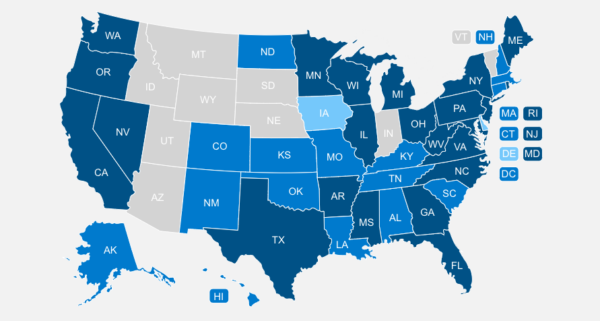

Cause Marketing and Commercial Co‑Venture by State: Essential Registration Requirements Guide
Cause-Marketing and Commercial Co-Venture in Maine: Essential Registration Requirements Guide
At a Glance
Maine has eliminated commercial co-venture registration requirements through the 2013 Streamlined Charitable Solicitations Act. Businesses conducting charitable promotions in Maine no longer need to register, post bonds, or file annual reports. However, partner charities must still maintain proper registration with the state, and all promotional activities remain subject to Maine’s Unfair Trade Practices Act.
Whether you’re planning your first cause marketing campaign or looking to expand your charitable initiatives into Maine, this guide will walk you through everything you need to know about the current legal landscape, remaining obligations, and best practices for conducting legally compliant charitable promotions. You’ll discover how Maine’s updated regulations compare to other states’ requirements and how to create marketing campaigns that benefit both your business and worthy causes while staying on the right side of the law.
Understanding Commercial Co-Ventures in Maine
Commercial co-ventures represent a unique form of business-charity partnership that benefits both organizations. Before diving into specific requirements, let’s explore what exactly constitutes this arrangement in Maine and how it typically functions.

Definition of ‘Commercial Co-Venturer’ under Maine Law
Prior to 2013, Maine law specifically defined a commercial co-venturer as “any person who, for profit, is regularly and primarily engaged in trade or commerce in this State, other than in connection with the raising of funds for charitable organizations or purposes, and who conducts a sale, performance, event or collection and sale of donated goods that is advertised in conjunction with the name of any charitable organization.” Essentially, this referred to for-profit businesses that conducted promotions advertising that a portion of sales would benefit a charitable organization.
Notably, Maine exempted entities whose annual charitable contributions did not exceed $10,000 from registration requirements that were previously in place. Additionally, organizations benefiting solely in goodwill were not considered commercial co-venturers if the charitable organization supervised the collection and distribution of proceeds.
Charitable Sales Promotion vs. Commercial Co-Venture
In many states, these terms are used somewhat interchangeably, but they have specific technical meanings. A charitable sales promotion is generally defined as “an advertising or sales campaign, conducted by a commercial co-venturer, which represents that the purchase or use of goods or services offered by the commercial co-venturer will benefit a charitable organization or purpose.”
In contrast, commercial co-ventures represent the broader relationship between the business and charity. The commercial co-venturer is the company itself, whereas the charitable sales promotion is the specific marketing campaign they conduct. Both concepts involve a for-profit business promoting that purchases will benefit a charitable organization in some way.
Common Examples: Cause Marketing Campaigns
Maine businesses have embraced cause marketing through various creative approaches. For instance:
- Allagash Brewing Company donated 10 cents from every barrel of beer brewed to Sebago Clean Waters in 2020, raising $10,000.
- Bissell Brothers created a partnership with The Barbara Bush Children’s Hospital where 5% of all can sales for a summer ale was donated.
- Geary Brewing directed $3.00 from each case sold of an American pale ale to be split between Good Shepherd Food Bank and Preble Street in Portland.
- Bigelow Brewing pledged 50 cents from each experimental beer sold to a Skowhegan animal shelter.
Instead of short-term campaigns, some businesses opt for ongoing commitments. Maine Beer Company, for example, participates in 1% for the Planet, directing one percent of all sales toward local environmental nonprofits.
These types of promotions have become increasingly popular, particularly during themed months like October for Breast Cancer Awareness, when many products temporarily turn pink to signal their charitable component. Studies indicate that consumers are more motivated to make purchases when they believe a percentage of sales will support a worthy cause.
Despite Maine’s elimination of commercial co-venture registration requirements in 2013, it remains important for businesses to understand the nature of these arrangements and their remaining obligations under other state laws.
Repeal of Maine’s Commercial Co-Venture Registration Requirements
Maine has significantly altered its regulatory approach to commercial co-ventures through legislative action. In 2013, the state passed a comprehensive reform that fundamentally changed how businesses conducting charitable promotions operate within its borders.
Key Provisions of the Streamlined Charitable Solicitations Act
The Maine Legislature enacted the Streamlined Charitable Solicitations Act, effectively removing commercial co-venturers from the definition of professional fundraisers. This legislative change marked a substantial shift in Maine’s regulatory framework. Consequently, businesses partnering with charities for promotional campaigns no longer face the extensive registration and reporting requirements that were previously mandatory.
The Act represented a deliberate move toward reducing administrative burdens for businesses engaging in cause marketing. Furthermore, this change aligned Maine more closely with states that maintain minimal oversight of commercial co-ventures, creating a more business-friendly environment for charitable promotions.
Elimination of Bond and Application Fee Requirements
One of the most significant changes resulting from the legislative reform was the elimination of financial requirements that many businesses found prohibitive. Prior to the repeal, commercial co-venturers in Maine were obligated to:
- Secure a surety bond
- Pay an application fee with initial registration
- Submit contract documentation for each charitable promotion
The removal of these financial barriers has made Maine an attractive state for businesses looking to launch cause marketing campaigns. Moreover, companies can now redirect funds previously allocated for bonds and fees toward their actual charitable initiatives or operational needs.
No More Financial Reporting or Annual Renewals
Beyond eliminating upfront costs, the Streamlined Charitable Solicitations Act also removed ongoing administrative requirements. Under the previous regulatory framework, commercial co-venturers faced:
- Mandatory submission of financial reports detailing promotion results
- Annual renewal applications and associated fees
- Documentation requirements for each new charitable campaign
With these obligations no longer in place, businesses can conduct charitable promotions in Maine without the paperwork burden that once accompanied such activities. Subsequently, this has simplified compliance for multi-state campaigns that include Maine among their target markets.
The removal of these requirements does not mean businesses can operate without any oversight whatsoever. Although Maine has eliminated specific commercial co-venture registration requirements, companies must still adhere to other applicable laws, such as the Maine Unfair Trade Practices Act, which prohibits deceptive advertising practices.
This regulatory simplification places Maine among the more permissive states regarding commercial co-venture regulations. In comparison, states like Massachusetts and Alabama maintain stricter requirements, including bonds, registrations, and detailed financial reporting. Thus, businesses conducting nationwide charitable promotions must still navigate varying requirements across different states, even as they enjoy reduced regulatory burdens in Maine.
Remaining Legal Obligations for Charitable Promotions in Maine
Even with the repeal of specific commercial co-venture regulations, several important legal obligations remain for businesses conducting charitable promotions in Maine. Understanding these continuing requirements helps ensure your cause marketing campaigns operate within legal boundaries.
Charity Registration Still Required in Maine
While commercial co-venturers no longer need to register, the charities you partner with must still comply with Maine’s registration requirements. Maine mandates that charitable organizations register with the Department of Professional and Financial Regulation before soliciting contributions in the state.
The annual renewal fee for charitable organizations is $20.00, as outlined on the Maine charitable organizations licensing page. Importantly, any organization that submits a renewal application more than 90 days after expiration must reapply as a new applicant. A late fee of $50.00 applies for licenses renewed after the expiration date.
For nonprofits engaging in multi-state CCV campaigns, understanding when charitable solicitation registration may be required beyond Maine becomes particularly important. Labyrinth provides professional guidance to help nonprofits navigate these intersecting obligations across jurisdictions.
Certain organizations qualify for exemption from full registration requirements, including:
- Organizations that solicit primarily within their membership and don’t contract with professional solicitors
- Charitable organizations that don’t solicit or receive more than $35,000 annually from the public or receive contributions from more than 35 persons during a calendar year
- Educational institutions whose curricula are registered or approved by the Department of Education
- Nonprofit and charitable hospitals
- Free clinics
Religious organizations are fully exempted from the Charitable Solicitations Act, per the Maine Attorney General’s charitable solicitation guidance (PDF). Nevertheless, the Attorney General retains authority to ensure all charities properly use donations, as noted in the same guidance.
Applicability of Maine Unfair Trade Practices Act
Charitable promotions in Maine remain subject to the Maine Unfair Trade Practices Act (UTPA), which prohibits unfair or deceptive advertising. Under Maine law, any violation of the Charitable Solicitations Act constitutes a per se violation of the UTPA, per Maine Title 9 §5014.
For commercial co-venturers, this means you must ensure your advertising accurately represents how purchases will benefit charitable organizations. Misrepresenting the purpose of fundraising or how donations will be used can trigger violations; see the Maine Attorney General’s charitable solicitation guidance (PDF).
Consumers can bring private court actions to recover lost money from violations, and successful plaintiffs may recover attorneys’ fees, as outlined in the same Attorney General guidance. Furthermore, compliance and enforcement authority in Maine includes:
- The Office of Professional and Occupational Regulation (OPOR), through the Director, may deny, refuse to renew, suspend, or revoke a charitable organization’s license; assess civil penalties up to $1,500 per violation; and place conditions of probation on a license, under Maine Title 10 §8003
- The Attorney General may seek temporary or permanent injunctions under the UTPA, and violations of such injunctions can result in civil penalties up to $10,000 per violation, under Maine Title 5 §209

Recommended Use of Written Agreements
Written agreements between businesses and charities remain crucial, even though they’re no longer legally mandated in Maine. A formal contract ensures all parties understand the terms of the promotion.
According to best practices, these agreements should clearly establish:
- The specific amount or percentage of sales to be donated
- The actions that will trigger donations
- Rules governing intellectual property usage
- Any minimum or maximum donation limits
- Duration of the promotional campaign
- Reporting mechanisms for sales tracking
Many states beyond Maine still require written agreements for commercial co-ventures. Accordingly, having proper documentation serves as preparation for multi-state campaigns and helps protect against potential disputes.
Businesses conducting charitable promotions across state lines should recognize that Maine’s simplified requirements differ from those in other states. Unlike Maine, states including Alabama, Massachusetts, Illinois, and California maintain strict registration requirements for commercial co-venturers.
Comparison with Commercial Co-Venture Laws in Other States
Unlike Maine’s simplified approach, many other states maintain strict regulatory frameworks for commercial co-ventures. Businesses operating cause marketing campaigns across multiple jurisdictions must navigate a complex patchwork of requirements that often require expert guidance to ensure accurate, timely compliance.
States Requiring CCV Registration: AL, MA, IL, CA
- Alabama: Requires registration with a $100 fee and annual renewal by September 30
- Massachusetts: Mandates registration with a $200 fee and annual renewal by December 31
- California: Requires formal registration with a substantial $500 fee and annual renewal by January 15
- Illinois: While not issuing CCV-specific licenses, some commercial co-venturers must register under the Charitable Trust Act
At least 22 states regulate commercial co-ventures as activities requiring special filings. In total, approximately 24 states regulate charitable sales promotions through various registration, bonding, and reporting mandates.
Bonding Requirements Vary by State
- Massachusetts requires posting a surety bond with the state
- Alabama mandates a surety bond
These bonds primarily serve as financial protection for charities and consumers against potential misconduct by businesses conducting promotional campaigns. Companies typically pay only a small percentage of the bond’s total value as a premium, similar to an insurance payment, with the exact amount based on creditworthiness.
Contract Filing and Disclosure Mandates in 8+ States
- Massachusetts requires contract filing within 10 days of execution but before campaign launch
- California mandates that two officers sign for the charity
- New York requires contracts be cancelable within fifteen days
Most states with commercial co-venture laws require businesses to enter written agreements with partner charities. Eight or more states additionally mandate filing these contracts with state authorities. Labyrinth helps prepare required CCV filings, review contract elements, and ensure disclosures meet varying state standards. Numerous states specify required disclosures in advertising materials, including percentage or amount per unit benefiting the charity.
Post-Promotion Reporting Requirements by State
- Alabama requires a closing statement within 90 days after campaign termination
- South Carolina mandates a joint financial report filing
- California requires distribution every ninety days
Five states have established post-charitable sales promotion filing requirements. Common elements include gross receipts, expenditures incurred, and net amounts provided to the charity. Most states mandate that records related to charitable promotions be maintained for three years after campaign completion.
Ultimately, while Maine has eliminated its commercial co-venture registration framework, businesses conducting multi-state campaigns must remain vigilant about compliance with varying requirements across jurisdictions.
Best Practices for Conducting Charitable Promotions Nationwide
Creating compliant commercial co-ventures across multiple states requires careful attention to legal requirements and ensuring effective nonprofit compliance. Written agreements form the foundation of successful charitable promotions, even in states like Maine where formal registration has been eliminated.
Drafting Legally Compliant CCV Agreements
Written contracts between businesses and charities represent more than legal formalities. They’re essential safeguards for both parties. To ensure compliance nationwide, your agreement should include:
- Clear description of goods/services offered in the promotion
- Geographic scope and campaign timeframe
- Exact percentage or dollar amount per purchase benefiting the charity
- Any minimum guarantees or donation caps
- Provisions for final accounting to the charity
- Specific payment schedule for transferring funds
Approximately 20 states require these written contracts. In some jurisdictions, two charity officers must sign the agreement. New York even mandates including the Attorney General’s address in cancelation provisions.
Labyrinth helps organize these contract elements and track state-specific requirements to reduce administrative burden for both businesses and nonprofits. When CCV activity affects charitable solicitation registration obligations, specialized compliance support becomes particularly valuable.
Disclosures in Advertising: Percentage or Dollar Amount
Transparent advertising serves both regulatory compliance and consumer trust. Your promotional materials must clearly state the exact donation amount per purchase, expressed either as a dollar figure or percentage. Never use vague phrases like “a portion of proceeds will benefit.”
Furthermore, disclose any maximum donation caps or minimum guarantees, plus specific timeframes for the promotion. For instance, “10% of the purchase price, up to $500,000” or “$1.00 per unit sold with a minimum donation of $100,000.”
Maintaining Records for 3 Years
Several states require maintaining sales records for three years after completing the promotion. However, others like South Carolina mandate joint financial reports. After campaigns conclude, document:
- Number of items sold
- Money accrued from each sale
- Amount paid or payable to the charity
Avoiding UBIT Through Passive Participation
Charities must carefully limit their promotional activities to avoid unrelated business income tax (UBIT). If the IRS views a charity’s participation as providing advertising services, payments become taxable at the standard 21% corporate rate.
Therefore, charities should restrict involvement to providing trademark licensing, acknowledging the company in communications, and simply receiving donations. Acceptable acknowledgments include displaying company logos without qualitative descriptions or comparative language about products.
Conclusion
Commercial co-ventures in Maine now operate under significantly streamlined regulations, making the state one of the more business-friendly jurisdictions for cause marketing campaigns. Following the passage of the Streamlined Charitable Solicitations Act, your business no longer faces the burden of registration requirements, surety bonds, application fees, or annual renewals when conducting charitable promotions within Maine.
Despite these relaxed requirements, certain obligations still apply to your promotional activities. First and foremost, the charitable organizations you partner with must maintain proper registration with Maine authorities unless they qualify for specific exemptions. Additionally, all promotional campaigns remain subject to the Maine Unfair Trade Practices Act, which prohibits deceptive advertising practices and ensures consumers receive accurate information about charitable contributions.
The contrast between Maine’s approach and other states remains stark. Alabama, Massachusetts, Illinois, and California maintain comprehensive registration systems with fees ranging from $100 to $500. Massachusetts and Alabama also require substantial surety bonds as financial safeguards. Eight or more states mandate contract filings, while five states require detailed post-promotion financial reporting. Managing these multi-state requirements can be complex, making experienced guidance valuable for coordinating CCV compliance across jurisdictions.
Businesses conducting nationwide charitable promotions should accordingly develop comprehensive compliance strategies. Written agreements between your company and partner charities serve as the cornerstone of legally sound campaigns, even when not explicitly required by state law. These agreements should clearly specify donation amounts, promotional timeframes, and payment schedules. Equally important, your advertising materials must transparently disclose the exact percentage or dollar amount benefiting the charity.
Record-keeping practices remain essential regardless of state requirements. Maintaining detailed documentation of sales figures, donation calculations, and fund transfers for at least three years after campaign completion protects your business against potential disputes or regulatory inquiries.
Though Maine has eliminated specific commercial co-venture registration requirements, your business should view this as an opportunity to focus on creating meaningful charitable partnerships rather than simply reducing compliance costs. Successful cause marketing campaigns ultimately benefit from clear communication, transparent operations, and genuine commitment to charitable giving—principles that transcend regulatory frameworks across all states.

Frequently Asked Questions
