
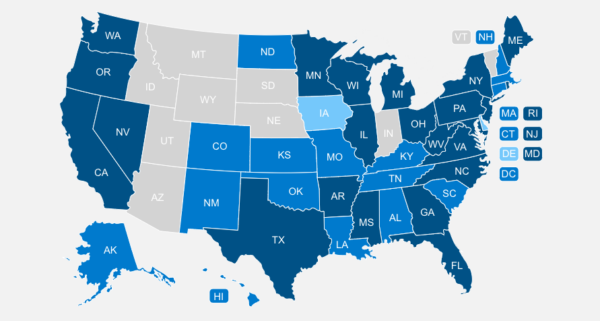

Cause Marketing and Commercial Co‑Venture by State: Essential Registration Requirements Guide
Cause-Marketing and Commercial Co-Venture in Massachusetts: Essential Registration Requirements Guide
At a Glance
Massachusetts requires businesses conducting commercial co-ventures to register with the Attorney General's Office before launching any charity-linked sales campaign. You must file Form 10 with a $200 fee, secure a surety bond, and submit each fundraising contract within 10 days of signing. Annual financial reports are due by February 28, and registration must be renewed by December 31.
Commercial co-ventures have become an increasingly popular way for businesses to boost sales while supporting worthy causes. However, Massachusetts has specific registration and reporting requirements that you must follow before promoting any charity-linked sales campaign. Specifically, the state requires initial registration with Form 10, a surety bond, contract filings, and regular financial reports.
Understanding these requirements is crucial for maintaining compliance and avoiding potential penalties. Throughout this guide, you'll discover exactly who qualifies as a commercial co-venturer under Massachusetts law, the step-by-step registration process, contract filing protocols, and how to properly report your fundraising activities. Furthermore, you'll learn about the annual renewal process that keeps your business in good standing with state regulators.
By following these guidelines, you'll be able to confidently launch cause marketing campaigns that benefit both your business and the charities you support.
Who Qualifies as a Commercial Co-Venturer in Massachusetts
Understanding precisely who qualifies as a commercial co-venturer is essential for businesses planning to engage in cause marketing activities in Massachusetts. The state has specific legal definitions and requirements that differentiate commercial co-venturers from other fundraising entities.

Definition under Massachusetts General Laws Chapter 68
Massachusetts General Laws Chapter 68, Section 18 provides the legal framework that defines commercial co-venturers. According to state law, a commercial co-venturer is any individual or business that, for profit or other commercial consideration, advertises that an event or sale to the public of a good or service will benefit a charitable purpose to any extent.
In more comprehensive terms, a commercial co-venturer means any person who—for profit or commercial consideration—conducts, produces, promotes, underwrites, arranges, or sponsors a performance, event, or sale to the public of goods or services that is advertised in conjunction with the name of any charitable organization or as benefiting any charitable purpose, as outlined in the Massachusetts Form 11B instructions.
It's worth noting that if your business will benefit in goodwill only (rather than financial profit), you might not be considered a commercial co-venturer—but only if the collection and distribution of proceeds are supervised and controlled by the benefiting charitable organization, according to the Massachusetts Form 11B instructions.
Examples of qualifying business activities
- Selling products where a portion of proceeds benefits a charity
- Hosting an event where ticket sales partially support a nonprofit
- Running a promotion where each purchase triggers a donation
- Advertising that your business's services will benefit a charitable cause
- Sponsoring a performance that is marketed as supporting a nonprofit organization
Massachusetts explicitly includes in its definition "any person who promotes the sale of any good or service which is advertised in conjunction with the name of any charity." This broad definition encompasses most businesses that associate their sales with charitable giving.
Distinction from professional fundraisers and fundraising counsel
Professional fundraisers are individuals or organizations hired specifically to solicit donations for charities. Unlike co-venturers, they don't necessarily sell products or services—their primary function is fundraising.
Fundraising counsel provides advice or consultation on solicitation campaigns but doesn't directly solicit or have access to contributions.
These distinctions are reflected in the different registration fees required by Massachusetts: commercial co-venturers pay $200 annually, professional fundraising counsel pay $400, and professional solicitors pay $1000. Additionally, commercial co-venturers need to file a surety bond with the state, a requirement they share with professional solicitors but not with fundraising counsel.
Prior to launching any campaign, ensure that the charity you're partnering with is properly registered and possesses a valid Certificate for Solicitation. This verification step is vital—if the charitable organization isn't required to register with the Attorney General's Office, you won't need to file Form 10B, contract documents, or Form 11B for that specific campaign. Nonprofits engaged in multi-state CCV campaigns may also need to maintain current charitable solicitation registrations in applicable states.
Initial Registration Requirements for CCVs
Beginning your commercial co-venture in Massachusetts requires completing several crucial registration steps with the state's Attorney General's Office. Once you've determined that your business qualifies as a commercial co-venturer, you must fulfill specific filing requirements before launching any charitable promotion campaign.
Form 10: Registration Statement Submission
The first step in registering as a commercial co-venturer involves submitting Form 10, officially titled "Registration Statement to be filed by Professional Solicitors, Professional Fund-Raising Counsel, and Commercial Co-Venturers" (see Massachusetts Form 10). This form serves as your initial registration document with the Non-Profit Organizations/Public Charities Division.
Form 10 must be submitted before any charitable solicitation activities can legally begin, per the Massachusetts Form 10 instructions. Essentially, a single registration covers all campaigns you conduct within the same calendar year, making it vital to file early if you're planning multiple promotions. The registration operates on a calendar-year basis, not from the date of submission.
Filing Fee: $200 Payment Methods
Your Form 10 submission must include a $200 filing fee. The Massachusetts Attorney General's Office accepts payment through several methods:
- Check or money order made payable to "Commonwealth of Massachusetts"
- Electronic payment (available only when using the Fundraiser Portal; see the Massachusetts Professional Fundraiser Guide)
When paying by check, ensure it's properly addressed to avoid processing delays. This fee covers your registration for one calendar year, regardless of how many charitable campaigns you conduct during that period.
Surety Bond Requirement via Form 9
Along with Form 10 and the filing fee, you must also submit a surety bond using Massachusetts Form 9. Massachusetts requires a surety bond as financial security, protecting both the Commonwealth and any charitable organizations that might have claims against you for improper conduct of solicitation activities. Rather than paying the bond's full amount upfront, businesses typically pay only a small percentage of the total bond value based on their creditworthiness, similar to paying an insurance premium. The surety company issuing your bond must be authorized to do business in Massachusetts.
Where and how to file: Email vs Fundraiser Portal
Massachusetts offers two primary methods for submitting your commercial co-venturer registration:
- Fundraiser Portal: The state's online submission system allows electronic filing and payment processing (see the Massachusetts Professional Fundraiser Guide).
- Email Submission: You can email your forms to professionalfundraiser@mass.gov. When using this method, you must still mail your $200 check payment to:
- Non-Profit Organizations/Public Charities Division
- One Ashburton Place
- Boston, MA 02108
Managing CCV requirements across multiple states can be complex. Labyrinth helps businesses prepare required filings, organize documentation, and track state-specific requirements to ensure accurate and timely compliance.
Once your registration is processed and approved, you'll need to file additional documents for each specific charitable campaign you undertake. These include Massachusetts Form 10B and copies of your fundraising contracts, which must be submitted within 10 days of signing and prior to beginning any charitable promotion.
Filing Fundraising Contracts with Form 10B
After completing your initial registration as a commercial co-venturer, you must file each fundraising contract you enter into with charitable organizations. Massachusetts law demands that these contracts be submitted as part of your ongoing compliance obligations. Form 10B serves as the official document for filing these agreements with state regulators.
When to file: 10 days after signing and before campaign starts
Timing is critical when filing your fundraising contracts in Massachusetts. You must submit Form 10B along with a copy of each contract within 10 days of signing the agreement. Most importantly, this filing must occur before you commence any co-venturing activities (see Massachusetts Form 10B).
This timeline ensures regulators have an opportunity to review the specific terms of your fundraising arrangement prior to the launch of your promotional campaign. Subsequently, no solicitation on behalf of the charitable organization may begin until the Form 10B has been properly filed.
The Massachusetts Attorney General's Office strictly enforces this requirement to protect both donors and charitable organizations. Failure to submit contracts within the specified timeframe could result in compliance issues for your business.

What to include in the contract
Massachusetts law mandates specific elements that must appear in every contract between a commercial co-venturer and a charitable organization. Each agreement must include:
- A clear statement of the charitable purposes to be described in the solicitation
- A guaranteed minimum percentage of the gross receipts from fundraising that will be used exclusively for the charitable purposes described in the solicitation
These requirements ensure transparency about how funds will be allocated. The contract serves as a formal commitment regarding the financial arrangement between your business and the charity.
Filing your contract alongside Form 10B provides state regulators with visibility into the specific terms of your agreement. This oversight helps maintain the integrity of charitable fundraising in Massachusetts.
Indeed, some states allow commercial co-venturers to avoid certain filings by including specific terms in their contracts. Massachusetts, nevertheless, requires both the contract submission and Form 10B regardless of contract contents.
Multiple campaigns: Separate Form 10B for each
For businesses conducting multiple charitable campaigns throughout the calendar year, documentation requirements multiply accordingly. You must file a separate Form 10B and contract for each individual campaign you conduct.
Although you only need to submit one Form 9, Form 10, and filing fee for the entire calendar year, the individual campaign documentation requirements remain distinct. Each campaign requires:
- A unique Form 10B submission
- A copy of the specific contract for that campaign
- A separate Form 11B (financial report) after the campaign concludes
This approach enables state regulators to track each promotional campaign independently. Furthermore, it ensures that the specific terms of each charitable arrangement receive proper oversight.
The Form 10B filing does not require an additional fee—it carries no cost beyond your initial registration fee. You can submit these forms either online through the state's portal or by mail to the Attorney General's Office.
As a final consideration, you should verify that your charity partner is properly registered with Massachusetts authorities. If the charitable organization is not required to register with the Attorney General's Office, then you won't need to file Form 10B, contracts, or Form 11B for that specific campaign.
Annual Financial Reporting with Form 11B
Financial accountability forms a cornerstone of Massachusetts' commercial co-venture regulations. Once you've conducted charitable promotions, you must document the financial outcomes through mandatory reporting requirements.
Form 11B: What financial data is required
Massachusetts Form 11B, titled "Commercial Co-venturer's Annual Financial Report," requires specific financial information about your charitable campaigns. The form must clearly document:
- Total payments made to the charitable organization from the commercial co-venture as of the calendar year's end
- A concise description of the co-venture campaign
- An explanation of how the donation amount was calculated
- Whether any expenses were paid out of the charitable contribution
For instance, if your company donated $5.00 per product with 1,000 units sold, resulting in a $5,000 contribution to the charity, you would need to document this calculation methodology.
Form 11B must be properly notarized to be considered valid. Moreover, the form requires signatures from authorized officers representing the charitable organization. This signature requirement serves as verification that the charity acknowledges and confirms the financial information presented.
Deadline: February 28 of the following year
Form 11B must be submitted by February 28 of the year following the reporting year. This deadline remains consistent regardless of when during the previous year your campaign occurred. For example, even if your campaign ended in March, you still have until February 28 of the following year to file.
No fee is required when submitting Form 11B. You can file either by email to professionalfundraiser@mass.gov or through the online Fundraiser Portal.
Reporting for multiple campaigns
If you conducted multiple charitable campaigns within a single calendar year, separate reporting is mandatory. You must file a distinct Form 11B for each campaign conducted. This requirement allows the state to assess how funds were handled for each individual promotion. Consequently, each Form 11B should contain the specific financial details pertaining only to that particular campaign.
Despite requiring separate Form 11Bs for each campaign, all reports share the same February 28 deadline. As a result, organizing your financial documentation throughout the year proves essential for efficient reporting.
Renewing Your CCV Registration Annually
Maintaining your status as a commercial co-venturer requires yearly renewal with Massachusetts authorities. Once registered, you cannot simply assume your status continues indefinitely.
Form 10 Re-submission for renewal
To maintain your legal standing as a commercial co-venturer, you must resubmit Form 10 annually (see Massachusetts Form 10). This renewal process uses the identical form as your initial registration. Yet, unlike your first submission, the renewal serves to extend your authorization to conduct charitable sales promotions throughout Massachusetts. The state processes registrations on a calendar-year basis, thus each renewal grants permission for the following calendar year.
When renewing, you'll need to submit the same Form 10 document marked as a renewal application. The renewal filing keeps Massachusetts records current and reinforces long-term accountability for organizations engaged in repeated fundraising efforts.
Annual deadline: December 31
The deadline for submitting your renewal application is December 31. This cutoff date applies regardless of when you initially registered during the year (see Massachusetts General Laws c. 68, §24).
Filing methods remain consistent with your initial registration—either through email submission to professionalfundraiser@mass.gov or via the online Fundraiser Portal. The renewal fee is $200, identical to the initial registration cost.
Avoiding late penalties and maintaining compliance
To maintain compliance:
- Mark your calendar with the December 31 deadline
- Begin renewal preparation at least one month in advance
- Ensure payment is properly submitted with your renewal form
Compliance extends beyond simply renewing your registration. Remember that Form 11B financial reports remain due by February 28 for each campaign conducted in the previous year. Simultaneously maintaining both renewal and reporting requirements keeps your co-venturing activities fully compliant with Massachusetts regulations.
Conclusion
Navigating the commercial co-venture requirements in Massachusetts demands careful attention to multiple filing obligations and deadlines. Throughout this guide, you've learned that qualifying businesses must complete Form 10 registration, secure a surety bond, and pay a $200 filing fee before promoting any charity-linked sales campaigns.
Additionally, each fundraising contract requires proper documentation through Form 10B within 10 days of signing and certainly before campaign launch. This process ensures transparency between your business and charitable partners while maintaining compliance with state regulations.
Financial accountability remains equally important. Form 11B submissions by February 28 document your campaign outcomes, calculation methodologies, and total payments made to charitable organizations. Remember that separate reports must be filed for each individual campaign conducted during the calendar year.
Furthermore, your registration requires annual renewal by December 31, regardless of when you initially registered. This deadline allows seamless continuation of your charitable promotions without interruption or potential penalties.
Compliance with these requirements protects both your business and the charitable organizations you support. When executed properly, commercial co-ventures create mutually beneficial relationships that boost your business visibility while supporting worthy causes. The registration process, though detailed, ultimately safeguards donors' trust and ensures that charitable contributions reach their intended destinations.
For more than 35 years, Labyrinth has been helping businesses and nonprofits navigate complex compliance requirements with confidence. Our experienced team provides expert guidance on CCV filings, disclosure requirements, and multi-state coordination, allowing you to focus on creating successful campaigns that benefit both your business and charitable partners.
Following these guidelines enables you to confidently develop cause marketing campaigns that benefit your business while making meaningful contributions to charitable organizations throughout Massachusetts. The effort invested in proper registration and reporting demonstrates your commitment to ethical business practices and philanthropic responsibility.

Frequently Asked Questions
