
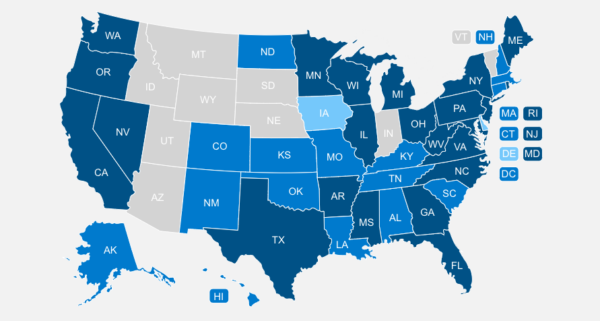

Cause Marketing and Commercial Co‑Venture by State: Essential Registration Requirements Guide
Cause-Marketing and Commercial Co-Venture in Michigan: Essential Registration Requirements Guide
At a Glance
Michigan does not require traditional state registration for commercial co-venturers, unlike many other states. However, if your activities qualify as professional fundraising, you must obtain licensing, secure a surety bond, and comply with contract filing requirements. Professional fundraiser licensing involves specific documentation and annual renewals, while standard commercial co-ventures focus primarily on proper contracting and recordkeeping obligations.
Are you planning to boost your business through a commercial co-venture with a charity in Michigan? Partnering with charitable organizations can significantly increase customer engagement while supporting worthy causes—a win-win for everyone involved! However, before launching your promotion, you need to understand Michigan’s specific regulatory landscape.
Commercial co-ventures in Michigan are subject to state regulations that protect both charities and consumers. Specifically, these partnerships require proper documentation, timely filings when applicable, and ongoing compliance with the Michigan Charitable Organizations and Solicitations Act. As a business owner or marketing professional, you must navigate these requirements carefully to avoid potential penalties while maximizing the benefits of your charitable promotion.
Throughout this guide, you’ll discover everything you need to know about commercial co-venture compliance in Michigan. From understanding when professional fundraiser licensing applies to contract filing deadlines and financial reporting obligations—we’ll walk you through each step of the compliance process. Additionally, you’ll learn about important exemptions that might apply to your situation and the recordkeeping responsibilities you’ll need to fulfill.
Navigating CCV requirements can be complex, but expert guidance helps streamline the process. We support businesses and nonprofits with state-specific CCV filings, compliant disclosure language, and contract guidance that meets regulatory standards.
Understanding Commercial Co-Venturers in Michigan
Commercial co-ventures represent a unique partnership between for-profit businesses and charitable organizations. Understanding the legal framework governing these relationships in Michigan is essential for maintaining compliance while maximizing their benefits.

Definition under Michigan Charitable Organizations and Solicitations Act
A commercial co-venturer (CCV) refers to any person or entity that, for profit, advertises that the purchase or use of certain goods or services will benefit a charitable organization or purpose, according to Michigan records management guidance. In simpler terms, when your business promotes that a portion of sales will support a charity, you’re engaging in a commercial co-venture arrangement.
The Michigan Charitable Organizations and Solicitations Act establishes the regulatory framework for these partnerships. Although Michigan doesn’t currently require traditional registration for commercial co-venturers at the state level, you still need to comply with other regulations before and after fundraising events.
Nevertheless, the legal foundation for these activities remains important. Commercial co-ventures typically involve a written contract between the business and charity, which should include specific terms to protect both parties and the public.
Difference between Co-Venturer and Professional Fundraiser
Understanding the distinction between a commercial co-venturer and a professional fundraiser is crucial since each faces different regulatory requirements.
Professional fundraisers in Michigan are defined as persons who plan, conduct, manage, or carry on solicitation campaigns for charitable organizations in exchange for compensation. Furthermore, they include those who hold themselves out as independently engaged in soliciting contributions. Professional fundraisers must obtain licensing and bonding before conducting solicitation campaigns in Michigan.
In contrast, commercial co-venturers operate differently. As a commercial co-venturer, you’re primarily engaged in trade or commerce for profit and conduct charitable sales promotions as an additional activity. Your core business isn’t fundraising—instead, you’re incorporating charitable giving into your existing business model.
The key difference lies in your primary business purpose. If you’re a business that occasionally runs promotions benefiting charities, you’re likely a co-venturer. If your primary business is raising funds for charities, you’re likely a professional fundraiser requiring registration.
Examples of Charitable Sales Promotions
- Percentage-based donations: When businesses donate a percentage of purchases to a named charity through an ongoing rewards program.
- Product-specific contributions: Donating a fixed amount from the sale of a specific product to support charitable efforts.
- Point conversion programs: Allowing customers to convert loyalty points into charitable donations.
- Round-up campaigns: Inviting customers to round up purchases at registers with proceeds benefiting partner charities.
Importantly, these promotions should be structured with concrete donation amounts (such as $0.10 per item sold or 1% of net sales) rather than vague promises. Additionally, the charity must be clearly specified—not just a general category like “environmental charities.”
For such arrangements to be sound, they should be detailed in written contracts that outline specific terms, particularly in states with commercial co-venture regulations.
Who Must Register as a Commercial Co-Venturer
Unlike many other states, Michigan does not currently impose a traditional registration requirement specifically for commercial co-venturers at the state level. Nonetheless, this doesn’t mean you can proceed with a charitable sales promotion without understanding the regulatory landscape. Despite the absence of direct registration requirements, your business must still adhere to other regulations before and after fundraising events.
Revenue Thresholds Triggering Registration
For the charitable organizations you partner with, registration thresholds become extremely relevant. Organizations soliciting or receiving contributions in Michigan generally must register with the Department of Attorney General, per the Michigan Attorney General’s charitable organizations guidance. Notably, these organizations may qualify for exemption if they receive less than $25,000 annually and use only volunteers for fundraising. This threshold directly impacts your commercial co-venture planning—if your promotion pushes a previously exempt charity over this threshold, registration becomes mandatory.
When CCV activity occurs across multiple states, nonprofits should be aware that they may need active charitable solicitation registration in various jurisdictions, especially if the promotional activity is considered solicitation under state law. We help track varying requirements across multiple jurisdictions to ensure complete compliance for your charitable partner.
Moreover, under Michigan’s statute, charitable organizations that meet financial thresholds must provide accountant-prepared financial statements with their registration: contributions of at least $300,000 require reviewed (or audited) statements and contributions of at least $550,000 require audited statements (amounts effective January 1, 2025, per periodic increases) (see MCL 400.273(2)(j) and (3)(a)).
Exemptions for Charitable Organizations
Understanding exemption criteria remains crucial for planning your commercial co-venture. The Michigan Charitable Organizations and Solicitations Act exempts several types of organizations from registration requirements:
- Organizations requesting contributions solely for a named individual or family, with all fundraising conducted by unpaid volunteers, per the Michigan AG CTS-3 Request for Exemption.
- Educational institutions certified by the state board of education, per the Michigan AG CTS-3 Request for Exemption.
- Veterans organizations incorporated under federal law, per the Michigan AG CTS-3 Request for Exemption.
- Licensed hospitals (though health systems and affiliates typically don’t qualify), per the Michigan AG CTS-3 Request for Exemption.
- Governmental units or instrumentalities, per the Michigan AG CTS-3 Request for Exemption.
- Religious organizations or their integral affiliated groups, per the Michigan AG CTS-3 Request for Exemption.
Additionally, organizations may qualify for exemption if they don’t invite the general public to become members and confine solicitations to members, directors, and immediate families, as outlined in the Michigan AG CTS-3 Request for Exemption. Organizations receiving funds exclusively from another registered charitable organization likewise qualify for exemption.
Impact of Online Solicitations in Michigan
In this digital age, online solicitations deserve special attention. Soliciting through websites, social media, or email counts as solicitation under Michigan law. Consequently, even if your commercial co-venture operates primarily online, it still falls under relevant regulations.
For charitable organizations incorporated outside Michigan but conducting online solicitations reaching Michigan residents, registration might be required unless they “never hold assets in Michigan,” per the Michigan AG CTS-3 Request for Exemption. This provision affects your co-venture strategy, especially for multi-state or national campaigns.
Given varied requirements across states, your Michigan-based commercial co-venture should be structured with careful consideration of both local regulations and potential multi-state implications, especially if your promotion crosses state lines via online platforms.
Initial Registration Process for Co-Venturers
The paperwork process for commercial co-ventures in Michigan might seem complex at first glance. Although Michigan doesn’t require traditional registration for commercial co-venturers, your business must follow certain filing procedures, particularly if your arrangement resembles that of a professional fundraiser rather than a standard commercial co-venture.
Required Forms: CTS-11 and CTS-07
- Form CTS-11 (Professional Fundraiser Contract Summary Sheet): If a professional fund raiser is retained, Michigan law requires the charitable organization to file a copy of the professional fund raiser contract with the Attorney General within 10 days after execution; the Attorney General uses Form CTS-11 to summarize these contracts (see MCL 400.273(2)(i)). This filing requirement applies to professional fund raiser contracts; it does not apply to charitable sales promotions that do not involve a professional fund raiser.
- Form CTS-07 (Application for License of Professional Fundraiser): If your activities meet Michigan’s definition of a professional fund raiser (MCL 400.272(f)), you must be licensed before soliciting, which entails submitting Michigan Form CTS-07: Application for License of Professional Fundraiser. If you’re merely advertising that purchases support a charity (a charitable sales promotion) and are not soliciting contributions as a professional fund raiser, this licensing requirement typically does not apply.
The distinction hinges on your role: as a consultant who merely advises but doesn’t solicit funds, you might avoid licensing requirements altogether.
Surety Bond Requirement
If your commercial co-venture activities require professional fundraiser licensing, you must secure a surety bond (MCL 400.287(1)), per the Michigan Attorney General’s professional fundraisers guidance. This bond serves as financial protection for both the charity and consumers against potential misconduct. Rather than paying the full bond amount, registrants typically pay only a small percentage of the bond’s total value as a premium, similar to insurance, with the actual percentage based on creditworthiness and other factors.
The surety bond must be properly executed with:
- Your business listed as the principal
- A recognized surety company as the guarantor
- A power of attorney form signed by the surety
The bond ensures that if your business fails to remit promised funds or violates regulations, the affected parties have recourse to recover financial damages. For renewals, you’ll need to provide a continuation certificate showing the bond remains active through the next licensing period, as outlined in Michigan Form CTS-07 instructions.

Filing with the Michigan Attorney General
All required forms must be submitted to the Michigan Attorney General’s Consumer Protection Team – Charitable Trust Section (517-335-7599, michigan.gov/consumerprotection). Filing methods include:
- Mail submission to the department’s physical address
- Online filing through the Michigan Attorney General’s website, where available
Because Michigan does not require a standalone commercial co-venturer registration, there is no separate state CCV registration fee. Professional fund raiser licensing and related filings are currently processed without an agency fee.
Timeline for Submission Before Campaign Start
Timing is critical when planning your commercial co-venture. First-time registrants should allocate approximately 1-2 months prior to their promotion’s launch date to complete any required licensing and contract-related filings. This buffer period allows sufficient time for:
- Securing the necessary surety bond (if professional fund raiser licensing applies)
- Preparing and executing the contract with the charitable organization
- Filing any required professional fund raiser contract documents within 10 days of execution (if applicable)
- Addressing any questions or requests for additional information from regulators
Furthermore, understanding future obligations is important. If your campaign continues long-term, plan for annual reporting requirements and potential renewals of any applicable licenses, as noted in the Michigan professional fundraisers guidance.
We help coordinate these timelines and requirements, ensuring that all necessary documentation is prepared accurately and submitted on schedule to maintain compliance from the outset.
Through appropriate planning and timely submission, your commercial co-venture can proceed smoothly while maintaining full compliance with Michigan’s regulatory framework.
Contract Filing and Disclosure Requirements
Establishing clear contractual relationships forms the foundation of successful commercial co-ventures in Michigan. Once you’ve determined your registration status, you must focus on creating proper documentation that meets state requirements.
Mandatory Contract Elements with Charities
Your commercial co-venture contract with a charitable organization should contain several essential components to remain compliant with Michigan regulations. According to best practices, these contracts should include:
- Scope of Work: Clearly define services, deliverables, and timelines to ensure both parties understand expectations.
- Compensation and Payment Terms: Outline payment structure, fees, expenses, and whether payments depend on specific fundraising goals.
- Compliance with Laws: Include clauses requiring adherence to relevant laws and regulations.
- Confidentiality and Data Security: Specify provisions for protecting donor information and sensitive data.
- Termination and Dispute Resolution: Define conditions for contract termination and processes for resolving disputes.
For the most part, your contract should also include financial details like the percentage or dollar amount of total funds collected that will be retained for purposes other than the charity’s benefit.
Filing Deadlines for Co-Venturer Agreements
Timing is crucial for contract filings. These contracts must be finalized and signed before beginning any charitable sales promotion. In Michigan, law requires both the professional fund raiser and the charitable organization to keep copies of professional fund raiser contracts, and the charitable organization must file a copy with the Attorney General within 10 days after execution (MCL 400.274; MCL 400.273(2)(i)). During a charitable sales promotion, certain states may also require interim financial reporting, especially for campaigns lasting longer than one year.
Retention Period for Contracts and Records
Record retention remains a vital aspect of compliance. Under Michigan law, true and correct copies of professional fund raiser contracts must be kept on file during the term of employment and for six years after solicitation terminates (MCL 400.274). In addition, persons subject to the Act must maintain accurate and detailed books and records open to inspection by the Attorney General (MCL 400.278). Maintaining accurate and current books documenting all activities conducted under any charitable contract is essential.
Record retention serves a dual purpose: it protects your business during potential audits and provides necessary documentation if the Attorney General requests accounting information from your charitable sales promotion, which can happen at their discretion.
Financial Reporting and Annual Renewal Obligations
Maintaining compliance for your commercial co-venture extends beyond initial registration and contract filing. Regular financial reporting and timely renewals are essential components of Michigan’s regulatory framework.
Campaign Financial Statement (CTS-10) Requirements
Form CTS-10: Campaign Financial Statement must be submitted to the Michigan Attorney General’s Charitable Trust Section within 90 days after a campaign conducted by a licensed professional fund raiser ends; for ongoing campaigns lasting more than one year, a CTS-10 is filed annually on the anniversary of commencement, consistent with the Michigan professional fundraisers guidance. This financial report must include:
- Comprehensive details about fundraising methods used
- Complete financial information including gross receipts
- All campaign costs paid to or retained by fundraisers
- Campaign costs incurred separately by the charity
- Net amount ultimately delivered to the charitable organization
The form requires certification from both the fundraiser and charity that all statements are accurate, complete, and true. False statements are prohibited by Michigan law and can result in both civil and criminal penalties.
Annual Renewal Form and Fee Structure
A professional fund raiser license expires annually on June 30 (MCL 400.287(1)). To maintain active status, submit a renewal application before this expiration date, alongside a bond continuation certificate confirming your surety bond remains active, as described in the Michigan professional fundraisers guidance. Currently, Michigan does not charge a filing fee for these renewals, making this primarily a documentation rather than financial obligation.
Penalties for Late or Non-Compliance
Failure to comply with Michigan’s reporting requirements can trigger several consequences, including civil and criminal penalties, potential license revocation preventing future fundraising activities, and damage to your business reputation and relationship with partner charities.
Recordkeeping Duration and Audit Readiness
Properly maintaining records is crucial for audit readiness. Michigan law requires persons subject to the Act to maintain accurate and detailed books and records open to inspection by the Attorney General (MCL 400.278). Copies of professional fund raiser contracts must be retained for six years after solicitation terminates (MCL 400.274). The Attorney General’s office can request accounting information from your charitable sales promotion at any time, making proper recordkeeping essential to demonstrating compliance.
Beyond legal requirements, proper documentation protects both your business and the charitable organization in case of disputes or regulatory inquiries. We assist with organizing contracts, filing materials, and post-campaign records, helping partners stay compliant and audit-ready.
Frequently Asked Questions

Conclusion
Navigating the commercial co-venture landscape in Michigan requires careful attention to regulatory requirements despite the lack of traditional registration obligations. Throughout this guide, you’ve learned that Michigan operates differently from many other states regarding commercial co-ventures, yet still maintains specific compliance standards that protect both charities and consumers.
First and foremost, understanding the distinction between a commercial co-venturer and a professional fundraiser remains essential for determining your specific filing obligations. While commercial co-venturers may avoid the rigorous registration process professional fundraisers face, you still need proper documentation, especially when your promotional activities blur these lines.
Contract filing stands as a cornerstone of compliance. If a licensed professional fund raiser is involved, the charitable organization must file a copy of the contract with the Michigan Attorney General within 10 days after execution, and both parties must retain the contract for six years after solicitation ends. Otherwise, Michigan does not require filing co-venturer agreements with the state.
Financial reporting follows closely behind in importance. For campaigns conducted by licensed professional fund raisers, CTS-10 submissions within 90 days after campaign completion—and annually for campaigns lasting more than a year—provide transparency about fundraising activities. Undoubtedly, keeping meticulous records throughout your campaign supports these reporting requirements and prepares you for potential audit requests from the Attorney General’s office.
Record retention deserves significant attention as well. The statutory six-year retention period applies to professional fund raiser contracts, and all persons subject to the Act must maintain accurate and detailed books and records open to inspection. Therefore, establishing organized recordkeeping systems before launching your campaign saves considerable stress later.
The consequences of non-compliance can be severe, including both civil and criminal penalties that might significantly impact your business. Additionally, maintaining proper registration and reporting protects your company’s reputation while building trust with charitable partners and customers alike.
Commercial co-ventures offer a wonderful opportunity to combine business growth with social impact. Managing these requirements effectively often benefits from experienced guidance to ensure accuracy, timeliness, and clarity in meeting all obligations. Labyrinth can help coordinate multi-state CCV compliance while reducing administrative burden, allowing you to focus on creating successful promotional campaigns that benefit everyone involved—your business, your charitable partners, and most importantly, the causes they support.
