
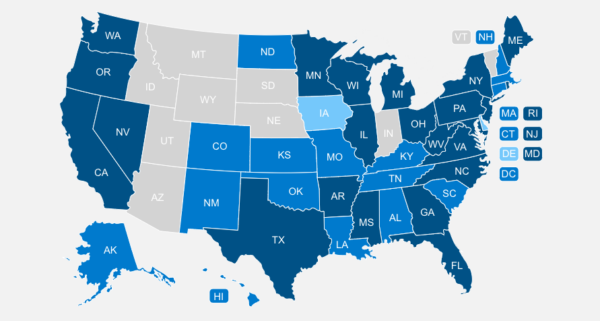

Cause Marketing and Commercial Co‑Venture by State: Essential Registration Requirements Guide
Cause-Marketing and Commercial Co-Venture in Missouri: Essential Registration Requirements Guide
At a Glance
Missouri does not require commercial co-venturers to register directly with the state, unlike many other jurisdictions. However, your business must still comply with contract filing requirements, financial reporting duties, and ensure your charitable partner maintains proper registration with the Missouri Attorney General’s Office. Written agreements and transparent financial documentation remain essential for legal compliance.
Are you planning a marketing campaign that promotes charitable giving in Missouri? Commercial co-ventures offer powerful opportunities to boost your brand while supporting good causes, but they also come with specific legal responsibilities you need to understand.
Commercial co-venture arrangements in Missouri require careful navigation of state-specific registration requirements and reporting obligations. Specifically, these partnerships between businesses and charities must comply with Missouri’s Charitable Organizations and Solicitations Law (RSMo §§ 407.450–407.478), which governs charitable solicitations in the state. Additionally, understanding the distinction between being a co-venturer versus a professional fundraiser can significantly impact your compliance obligations.
Throughout this guide, you’ll discover the essential registration procedures, contract filing requirements, financial reporting duties, and renewal processes necessary to conduct legal charitable promotions in Missouri. By mastering these regulatory requirements, you’ll protect your business from potential penalties while maximizing the positive impact of your cause marketing campaigns.
What Qualifies as a Commercial Co-Venture in Missouri
Understanding what constitutes a commercial co-venture under Missouri law forms the foundation for proper compliance with state regulations. Commercial co-ventures represent a unique partnership model that requires careful attention to legal definitions and distinctions from other fundraising arrangements.

Definition under Missouri Revised Statutes § 407.453
In Missouri, a commercial co-venture occurs when a for-profit business partners with a charitable organization to support charitable causes while generating commercial goodwill. Though Missouri Revised Statutes § 407.453 doesn’t explicitly define “commercial co-venturer” in its definitions section, the concept is nevertheless recognized in state law as distinct from other fundraising relationships.
Essentially, commercial co-ventures involve arrangements where a business advertises that the purchase or use of its goods or services will benefit a charitable organization or purpose. These partnerships serve dual purposes: allowing the for-profit entity to align with customer interests through social responsibility, while providing financial support to the charity.
Furthermore, commercial co-ventures typically feature several common characteristics:
- A share of revenue being donated to a charitable organization
- Charitable events underwritten by businesses
- Activities advertised to benefit a charitable organization in any amount
Distinction between CCVs and Professional Fundraisers
Missouri law clearly differentiates commercial co-venturers from professional fundraisers. According to Missouri Revised Statutes § 407.453, a “professional fund-raiser” is defined as “any person who is retained under contract or otherwise compensated by or on behalf of a charitable organization primarily for the purpose of soliciting funds.”
The key distinctions include:
Commercial co-venturers primarily engage in trade or commerce for profit, not fundraising. Their core business is selling products or services, with charitable giving as a secondary activity. Moreover, they typically promote that purchasing their products or services will benefit a charity.
Professional fundraisers, however, are primarily hired for soliciting funds. The statute explicitly excludes “any bona fide employee of a charitable organization who receives regular compensation and is not primarily employed for the purpose of soliciting funds” from this definition.
Examples of Charitable Sales Promotions
Charitable sales promotions, the activities conducted by commercial co-venturers, take various forms in practice. These arrangements generally involve clear financial relationships between businesses and charitable organizations:
- Retail stores pledging to donate a percentage of purchase price to a charitable organization
- Businesses donating a specific amount per unit sold to a charity
- Companies underwriting charitable events while advertising their support
- “Buy one, give one” programs where purchases trigger donations of products
- Limited-time campaigns where portion of proceeds benefit specific causes
When structuring these promotions, remember that the charitable beneficiary must be clearly specified rather than using general categories like “charities supporting the environment.” Additionally, the donation amount must be concrete (such as $0.10 per item sold or 1% of net sales) rather than vague.
Initial Registration Requirements for CCVs
The regulatory landscape for commercial co-ventures in Missouri presents several nuances that businesses must understand before launching cause marketing campaigns. Managing CCV requirements can be complex, but experienced guidance helps navigate these requirements efficiently.
Is Registration Mandatory for All CCVs?
Unlike some states, Missouri takes a different approach to commercial co-venture regulation. Based on current state regulations, commercial co-venturers are not required to register directly with the Missouri Attorney General’s Office. This stands in contrast to several other states that maintain strict registration protocols specifically for commercial co-ventures.
Notably, although commercial co-venturers themselves don’t face direct registration mandates, they still must adhere to other regulations concerning their charitable promotions. The absence of a formal registration requirement doesn’t exempt businesses from contractual obligations, financial reporting, or other compliance duties related to charitable sales promotions.
The charitable organizations that co-venturers partner with, nonetheless, typically need to register unless they qualify for exemption. Consequently, businesses planning commercial co-ventures should verify their nonprofit partners’ registration status before launching joint promotions. It’s worth noting that when CCV activity occurs across multiple states, nonprofits may need active charitable solicitation registrations in those jurisdictions, as CCV campaigns can sometimes trigger solicitation requirements for the charitable partner.
Required Forms: Missouri Charitable Organization Registration
Since commercial co-venturers work closely with charitable organizations, understanding the registration requirements for these partners is essential. Most charitable organizations soliciting donations in Missouri must complete an Initial Registration Statement prior to beginning fundraising activities, as outlined in the Missouri Attorney General charity registration FAQs.
Several organizations are exempt from registration requirements, including:
- Organizations recognized as tax-exempt under §501(c)(3), (c)(7), or (c)(8) of the Internal Revenue Code (see the Missouri Attorney General charity registration FAQs)
- Religious organizations as defined by §407.453(5), RSMo (see the Missouri Attorney General charity registration FAQs)
- Educational institutions with defined curricula, student bodies, and faculty conducting regular classes (see the Missouri Attorney General charity registration FAQs)
- Hospitals and their auxiliaries (provided fundraising is conducted by employees or auxiliary members)
- Organizations governed by Chapter 130 (campaign finance law)
For non-exempt organizations, the Initial Registration Statement must include supporting documentation, particularly the IRS determination letter and Articles of Incorporation. Without proper registration, both the charitable organization and, potentially, the commercial co-venturer could face legal complications.
Filing with the Missouri Attorney General’s Office
The registration process involves submitting completed forms to the Missouri Attorney General’s Office (573-751-3321, ago.mo.gov), which serves as the guardian of all nonprofits in the state. For charitable organizations partnering with commercial co-venturers, the filing process includes:
- Submitting the Initial Registration Statement by mail
- Including a $15.00 fee payable to the “Merchandising Practices Revolving Fund”
- Obtaining notarization of the authorized signature on the form
Failing to properly register carries significant consequences. Charitable organizations soliciting without registration violate Missouri’s Merchandising Practices Act, potentially resulting in civil penalties of $1,000 per violation, solicitation bans, restitution requirements, and additional sanctions, as noted in the Missouri Attorney General charity registration FAQs. Each solicitation may be treated as a separate violation.
Even if your business doesn’t need to directly register as a commercial co-venturer, understanding these requirements remains crucial when developing cause marketing partnerships. Ensuring your charitable partner has fulfilled all registration obligations protects both parties and maintains the integrity of your promotional campaign.
Contract Filing and Disclosure Obligations
The contractual relationship between commercial co-venturers and charitable organizations forms a critical legal foundation for cause marketing campaigns. Proper documentation and timely filing of these agreements help protect both parties while ensuring transparency for consumers and regulatory authorities.
Written Agreement Requirements under § 407.453
A written contract serves as the cornerstone of commercial co-venture arrangements. Missouri, through its regulatory framework, recognizes the importance of formal agreements between for-profit entities and their charitable partners.
The written contract establishes the legal parameters of the relationship, defining each party’s responsibilities and protecting both organizations from misunderstandings or disputes. Importantly, this documentation creates an accountability mechanism that supports enforcement of the promised charitable contributions.
Beyond mere documentation, these contracts provide evidence that the charitable organization has authorized the use of its name and reputation in connection with the commercial entity’s products or services. This prevents unauthorized use of charitable brands in commercial promotions.

Timing of Contract Submission Before Promotion
For many states with specific filing requirements, contracts must be submitted before any solicitation or promotional activities commence. This advance filing ensures regulatory bodies can review the agreement terms before consumers are exposed to charitable claims.
Although Missouri-specific timing requirements aren’t explicitly detailed in state statutes, best practice dictates submitting any required documentation well ahead of campaign launch. This proactive approach allows time for regulatory review and any necessary adjustments to campaign materials.
Required Contract Elements: Duration, Scope, and Financial Terms
Commercial co-venture contracts must contain several key provisions to satisfy legal requirements. The most commonly required elements include:
- Goods or services offered to the public during the promotion
- Geographic territory covered by the promotional campaign
- Actual or estimated financial terms, including dollar amount or percentage of purchase price the charity will receive
- Minimum guarantee or donation cap details, if applicable
- Term dates specifying the promotion’s start and end points
- Provision for final accounting to the charity
- Fund transfer dates indicating when donations will reach the charity
The financial terms deserve particular attention, as they constitute the core promise to consumers. These terms should clearly articulate whether contributions represent a percentage of sales, a fixed amount per unit sold, or another financial arrangement.
Additionally, well-crafted contracts often address contingency plans for scenarios like underperforming campaigns. For example, the agreement might specify whether the nonprofit still receives promised percentages if sales fall below projected levels.
Duration specifications equally matter, as they define the timeframe during which promotional claims apply. One-time sales events typically face fewer regulatory hurdles than ongoing promotions, although regulatory requirements ultimately depend on specific state laws.
Completing these contractual obligations properly safeguards both parties while creating a transparent framework for charitable promotions that benefits both commercial interests and nonprofit causes.
Financial Reporting and Recordkeeping Duties
Proper financial documentation serves as the backbone of compliant commercial co-ventures in Missouri. Once your charitable promotion concludes, your recordkeeping responsibilities begin in earnest.
Retention of Records After Campaign
Commercial co-venturers should maintain comprehensive records related to their charitable sales promotions. While Missouri statutes do not specify a CCV-specific retention period, keeping complete records of advertisements, promotional materials, financial transactions, and relevant correspondence is a prudent practice so that charities can substantiate the amounts received if requested by regulators or donors.
Disclosure of Gross Proceeds and Net Contributions
Following your promotional campaign, transparency becomes paramount. Many jurisdictions impose disclosure and reporting requirements on charitable sales promotions, such as stating the amount or percentage that will benefit the charity in advertising and providing closing statements or accountings to the charity. Missouri’s charitable solicitation statutes do not set out CCV-specific advertisement or joint-reporting requirements, but charities and professional fund-raisers remain subject to the general provisions of RSMo §§ 407.450–407.478.
Accounting Format and Acceptable Documentation
Commercial co-venturers should retain documentation sufficient to demonstrate the funds due to and transferred to the charitable organization under the promotion (for example, sales reports with supporting bank or transfer records). The charity may also need this information for its own filings and financial reporting. Proper documentation helps ensure both parties can meet their respective compliance obligations efficiently.
Annual Renewal and Ongoing Compliance
Maintaining compliance with Missouri’s commercial co-venture regulations extends beyond initial registration and reporting requirements. After establishing your charitable promotion partnership, understanding ongoing obligations becomes vital for long-term legal compliance.
Renewal Timeline and Deadlines
Many states require annual renewals or notices for commercial co-venturers, with fees and deadlines that vary by jurisdiction. Missouri does not impose a specific commercial co-venturer renewal requirement.
Nevertheless, commercial co-venturers must ensure their charitable partners maintain current registrations. Charities registered with the Missouri Attorney General must renew annually within 75 days of their fiscal year end. For instance, charities with a December 31 fiscal year end must complete renewals by March 15.
Changes in CCV Information: When to Update
Throughout your commercial co-venture operations, certain events may require immediate notification to authorities. As a general principle, significant changes to your organization’s structure or promotional activities should prompt timely updates.
While Missouri doesn’t specify commercial co-venturer notification requirements, best practices include:
- Promptly informing charitable partners about material changes to promotion terms
- Documenting modifications to financial arrangements
- Updating contract information if promotion timelines change
- Notifying appropriate parties about changes in organizational contacts
Penalties for Late or Incomplete Renewals
Failing to maintain proper compliance can result in substantial consequences. For charitable organizations in Missouri, failure to submit timely renewals triggers a reinstatement process. Furthermore, organizations suspected of violating Missouri’s Charitable Organizations and Solicitations Law face potential investigations by the Attorney General.
Penalties for non-compliance may include:
- Civil penalties reaching $1,000 per violation
- Temporary restraining orders or injunctions
- Sequestering of funds or accounts
- Mandatory restitution to injured parties
- Fines up to $5,000 per violation for injunction breaches
Consequently, commercial co-venturers should carefully monitor compliance requirements, as their promotional activities directly impact their charitable partners’ regulatory standing. Establishing a compliance calendar marking key deadlines helps prevent costly oversights. At the same time, maintaining detailed records of all communications with regulatory authorities creates an audit trail that proves valuable during potential investigations.
Yet, despite these stringent requirements, properly managed commercial co-ventures continue to provide mutually beneficial opportunities for businesses and charitable organizations throughout Missouri.
Conclusion
Commercial co-ventures present valuable opportunities for businesses to support charitable causes while enhancing their brand reputation throughout Missouri. Though the state takes a distinctive approach by not requiring direct registration of commercial co-venturers with the Attorney General’s Office, your business still faces significant legal responsibilities.
First and foremost, understanding the fundamental difference between commercial co-ventures and professional fundraising remains essential. Your business primarily engages in trade or commerce while supporting charities secondarily, unlike professional fundraisers who primarily solicit donations.
Additionally, verifying your charitable partner’s registration status protects both parties from potential violations. Most charitable organizations must complete an Initial Registration Statement before fundraising activities commence, though certain religious, educational, and healthcare institutions qualify for exemptions.
Written agreements serve as the cornerstone of compliant charitable promotions. These contracts must clearly outline promotion duration, geographic scope, financial terms, and accounting provisions.
Financial transparency demands meticulous recordkeeping practices after campaign completion. Maintain promotional and financial records sufficient to substantiate the contributions transferred to the charity and to support the charity’s own reporting obligations.
Failure to meet these obligations carries substantial risks. Penalties may include civil fines reaching $1,000 per violation, temporary restraining orders, mandatory restitution, and solicitation bans.
Despite these regulatory requirements, well-executed commercial co-ventures benefit both businesses and charitable organizations. Accordingly, establishing a compliance calendar, maintaining comprehensive documentation, and ensuring transparent communication with charitable partners safeguards your business while maximizing positive community impact through strategic cause marketing initiatives.

Frequently Asked Questions
