
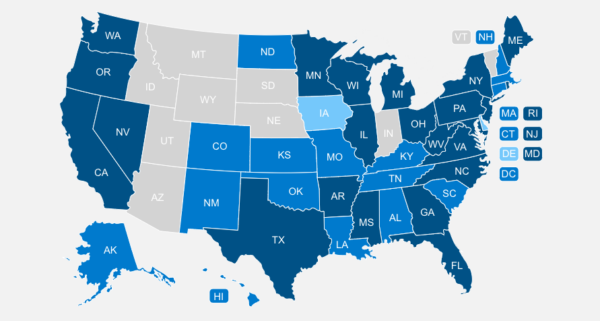

Cause Marketing and Commercial Co‑Venture by State: Essential Registration Requirements Guide
Cause-Marketing and Commercial Co-Venture in Montana: Essential Registration Requirements Guide
At a Glance: Montana does not require specific registration for commercial co-venturers at the state level, unlike approximately 22 other states. However, businesses must still maintain proper documentation, submit annual reports to the Secretary of State between January 1 and April 15, and ensure promotional materials comply with Montana’s consumer protection laws.
Are you planning to launch a commercial co-venture with a charity in Montana? When your business promises to donate proceeds from sales to a charitable organization, you’re entering the regulated world of commercial co-ventures. Before you announce your cause marketing campaign, you need to understand Montana’s specific registration requirements.
Montana law sets clear guidelines for businesses engaging in commercial co-ventures, specifically regarding initial registration, contract filing, and financial reporting obligations. Failing to comply with these regulations can result in penalties and damage to your brand reputation. Throughout this guide, you’ll discover the essential filing requirements, submission processes, and renewal obligations that keep your cause marketing efforts legally compliant in Montana. The good news? Once you understand these requirements, you can confidently create partnerships that benefit both your business and worthy causes.
Definition of Commercial Co-Venture in Montana Law
Commercial co-ventures represent a unique intersection of for-profit business activities and charitable giving. Understanding how Montana law defines and regulates these partnerships is essential for businesses planning cause-related marketing campaigns in the state.
Mont. Code Ann. § 30-14-701 Overview
Montana’s legal framework for commercial co-ventures differs from many other states. According to Montana Code Annotated § 30-14-702, the provisions primarily apply to mining or oil enterprises with finances derived from subscription and security sales to the public operating within Montana. Nevertheless, the broader concept of commercial co-ventures falls under Montana’s charitable solicitation regulations, though with less specific statutory language than found in other states.

The statute notably excludes certain entities from these provisions, including firms and corporations holding permits in good standing from the state securities commissioner or those securities listed on major exchanges such as the New York Stock Exchange or Chicago Stock Exchange.
What Qualifies as a Commercial Co-Venture
In the context of Montana law and broader legal frameworks, a commercial co-venture typically refers to advertising or sales activities where a business represents that purchasing or using goods or services will benefit a charitable organization or cause in some specified amount. The business conducting such activities is known as a commercial co-venturer.
- Be primarily engaged in trade or commerce for profit (not primarily in fundraising)
- Conduct a charitable sales promotion or advertised event benefiting a charity
- Represent that purchases will result in donations to charitable organizations
For instance, a retail store pledging to donate a percentage of each purchase to a local charity would qualify as a commercial co-venturer. Unlike professional fundraisers, commercial co-venturers typically don’t solicit donations directly but rather incorporate charitable giving into their regular business activities.
Distinction Between CCVs and Professional Solicitors
Commercial co-venturers differ fundamentally from professional solicitors and fundraisers in several important ways. Professional solicitors primarily engage in direct fundraising activities, whereas commercial co-venturers are businesses whose main purpose is commercial profit-making, with charitable giving as a secondary activity.
Additionally, while professional solicitors typically work on behalf of charities to solicit donations directly from the public, commercial co-venturers incorporate charitable giving into their regular business operations. For example, a retail store announcing that “10% of all purchases this weekend will benefit the local food bank” is acting as a commercial co-venturer rather than a professional solicitor.
Unlike many other states, Montana does not currently maintain a traditional registration requirement specifically for commercial co-venturers at the state level. Despite this, businesses engaging in commercial co-ventures in Montana should still be aware that they may need to follow other regulations before and after fundraising events.
Although Montana’s requirements are less stringent than those in states with formal registration processes, commercial co-venturers should still maintain proper documentation of their charitable promotions.
Initial Registration Requirements for CCVs in Montana
Understanding the registration landscape for commercial co-ventures in Montana requires clarity about the state’s unique approach to regulating cause-related marketing arrangements. Unlike many states with extensive filing requirements, Montana takes a different path, making compliance more straightforward for businesses engaging in commercial co-ventures.
When Registration is Required
Contrary to what you might expect, Montana does not currently maintain a traditional registration requirement specifically for commercial co-venturers at the state level. This represents a significant departure from the regulatory framework found in other states that impose specific registration obligations.
Furthermore, while businesses engaging in commercial co-ventures elsewhere often face mandatory pre-campaign filings, Montana law does not explicitly mandate this process for cause marketing partnerships. Essentially, commercial co-venturer licensure is not required on the state level.
Nevertheless, this absence of specific registration requirements doesn’t mean complete freedom from regulation. Commercial co-venturers operating in Montana must still adhere to other regulations governing their promotional activities both before and after fundraising events. These regulations primarily focus on proper disclosure and financial accountability rather than formal registration.
Required Information for Initial Filing
Since Montana doesn’t mandate traditional commercial co-venturer registration, there’s no standard set of information required specifically for commercial co-venture filings. Instead, businesses should focus on:
- Proper business registration with the Montana Secretary of State (406-444-3665, sosmt.gov) if not already registered
- Documentation of the charitable partnership arrangement
- Preparation for potential disclosure requirements in promotional materials
- Recordkeeping systems for tracking promotion results
If your business is new to Montana, you’ll need to complete the standard business registration process through the Secretary of State’s office (see the Montana Secretary of State Business Services portal).
Montana Secretary of State Submission Process
To register a business with the Montana Secretary of State’s office, you must follow a structured online submission process (guidance available from the Montana Secretary of State Business Services Help Center).
First, visit the Montana Secretary of State’s online filing portal at https://biz.sosmt.gov/ to begin the process. You’ll need to sign into the portal using your existing username and password or create a new user account if you don’t already have one.
Once logged in, select the appropriate filing option based on your business type and whether you are forming a domestic entity or registering a foreign entity to do business in Montana.
During the form completion process, pay careful attention to all required fields marked with red asterisks. After filling in all necessary information, submit your form for processing along with the applicable fee, which can be paid by credit/debit card or e-check.
The Secretary of State’s office will subsequently review your submission and, once approved, will notify you via email with instructions for accessing the approved documents from the online portal.
Should you encounter any questions during this process, the Secretary of State’s Business Services division is available to provide assistance at (406) 444-3665.
Ultimately, while Montana’s approach to commercial co-ventures involves fewer formal registration hurdles, businesses should remain vigilant about compliance with general business registration requirements and the proper documentation of charitable promotions.
Contract Filing and Notification Obligations
Every successful commercial co-venture begins with proper documentation. The legal foundation of your charitable promotion campaign lies in having proper contracts and meeting specific filing obligations.
Written Agreement Requirement Before Promotion
Written contracts form the cornerstone of legitimate commercial co-ventures. Some states require the nonprofit and the commercial co-venturer to file a copy of the contract governing the arrangement before any sales take place. However, Montana does not mandate filing CCV contracts with a state agency.
The written agreement between your business and the charitable organization serves multiple purposes:
- It documents the responsibilities of each party
- It clarifies how contributions and revenue will be split
- It creates legal accountability for the sales promotions
- It protects both parties in case of disputes
In some jurisdictions, contracts must include certain disclosures or terms, but the required content varies by state. We help organize contracts and filing materials to ensure they meet state-specific requirements and maintain compliance across multiple jurisdictions.
The basic requirement across jurisdictions is that any commercial co-venture arrangement should be detailed in a written contract, though specific terms vary from state to state.
Filing Location and Accepted Formats
In some states implementing commercial co-venture regulations, contracts need to be filed with the appropriate state agency. Generally, this means submitting documentation to either the Secretary of State’s office or the Attorney General’s office, depending on specific state requirements. Montana has no state-level filing requirement for CCV contracts.
For contract submissions where required, most states accept standard formats including:
- Hard copy submissions through mail
- Digital submissions through official portals
- PDF format for electronic submissions
Clearly, the contract between your business and the charitable organization must be accessible for review by regulatory authorities upon request.

Timeline for Contract Submission
Timing matters significantly in commercial co-venture contract filing. In jurisdictions that require contract filings, timelines vary and may require submission before the start of promotional activities. Montana does not prescribe a contract filing timeline for CCVs because there is no state-level filing requirement.
Failure to meet applicable filing timeline requirements in states that regulate CCVs can result in penalties. Hence, maintaining proper documentation and meeting all filing deadlines becomes crucial for protecting your business reputation and avoiding legal complications where such rules apply.
Overall, your commercial co-venture’s compliance depends on having properly executed written agreements and understanding whether any state-specific filing obligations apply.
Financial Reporting and Disclosure Rules
Beyond initial registration and contract filing, commercial co-ventures face financial reporting and transparency considerations. Maintaining proper financial records ensures both businesses and charities remain accountable throughout their partnership.
Final Accounting Obligations for CCVs
After completing a charitable sales promotion, reporting obligations depend on the jurisdiction. Montana does not require commercial co-venturers to file a closing statement with a state agency. In other states, post-campaign reports may be required and can include:
- Detailed disclosure of gross receipts
- Itemization of expenditures incurred
- Final calculation of amounts transferred to the charity
Some jurisdictions also require joint financial reports signed by both the commercial co-venturer and the charitable organization.
Consequently, commercial co-venturers should establish clear accounting processes before launching promotions. Tracking sales accurately throughout the campaign period facilitates easier final reporting and strengthens partner relationships. We assist with organizing post-campaign records to support transparency when promotional activities span multiple states with varying requirements.
Record Retention Periods
Recordkeeping expectations vary by state. Montana law does not set a CCV-specific record retention period for private businesses. Montana’s Records and Information Management guidance concerns public records of state and local government, not private companies. In the absence of a state-specific mandate for CCVs, adopt consistent business recordkeeping practices and retain documentation long enough to satisfy any applicable contractual, tax, or general business requirements (see the Montana Records and Information Management retention guidance).
Disclosure Requirements in Promotional Materials
Some states mandate specific disclosures in promotional materials for charitable sales campaigns. Montana does not have a statute that specifically prescribes CCV promotion disclosures; however, Montana’s consumer protection law prohibits unfair or deceptive acts or practices, so clear disclosures help avoid deception in advertising (see the Montana Unfair Trade Practices and Consumer Protection Act).
Annual Renewal and Fee Structure
Maintaining compliance for your commercial co-venture in Montana involves understanding the renewal process, fee structure, and potential consequences of non-adherence. Unlike other states with specific commercial co-venture renewal systems, Montana follows a different approach that businesses should understand.
Renewal Timeline and Deadlines
Montana does not currently require traditional commercial co-venturer registration renewal at the state level. Yet, businesses operating as commercial co-venturers must still adhere to Montana’s general business filing requirements. These include submitting annual reports to the Secretary of State’s office to maintain active business status.
For Montana businesses, annual reports must be filed between January 1 and April 15 each year (date windows and filing guidance are available in the Montana Secretary of State Business Services Help Center). This requirement applies to all limited liability companies and corporations (both profit and nonprofit) operating in the state. The annual report serves as a renewal of your registration information, allowing you to update:
- Business mailing address
- Registered agent information
- Shares and principals of record
In contrast to Montana’s approach, states with formal commercial co-venture regulations may require renewals by specific dates—such as Alabama by September 30, California by January 15, Massachusetts by December 31, and South Carolina by the anniversary of initial registration.
Fee Amounts and Payment Methods
The Montana Secretary of State’s office processes annual report filings with associated fees. For payment processing, Montana accepts multiple methods, including credit/debit cards and electronic checks through the online portal.
Consequences of Non-Compliance
Failing to maintain proper registration and renewal can lead to serious repercussions. Primarily, if an annual report is not submitted on time, the business registration may be administratively dissolved. This dissolution affects all business operations, including commercial co-venture activities.
For businesses facing administrative dissolution, Montana offers a reinstatement pathway subject to statutory limits. Reinstatement generally requires filing all missing annual reports and a reinstatement application, and may require tax clearance from the Montana Department of Revenue.
Beyond administrative dissolution, non-compliance with charitable solicitation regulations can potentially result in civil penalties, publicly announced cease and desist orders, or even loss of ability to raise funds in the state.
Conclusion
Commercial co-ventures in Montana present a unique regulatory landscape compared to other states. Throughout this guide, we’ve examined how Montana’s approach differs significantly from states with specific registration requirements.
While Montana doesn’t mandate traditional commercial co-venturer registration at the state level, you must still adhere to general business regulations and maintain proper documentation of your charitable promotions. This reduced regulatory burden certainly doesn’t mean complete freedom from oversight. Rather, your business must focus on transparency and financial accountability when launching cause marketing campaigns.
Written agreements remain essential before beginning any charitable promotion. Although Montana does not require contract filings for CCVs, having a clear agreement helps protect both your business and the charity partner. Establishing clear terms regarding responsibilities and revenue splits beforehand helps prevent future disputes.
Financial reporting obligations for CCVs are state-specific. Montana does not require CCV closing statements, but keeping thorough records and using clear, non-misleading disclosures in your promotional materials supports compliance with Montana’s consumer protection laws. For businesses operating multi-state campaigns, understanding when CCV activity may require nonprofit partners to maintain charitable solicitation registrations in various jurisdictions helps ensure comprehensive compliance.
Despite fewer specific co-venture requirements, you must still file annual reports with the Montana Secretary of State between January 1 and April 15 to maintain active business status. Failing to meet these obligations could result in administrative dissolution, affecting all your business operations including charitable promotions.
Understanding these requirements allows you to create meaningful partnerships with charitable organizations while remaining legally compliant. Though Montana’s regulatory approach may seem less demanding than other states, your diligence in documentation, transparency, and general business compliance will support successful cause marketing campaigns that benefit both your business and worthy charitable causes.

Frequently Asked Questions
