

Cause Marketing and Commercial Co‑Venture by State: Essential Registration Requirements Guide
Cause-Marketing and Commercial Co-Venture in Nebraska: Essential Registration Requirements Guide
At a Glance
Nebraska does not require commercial co-venturers to register with the state before conducting charitable sales promotions. However, you must maintain proper documentation between parties and transparency in advertising. Even without formal registration requirements, maintaining transparent promotional materials and written agreements with nonprofit partners remains essential for compliance.
When your company promotes that a portion of sales will benefit a charity, you’ve entered the world of commercial co-ventures. However, these marketing campaigns come with specific legal requirements in Nebraska that you can’t afford to overlook. Unlike standard marketing initiatives, commercial co-ventures involve regulatory compliance at the state level, including registration procedures, contract filings, and financial reporting obligations.
Importantly, navigating these requirements doesn’t need to be overwhelming. Labyrinth combines expert guidance with streamlined processes to help businesses understand CCV filing requirements and assist nonprofits when CCV activity may affect their charitable solicitation registration obligations. Throughout this guide, you’ll discover exactly what qualifies as a commercial co-venture, whether registration is mandatory in Nebraska, what documentation you need to file, and how to maintain compliance with all reporting requirements. Additionally, you’ll learn practical tips for avoiding common pitfalls that could potentially derail your cause marketing campaigns.
Understanding Commercial Co-Venturers
What qualifies as a commercial co-venture
A commercial co-venture (CCV) occurs when a for-profit business advertises that the purchase or use of its goods or services will benefit a charitable organization. Specifically, a commercial co-venturer is any person or firm who, for profit, is regularly engaged in trade or commerce outside of fundraising activities and conducts charitable sales promotions that benefit nonprofit organizations.

These partnerships take various forms, but they all share a common element: the promise that consumer purchases will generate donations to a charitable cause. For instance, the well-known partnership between Apple and (RED), where a portion of proceeds from red products sold are donated to charity, exemplifies a commercial co-venture arrangement that has lasted over 12 years.
For an arrangement to qualify as a commercial co-venture, it must include:
- A for-profit business primarily engaged in commercial activities
- A charitable organization that will receive benefits
- Advertising that indicates purchases will support the charity
- A mechanism where sales or use of products/services generates donations
Importantly, if the commercial entity doesn’t receive any proceeds from sales and all funds go directly to the charitable organization, state laws regarding commercial co-ventures generally don’t apply.
How CCVs differ from professional fundraisers
Commercial co-venturers should not be confused with professional fundraisers or fundraising counsel, despite some similarities. The key distinction lies in their primary business purpose and regulatory treatment.
Professional fundraisers are primarily engaged in soliciting funds for charities, whereas commercial co-venturers are businesses whose primary activities are unrelated to fundraising. Consequently, CCVs face less stringent regulation than professional fundraisers or solicitors.
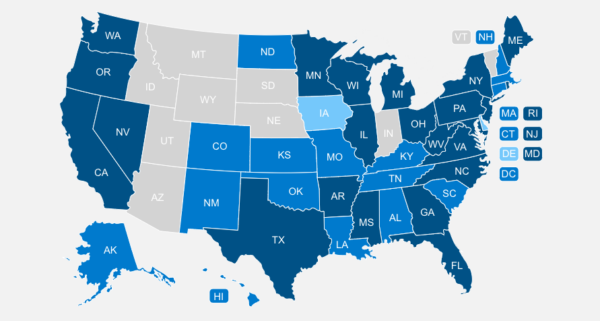
Professional fundraisers typically must register annually, post bonds in states where solicitations occur, make specific disclosures, maintain detailed financial records, and file regular reports. In contrast, commercial co-venturers are regulated in only about 24 states and the District of Columbia. These jurisdictions generally don’t require annual registration from CCVs.
Nevertheless, some states that don’t explicitly regulate commercial co-venturers may attempt to treat them as professional fundraisers, especially depending on the language used in promotions. To avoid this classification, it’s advisable to refrain from language suggesting that consumers are making direct contributions or donations to charities.
Why states regulate CCV activities
State regulation of commercial co-ventures exists primarily to protect consumers, charities, and the integrity of charitable giving. First, these regulations ensure transparency, helping consumers understand exactly how their purchases translate to charitable contributions.
Moreover, state laws aim to prevent deceptive practices. For example, it could be misleading to continue advertising a promotion after reaching a predetermined maximum donation cap. Alternatively, if a business guarantees a minimum donation regardless of actual sales, consumers might be misled if that minimum is unlikely to be exceeded.
States also regulate these activities to ensure charities receive the promised funds. Accordingly, many states require written contracts between the charity and commercial co-venturer that specify donation amounts, geographical scope, promotion timeframes, and distribution schedules.
Finally, failure to comply with state regulations can result in serious consequences, including fines and, in some states, even criminal penalties. Therefore, understanding and adhering to state-specific requirements is essential for both the for-profit company and the nonprofit organization involved in a commercial co-venture.
Nebraska’s Registration Requirements for CCVs
Is registration mandatory in Nebraska?
Unlike many states with strict registration protocols for commercial co-ventures, Nebraska takes a relatively hands-off approach. Currently, Nebraska does not require commercial co-venturers to register with the state before conducting a charitable sales promotion. This stands in contrast to states such as Alabama, Hawaii, Massachusetts, and others that maintain formal registration processes.
Although formal registration is not mandatory, this doesn’t mean you can operate without any regulatory oversight. Instead, Nebraska focuses more on proper documentation between parties and transparency in advertising rather than pre-approval registration processes.
As a commercial co-venturer in Nebraska, you should still maintain proper documentation of your charitable partnerships. Furthermore, since regulatory requirements can change, it’s advisable to periodically check with Nebraska’s Secretary of State office (402-471-2554, sos.nebraska.gov) or Department of Banking and Finance for any updates to charitable solicitation laws.
Who must register: nonprofits or CCVs?
While commercial co-venturers don’t need to register in Nebraska, the nonprofit organizations you partner with may have their own registration requirements. Most charitable organizations soliciting contributions in Nebraska must register with the state before fundraising activities commence.
The responsibility in a commercial co-venture partnership typically breaks down as follows:
- For nonprofits: Nebraska does not require statewide charitable solicitation registration. Charitable organizations should ensure proper organizational compliance (for example, corporate good standing) and check for any applicable local permitting or registration requirements before soliciting. They must also ensure proper accounting of funds received through commercial co-venture partnerships. Importantly, nonprofits engaged in multi-state CCV campaigns may need active charitable solicitation registrations in other jurisdictions where the activity is considered solicitation.
- For businesses (CCVs): Even without registration requirements, your business must maintain accurate records of all promotions, including sales figures, donation amounts, and promotional materials used during the campaign.
Both parties should enter into a written agreement specifying the terms of the promotion, including:
- The goods or services involved
- The timeframe of the promotion
- The exact donation amount or percentage
- The geographic scope
- When and how funds will be transferred to the charity
Exemptions and thresholds to know
Although Nebraska doesn’t require registration for commercial co-venturers, certain exemptions and thresholds still apply to charitable solicitations overall:
First, religious organizations, educational institutions, and certain membership organizations may be exempt from standard charitable solicitation requirements. If partnering with such organizations, verify their status before proceeding.
Second, consider whether your promotion crosses state lines. If your commercial co-venture operates in multiple states, you’ll need to comply with the regulations in each state where the promotion is advertised or conducted. Some neighboring states to Nebraska have more stringent requirements, including mandatory registration, contract filing, or posting a surety bond. For bonds, registrants typically pay only a portion of the bond’s total value—often just a small percentage based on creditworthiness—similar to an insurance premium.
Lastly, be mindful of minimum donation thresholds. Though Nebraska doesn’t specify minimum donation requirements, some states do require that a minimum percentage of proceeds actually benefit the charity. Offering extremely small percentages (like 1% of sales) might draw scrutiny even in less regulated states like Nebraska.
Even without formal registration requirements, maintaining transparency in all promotional materials is essential. Clearly disclose the specific donation amount or percentage, any maximum caps on donations, and the timeframe of the promotion to maintain consumer trust and comply with general advertising regulations.
Contract Filing and Notification Rules
When a written agreement is required
Even though Nebraska does not mandate the registration of commercial co-ventures, creating a written contract between your business and the nonprofit organization remains an essential best practice. While some states explicitly require written agreements prior to beginning charitable sales promotions, Nebraska takes a more flexible approach.
Indeed, this flexibility should not be mistaken for a lack of responsibility. Written agreements protect both parties and ensure clear understanding of the promotion’s terms. Subsequently, they provide crucial documentation should any questions arise about the handling of funds or promotional claims.
Without formal state requirements, many commercial co-venturers in Nebraska follow industry standards by establishing written contracts before launching any promotional campaign that benefits a charitable organization.

What must be included in the contract
A properly drafted commercial co-venture agreement typically includes several key elements to protect all parties involved:
- Clear identification of both the commercial co-venturer and the charitable organization
- Detailed description of the promotional campaign and its duration
- Specific financial arrangements, including exact donation amounts or percentages
- Geographic scope of the promotion
- Timeline for transferring funds to the charity
- Cancellation rights and procedures for both parties
- Provisions for record-keeping and financial reporting
Initially, your agreement should also address intellectual property concerns, primarily how the charity’s name and logo may be used in promotional materials. Additionally, the contract should outline any disclosure statements required for advertisements or product packaging.
Where and how to file the contract
Contrary to many other states, Nebraska does not currently require the filing of commercial co-venture contracts with any state agency. States such as Connecticut, Massachusetts, and New Jersey require contracts to be filed at least 10 days before a promotion begins, yet Nebraska has no comparable requirement.
Simultaneously, it’s worth noting that if your commercial co-venture extends beyond Nebraska’s borders, you may need to comply with contract-filing or notice requirements in other states before a promotion begins. Specific requirements and lead times vary by jurisdiction; consult the applicable state charity official or statutes in each state where the promotion will occur.
Evidently, keeping abreast of multi-state requirements becomes crucial when your promotion reaches consumers in multiple jurisdictions. Labyrinth helps coordinate these multi-state CCV requirements, ensuring proper filings and disclosures meet each jurisdiction’s standards. For nationwide campaigns, undoubtedly the most stringent requirements should guide your overall compliance strategy, even if Nebraska itself doesn’t require contract filing.
Financial Reporting and Disclosure Obligations
Are financial reports required in Nebraska?
In comparison to states with stringent reporting mandates, Nebraska takes a more lenient approach to financial reporting for commercial co-ventures. Currently, the state does not explicitly require formal financial reports to be filed with any government agency. This differs from states like New York, California, Massachusetts, and Illinois that have been more aggressive in enforcement of reporting requirements.
Nonetheless, as part of good business practice, you should maintain comprehensive records of all promotional activities and resulting donations. These records serve as protection in case questions arise about your campaign’s financial aspects.
In addition to state requirements, remember that nonprofit organizations have their own reporting obligations. The IRS Form 990 specifically asks whether the organization “invested in, contributed assets to, or participated in a joint venture or similar arrangement with a taxable entity during the year.” Hence, your nonprofit partner will need detailed information about the commercial co-venture to accurately complete their federal filings.
What to include in a campaign summary
Even without formal state requirements, a thorough campaign summary should document:
- Total units sold during the promotional period
- Calculation method used to determine charitable contributions
- Complete financial breakdown of funds generated and donated
- Dates of fund transfers to the charitable organization
- Any minimum or maximum donation thresholds that were applied
Typically, these summaries should be provided to the nonprofit partner at the conclusion of the promotional campaign. Some written agreements specify that accounting reports must be provided with each periodic payment to the charity.
Disclosure statements for public transparency
Transparency with consumers remains paramount in commercial co-ventures across all states. Most states regulating CCVs mandate that businesses conspicuously disclose specific financial details to the public. These disclosures must clearly state the amount per unit (either as a percentage of revenue or a dollar amount) that will benefit the charity.
For maximum consumer clarity, your promotional materials should include:
- Exact percentage or fixed amount going to the charity from each sale
- Any applicable minimum or maximum donation amounts
- The specific charitable purposes being supported
- The promotion’s duration (start and end dates)
Beyond legal requirements, transparent financial disclosures build consumer trust and enhance the effectiveness of your cause marketing efforts, creating authentic connections between your brand, customers, and charitable causes.
Annual Renewals and Ongoing Compliance
Renewal timelines and deadlines
While Nebraska doesn’t require commercial co-venturer registration or renewals, other states maintain strict schedules that you must follow if your campaign crosses state lines:
- Alabama: Renew annually by September 30 with a $100.00 fee
- California: Renew annually by January 15 with a $500.00 fee
- South Carolina: Renew annually by the original registration date with a $50.00 fee
- Massachusetts: Renew annually for campaigns soliciting funds in the state
Tracking these varying deadlines becomes crucial when operating in multiple jurisdictions. Presently, some states send renewal applications by mail approximately 45 days before due dates, yet missing them can result in penalties or fundraising restrictions.
Common mistakes to avoid
Several pitfalls frequently undermine compliance efforts for commercial co-ventures:
Missing deadlines tops the list of common errors, primarily due to poor tracking systems across multiple states. Equally problematic is submitting inconsistent information across state filings, which raises red flags with regulators.
Another frequent oversight involves forgetting required attachments such as financial statements, fundraising agreements, and copies of contracts with charitable partners. Such omissions often lead to rejected applications.
Tips for staying compliant year-round
Develop a calendar system specifically tracking each state’s deadlines, incorporating regular reminders as due dates approach. Essentially, consider using specialized compliance software that automates deadline tracking.
Maintain standardized information across all state filings by creating a single, accurate source for organizational details. Subsequently, ensure any updates are reflected in all jurisdictions where you’re registered.
Store all relevant documents—including contracts, promotional materials, and financial records—in a centralized document management system for quick access during renewals or audits. Fundamentally, this organized approach prevents oversights and ensures consistent information across all filings. Labyrinth provides expert guidance on multi-state CCV requirements and helps coordinate the preparation of required documents, reducing administrative burden for both businesses and nonprofits.
Conclusion
Commercial co-ventures present valuable opportunities for businesses and nonprofits alike, especially with Nebraska’s relatively straightforward regulatory framework. Although Nebraska doesn’t mandate registration for commercial co-venturers, you still need to maintain proper documentation and ensure transparent practices throughout your cause marketing campaigns.
First and foremost, written agreements between your business and charitable organizations serve as the cornerstone of compliant commercial co-ventures. These contracts should clearly outline donation amounts, promotion timeframes, and fund distribution schedules. Additionally, thorough financial record-keeping remains essential even without formal state reporting requirements.
States surrounding Nebraska often impose more stringent regulations, therefore your multi-state campaigns require careful attention to varying requirements. Most importantly, you must track registration deadlines, contract filing obligations, and financial reporting mandates for each jurisdiction where your promotion reaches consumers.
Consumer transparency stands as another critical aspect of successful commercial co-ventures. Your promotional materials should explicitly state the donation amount or percentage, maximum caps if applicable, and the specific timeframe of your campaign. This transparency not only fulfills regulatory expectations but also builds consumer trust in your cause marketing efforts.
Remember that charitable organizations have their own registration and reporting obligations. Consequently, providing them with accurate campaign data helps ensure their compliance with state and federal requirements. For nonprofits engaged in multi-state CCV activities, understanding when these campaigns may affect charitable solicitation registration requirements becomes particularly important.
The success of your commercial co-venture ultimately depends on balancing marketing goals with regulatory compliance. Though Nebraska offers a more flexible environment than many states, adhering to industry best practices still safeguards your reputation and ensures smooth operations across state lines. By following the guidelines outlined throughout this article, you can create win-win partnerships that benefit your business, nonprofit partners, and the causes they support.

Frequently Asked Questions
