
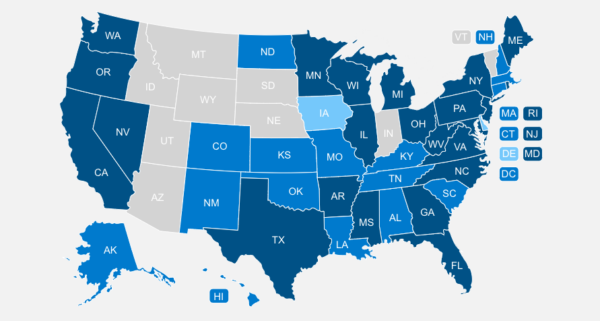

Cause Marketing and Commercial Co‑Venture by State: Essential Registration Requirements Guide
Cause-Marketing and Commercial Co-Venture in New Hampshire: Essential Registration Requirements Guide
At a Glance
New Hampshire does not require formal registration for commercial co-venturers, but you must file a notice with the NH Attorney General's Charitable Trusts Unit before launching any promotion. The charitable organization you partner with must be properly registered with the state. You'll also need a written agreement and must comply with specific advertising disclosure requirements during your campaign.
Are you considering a commercial co-venture to boost your business while supporting a worthy cause in New Hampshire? Commercial co-ventures offer an excellent opportunity to align your brand with charitable initiatives, creating mutual benefits for both your company and nonprofit partners. However, navigating the legal requirements for these partnerships in New Hampshire requires careful attention to specific regulations.
When your business advertises that purchasing a product or service will benefit a charity, you're entering into a commercial co-venture relationship that comes with certain legal responsibilities. Although New Hampshire doesn't require formal registration for commercial co-venturers specifically, there are still important filing requirements and contractual obligations you must follow. Additionally, the charitable organization you partner with must be properly registered with the New Hampshire Attorney General's Office.
Throughout this guide, you'll discover the essential requirements for commercial co-ventures in New Hampshire, including notice filings, contractual obligations, advertising disclosures, and recordkeeping practices. By understanding and following these guidelines, you can confidently launch charitable promotions that comply with state regulations while maximizing positive impact for both your business and your chosen cause.
Definition of a Commercial Co-Venturer in New Hampshire
Understanding exactly what constitutes a commercial co-venturer in New Hampshire is essential before engaging in these charitable marketing partnerships. The legal definition provides clarity on both your obligations and responsibilities under state law.

Legal definition under NH RSA 7:28-f
In New Hampshire, commercial co-venturers operate under specific legal parameters. Essentially, a commercial co-venturer refers to a relationship between a for-profit entity and a charitable organization where the business collects donations for the charity alongside the sale of its goods or services, as outlined by the New Hampshire Charitable Trusts Unit's fundraiser guidance. This arrangement creates a mutually beneficial partnership—the business gains marketing appeal through association with charitable causes, while the nonprofit receives financial support.
The legal framework defining commercial co-venturers in New Hampshire is referenced in Administrative Code § Jus 401.11, which states that a "commercial co-venturer" means "commercial co-venturer" as defined in RSA 7:21, III. Furthermore, this arrangement typically includes one or more of these common elements:
- A portion of sales revenue being donated to the charity
- A charitable event financially supported by a business
- Commercial activities advertised as benefiting a charitable organization
Unlike other states that may require formal registration processes, New Hampshire takes a more streamlined approach. The state does not currently mandate traditional registration requirements for commercial co-venturers at the state level. Nonetheless, other regulations before and after fundraising events may still apply.
Distinction between CCVs and professional fundraisers
A crucial distinction exists between commercial co-venturers and other fundraising entities such as professional fundraisers or fundraising counsel. First and foremost, commercial co-venturers face significantly less regulation compared to these other categories. Professional fundraisers and fundraising counsel typically must register annually, post bonds where solicitations occur, make specific disclosures with solicitations, maintain formal contracts with charitable organizations, file these contracts with the state, keep detailed financial records, and report to both the charitable organization and the state.
In contrast, commercial co-venturers operate under lighter regulatory requirements. They generally avoid classification as professional fundraisers because they don't receive direct payment or financial consideration from the charity itself. Instead, their relationship centers around the donation of a portion of proceeds from normal business operations.
One important caution: even without formal registration requirements, New Hampshire requires that any charitable organization engaging in a commercial co-venture relationship file a notice (Form NHCT-22) with the Charitable Trusts Unit along with a copy of the written agreement before the promotion begins, and the charitable trust must maintain a final accounting that can be provided to the Charitable Trusts Unit upon request. See the official Form NHCT-22 (Notice of Charitable Sales Promotion).
Initial Registration Requirements for CCVs
Once you understand what constitutes a commercial co-venture in New Hampshire, the next crucial step involves identifying the registration requirements that apply to your business partnership with a charitable organization.
No formal registration required for CCVs
In contrast to many states' regulatory frameworks, New Hampshire takes a more streamlined approach toward commercial co-ventures. The state does not currently mandate a traditional registration requirement for commercial co-venturers at the state level. This absence of formal registration simplifies the initial process for businesses looking to engage in charitable sales promotions within New Hampshire.
Nevertheless, this doesn't mean commercial co-venturers operate without any regulatory oversight. Throughout the campaign, you'll need to adhere to other requirements related to contractual arrangements and proper disclosures. The lack of registration simply means you won't need to complete an application or obtain a license specifically as a commercial co-venturer.
Charity must be registered with the NH Attorney General
Even though commercial co-venturers don't need to register, the charitable organization you partner with must be properly registered with the New Hampshire Attorney General's Office. Most states, including New Hampshire, consider charitable sales promotions as a form of charitable solicitation, therefore requiring charitable solicitation registration by the partnering nonprofit.
Prior to launching any commercial co-venture in New Hampshire, verify that your nonprofit partner:
- Has current registration with the NH Charitable Trusts Unit
- Is in good standing with state authorities
- Has authorized your business to conduct the promotion on their behalf
A charitable organization engaging in a relationship with a for-profit entity must maintain a copy of the contract and make it available to the Charitable Trusts Unit upon request. Refer to the Charitable Trusts Unit guidance for details.
Implications of non-registration for CCVs
Regardless of the absence of formal registration requirements, failing to comply with other commercial co-venture regulations can lead to consequences. Businesses that engage in commercial co-ventures without complying with applicable state requirements risk penalties, enforcement actions, and reputational harm.
Misrepresenting or failing to disclose the nature of the partnership or the exact benefits to the charity can lead to a loss of public trust. Without proper paperwork, the terms and conditions of your CCV partnership might remain unclear, potentially leading to disputes over profit sharing, branding use, and other partnership aspects.
Charitable Sales Promotion Notice Filing
While formal registration isn't required for commercial co-venturers in New Hampshire, filing a notice of charitable sales promotion represents an essential compliance step. This process ensures proper documentation and oversight of your charitable marketing campaigns.
Form NHCT-22 – Notice of Charitable Sales Promotion
The cornerstone of the filing process is Form NHCT-22, officially titled "Notice of Charitable Sales Promotion." Any charitable trust that permits a commercial co-venture must submit this form to the Charitable Trusts Unit along with a copy of the written agreement. Use the official Form NHCT-22.
Form NHCT-22 requires several key components:
- Contact information for both the charitable entity and the commercial co-venturer
- The charitable trust's NH Charitable Trusts Unit registration number
- Specific terms of the agreement, including commencement date
- Certification from an authorized representative
Moreover, the form includes a checklist verifying that your agreement contains all legally mandated elements. This checklist confirms inclusion of details about the goods/services offered, geographic area of the promotion, how the charity's name will be used, benefit structure (percentage or amount per unit), maximum benefit amount if applicable, estimated units to be sold, final accounting date, and the manner of conferring benefits to the charity.
Filing method: Online or by mail
New Hampshire provides two options for submitting your charitable sales promotion notice.
For online submission, visit the Charitable Trusts Unit forms page to access the electronic filing resources.
Alternatively, you may opt for traditional mail submission by downloading and completing the PDF version of Form NHCT-22, then mailing it to the New Hampshire Department of Justice Charitable Trusts Unit. Contact details are available on the forms page.

Filing fee and due date requirements
Timing and proper payment are crucial aspects of compliance. There is no state filing fee for submitting Form NHCT-22 in New Hampshire.
Regarding submission timing, the notice must be filed prior to the commencement of the charitable sales promotion. The form itself includes a field asking for the date the charitable sales promotion will commence, reinforcing the importance of advance filing.
In practical terms, this means your paperwork should be submitted before any advertising or marketing of the charitable sales promotion begins. Failure to file in advance could potentially result in compliance issues, so incorporating this filing step into your early planning process is advisable.
Remember that along with the form, you must also include a complete copy of the written agreement between your business and the charitable organization. This agreement serves as supporting documentation and must contain all the required elements previously outlined in the contract requirements section.
Contractual Obligations and Disclosures
The legal foundation of any commercial co-venture in New Hampshire lies in a properly executed contract between your business and the charitable organization. Beyond paperwork, your obligations extend to transparent advertising and diligent record maintenance.
Written agreement requirements between CCV and charity
Every commercial co-venture must begin with a formal written agreement signed by authorized representatives from both your business and the charitable trust. This contract must include several mandatory elements:
- Details about the specific goods or services offered to the public
- Geographic area where the promotion will occur
- Start and end dates of the offering
- Explicit description of how the charity's name will be used
- Clear representation of the actual or estimated dollar amount/percentage per unit that benefits the charity
- Maximum dollar amount benefiting the charity (if applicable)
- Estimated number of units to be sold or used
- Provision for final accounting on a per-unit basis
- Statement that the promotion is subject to state requirements
- Date and manner by which the benefit will be conferred
Careful crafting of this agreement forms the legal backbone of your promotion and protects both parties throughout the campaign.
Mandatory advertising disclosures during the campaign
During your promotional period, ensure all advertising clearly communicates the material terms of the promotion consistent with your written agreement. In practice, many campaigns highlight the charity's name, the benefit structure (percentage or amount per unit), the timeframe of the promotion, and any maximum caps on donations so consumers understand how purchases benefit the charitable organization.
Retention of records for audit purposes
After your campaign concludes, retain documentation of the promotion and ensure the charitable trust maintains a final accounting that can be provided to the Charitable Trusts Unit upon request. Records to preserve typically include the signed agreement, promotional materials, accounting records showing sales and charitable donations, and communications with the charity about the promotion.
Post-Campaign Reporting and Recordkeeping
After completing your charitable sales promotion in New Hampshire, your responsibilities as a commercial co-venturer don't immediately end. Understanding the post-campaign requirements helps ensure full compliance with state regulations.
No mandatory financial report filing for CCVs
New Hampshire's rules do not specify a post-campaign financial report filing by the commercial co-venturer. Instead, the charitable trust is expected to maintain a final accounting for the promotion and provide it to the Charitable Trusts Unit upon request.
Recommended best practices for financial transparency
- Provide your charity partner with a complete accounting of the promotion results
- Document the number of items sold and amount accrued from each sale
- Create clear financial statements showing total funds raised and transferred
- Maintain detailed tracking of all promotional activities and results
Record retention
Immediately upon concluding your campaign, begin organizing your documentation so that it remains accessible for potential examination by state authorities. Ensure the charitable trust maintains the final accounting for the promotion and can provide it to the Charitable Trusts Unit upon request when needed.
Conclusion
Establishing a commercial co-venture in New Hampshire offers your business a streamlined approach to charitable marketing compared to many other states. Throughout this guide, you've learned that while formal registration isn't required for commercial co-venturers specifically, certain important obligations still apply to your promotional campaigns.
First and foremost, your charitable partner must maintain proper registration with the New Hampshire Attorney General's Office Charitable Trusts Unit. Additionally, you must file Form NHCT-22 (Notice of Charitable Sales Promotion) before launching any promotional activities and include your written agreement with that filing. No fee is required for this notice.
Your written agreement with the charity deserves particular attention, as it must contain specific elements including geographic scope, timeframe, benefit structure, and accounting provisions. During the campaign, ensure your advertising clearly communicates how consumer purchases benefit the charitable organization and is consistent with your agreement.
After the promotion concludes, although New Hampshire does not mandate a formal financial report filing by the commercial co-venturer, the charitable trust should maintain a final accounting and related records and be prepared to provide them to the Charitable Trusts Unit upon request. These records protect both your business and the charitable organization should questions arise about the promotion.
Navigating CCV requirements can be complex, particularly when managing multi-state campaigns or ensuring nonprofits understand their charitable solicitation registration obligations. We help streamline the process by preparing required filings, organizing contract elements, and tracking state-specific requirements. With proper support, compliance becomes manageable, allowing you to confidently develop cause-related marketing initiatives that satisfy both regulatory requirements and your business objectives in the Granite State.

Frequently Asked Questions
