
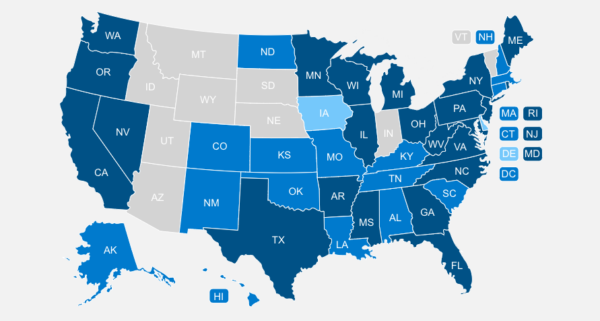

Cause Marketing and Commercial Co‑Venture by State: Essential Registration Requirements Guide
Cause-Marketing and Commercial Co-Venture in New Jersey: Essential Registration Requirements Guide
At a Glance
In New Jersey, commercial co-venturers must file a written contract with the Division of Consumer Affairs at least 10 days before starting their promotional campaign, along with a $30 filing fee. After the promotion ends, they must submit Form CCO-500 within 40 days with a $10 fee. All promotional materials must clearly disclose the specific dollar amount or percentage per unit that will benefit the charitable organization.
Commercial co-ventures offer exciting opportunities for your business to boost sales while supporting charitable causes. However, navigating the registration requirements in New Jersey can quickly become overwhelming if you’re unprepared. Many businesses enthusiastically jump into cause marketing partnerships without realizing the specific legal obligations they must fulfill.
Fortunately, understanding these requirements isn’t impossible. In New Jersey, commercial co-venturers must follow specific filing procedures, including initial contract registration, promotional reporting, and financial disclosures. Each step has strict deadlines and documentation requirements that you must meet to remain compliant. Importantly, failing to follow these regulations can result in penalties that diminish the positive impact of your charitable promotion.
This guide breaks down everything you need to know about commercial co-venture requirements in New Jersey. From initial registration and contract filing to reporting obligations and fee structures, you’ll discover the essential steps to ensure your cause marketing campaigns remain both successful and legally compliant. Let’s dive into the specific requirements you must fulfill before launching your next charitable promotion!
Legal Definition and Scope of Commercial Co-Ventures in NJ
Definition under NJ Statutes § 45:17A-29
New Jersey’s fundraising statute directly addresses cause-related marketing through comprehensive legal provisions. According to N.J.S.A 45:17A-29, a “charitable sales promotion” refers to an advertising or sales campaign conducted by a commercial co-venturer that represents that the purchase or use of goods or services offered will benefit a charitable organization or purpose. This statute establishes the foundation for how these partnerships must operate within the state.

The law requires every charitable organization permitting a charitable sales promotion on its behalf to obtain a written contract from the commercial co-venturer. Furthermore, this contract must be filed with the Division of Consumer Affairs Charities Registration Section at least 10 days before starting the promotion.
Who qualifies as a commercial co-venturer?
Not every business-charity partnership constitutes a commercial co-venture. New Jersey law provides a specific definition to determine qualification. A “commercial co-venturer” is defined as any person who, for profit or other consideration, is regularly and primarily engaged in trade or commerce other than fundraising, and who advertises that the purchase or use of their goods, services, or entertainment will benefit a charitable organization.
Key qualifications include:
- Primary engagement in normal business activities (not fundraising)
- Operating for profit or other consideration
- Advertising that purchases or use of products/services benefits a charity
- Having a formal agreement with the charitable organization
Essentially, this covers most businesses that promote “a portion of proceeds going to charity” or similar campaigns, regardless of industry. The definition encompasses retailers, service providers, manufacturers, and virtually any for-profit entity that advertises charitable benefits from purchases.
Activities that trigger registration requirements
Several specific activities trigger charitable sales promotion contract filing requirements in New Jersey. The primary trigger is conducting a “charitable sales promotion,” which the law defines as any advertising or sales campaign representing that purchases will benefit a charitable cause, as outlined in the New Jersey Form CCO-500 instructions.
Specifically, registration requirements activate when:
- You advertise that purchases of your products or services will benefit a charity
- You establish a formal agreement with a charitable organization
- You plan to promote the charitable connection in marketing materials
The core registration requirement involves the written contract filing with the Attorney General’s office. This must occur at least 10 days prior to beginning the promotional campaign. Additionally, the contract must clearly state that all parties are subject to the provisions of P.L.1994, c.16 (C.45:17A-18 et seq.) and any rules adopted pursuant to it.
The commercial co-venturer must also disclose in each advertisement the dollar amount or percent per unit that will benefit the charitable organization. Consequently, vague statements like “a portion of proceeds will be donated” without specific amounts are insufficient under New Jersey law.
Initial Contract Filing Requirements
Mandatory written agreement between charity and co-venturer
Every commercial co-venture in New Jersey requires a formal contract between both parties. This isn’t merely a good business practice—it’s a legal necessity. The most fundamental requirement for any commercial co-venture arrangement is that it must be detailed in a written contract. This document serves as the official framework for your partnership and protects both your business and the charitable organization.
The written contract establishes clear expectations regarding the promotion’s structure, the responsibilities of each party, and the financial arrangements. Moreover, this document becomes the cornerstone of your compliance efforts, as New Jersey law mandates its submission to regulatory authorities. Without this formal agreement, your charitable promotion risks violating state regulations regardless of good intentions. Labyrinth assists organizations in preparing these essential contract components to ensure state compliance requirements are properly addressed.
Filing deadline: 10 days before promotion starts
Timing matters significantly in commercial co-venture compliance. New Jersey law establishes a strict timeline for contract submission. You must file a copy of your agreement with the Division of Consumer Affairs Charities Registration Section (609-292-3020, njconsumeraffairs.gov) at least ten days prior to the initiation of your charitable sales promotion. See the New Jersey Division of Consumer Affairs charities registration information for details.
This ten-day window is a pre-campaign submission requirement. Unlike some states that require fifteen days or allow for post-campaign filings, New Jersey specifically mandates this pre-campaign submission. The filing must occur within the specified timeframe.
Filing too late may result in your promotion being considered non-compliant, despite meeting all other requirements. Therefore, building this deadline into your campaign planning timeline is essential for proper execution of your cause marketing initiative.
Required contract elements under CRI Act
The Charitable Registration and Investigation Act (CRI Act) outlines specific components that must be included in your commercial co-venture contract. Although New Jersey doesn’t provide a standardized form for these agreements, certain elements are mandatory under state law.
Your contract must include:
- Names and addresses of both the charitable organization and commercial co-venturer
- Clear beginning and expiration dates for the agreement
- A detailed description of the charitable sales promotion, including start and end dates
- The dollar amount or percentage per unit that will benefit the charity
- A provision for the commercial co-venturer to report the total income generated
- A statement clearly indicating that all parties are subject to the provisions of P.L.1994, c.16 (C.45:17A-18 et seq.) and any rules adopted pursuant to it
In fact, New Jersey specifically requires that every contract contain a provision “clearly and conspicuously stating that the parties are subject to this act and any rules adopted pursuant thereto.” This statement affirms that both parties acknowledge their legal obligations under state law.
Upon completing your agreement, you must submit it along with a $30 contract filing fee. File through the Division of Consumer Affairs Charities Registration Section as outlined on the New Jersey Division of Consumer Affairs charities registration information page. Notably, there is no specific form required for this submission—simply provide the complete contract as finalized between your business and the charitable organization.
Promotion Reporting and Disclosure Obligations
Form CCO-500: What it includes and who signs it
The cornerstone of your post-promotion reporting is Form CCO-500, officially titled “Report of Charitable Sales Promotion Commercial Co-Venture.” This mandatory document captures the financial results of your charitable campaign. Access the form and instructions via the New Jersey Form CCO-500.
The form requires several key pieces of information:
- Names and registration numbers of both parties
- Contract date range
- Description of merchandise sold
- Number of units sold
- Dollar amount or percentage donated per unit
- Gross income/sales generated
- Net amount provided to the charity
Form CCO-500 must be completed and certified as instructed on the form.

Timeline for final and interim reports
Your reporting obligations follow strict deadlines based on campaign duration. For standard promotions, the charitable organization must file Form CCO-500 within 40 days after the conclusion of the charitable sales promotion.
For extended campaigns lasting more than 12 months, New Jersey requires interim reporting. In such cases, file interim reports within 40 days following the end of the charity’s fiscal year. Subsequently, you may submit the final report either within 40 days after contract expiration or at the end of the last fiscal year covered by the agreement.
Remember that each report submission must include a $10 filing fee. This fee applies to both interim and final reports, regardless of campaign duration or size.
Disclosure of estimated vs. actual donation amounts
Beyond reporting to regulators, New Jersey law mandates specific disclosures in your promotional materials. Each advertisement must clearly state the dollar amount or percentage per unit that will benefit the charitable organization.
In cases where the exact contribution cannot be determined before the campaign concludes, you must provide a reasonable estimate. This estimate must reflect all relevant facts known to both your company and the charitable organization. Vague statements like “a portion of proceeds” without specific percentages violate New Jersey requirements. See the disclosure guidance within the Form CCO-500 instructions.
Financial Reporting and Fee Structure
Filing fee for contract submission: $30
Every commercial co-venture arrangement necessitates payment of a filing fee when submitting your contract documentation. The New Jersey Division of Consumer Affairs requires a $30 fee for all contract filings. See the New Jersey Division of Consumer Affairs charities registration information for current fee details.
Indeed, this $30 fee applies to various contract situations, including:
- Initial contract submissions
- Contract extensions or amendments to previously filed contracts (see the Division of Consumer Affairs charities FAQ)
The fee remains consistent regardless of promotion size or duration. This payment must be processed alongside your contract documentation at least 10 days before your promotion begins.
Promotion report fee: $10
Upon completion of your charitable sales promotion, a separate fee applies for mandatory reporting requirements. Each Form CCO-500 report submission requires payment of a $10 filing fee. See the New Jersey Division of Consumer Affairs charities registration information for details.
Hence, for longer promotions requiring multiple interim reports, each separate report filing necessitates its own $10 payment. This fee structure remains consistent regardless of the promotion’s financial success or the amount ultimately donated to the charity.
Who pays and how to submit
In conjunction with understanding fee amounts, determining responsibility for payment is equally important. Under New Jersey regulations, the charitable organization bears primary responsibility for filing both the contract and the promotion report. As such, the charity typically handles fee payment, even though the commercial co-venturer may prepare documentation. Refer to the Form CCO-500 instructions for filing guidance.
Compliance Challenges and Best Practices
Common mistakes in contract language
Many businesses undermine their compliance efforts through poorly drafted agreements. One frequent error involves using generic templates found online without legal review. These standardized forms often lack New Jersey’s required provisions, especially the mandated statement that “the parties are subject to the Act and the rules of this chapter” as set out in the New Jersey charitable fundraising regulations. Another common mistake is inadequate definition of donation amounts. Your contract must explicitly state the “dollar amount or percent per unit of goods or services purchased” that will benefit the charity. Vague language around financial obligations creates both legal exposure and consumer confusion.
Additionally, commercial co-venturers often neglect to include complete campaign timeframes or proper provisions for final accounting. Without these elements, your otherwise compliant promotion may still violate state regulations. Labyrinth helps ensure contract language meets all required elements and supports both businesses and nonprofits in understanding how CCV activity may affect broader compliance obligations.
Late filing penalties and how to avoid them
Failure to meet filing deadlines can trigger monetary penalties. Every registration renewal filed after the due date may incur a $25 late fee as reflected in the New Jersey Division of Consumer Affairs charities registration information and the New Jersey charitable fundraising regulations. Beyond monetary penalties, late filings are considered violations of the CRI Act and may be subject to additional enforcement actions.
To avoid these consequences, mark your calendar with critical deadlines. The 10-day requirement for contract submission remains non-negotiable. Furthermore, promotion reports must be filed within 40 days after campaign conclusion. For campaigns lasting over 12 months, interim reports must be submitted within 40 days of the charity’s fiscal year-end.
Using compliance services to streamline filings
Given these complexities, many businesses turn to specialized compliance services. These providers offer support by identifying which states require registration, preparing necessary documentation, and managing all filing deadlines. Professional compliance services typically handle contract submissions, notices of solicitation, and post-campaign financial reports.
Some services advance state filing fees on your behalf, simplifying financial management. Throughout the process, dedicated compliance partners maintain records of all submissions and provide dashboard tracking of your compliance status across multiple jurisdictions. Labyrinth provides expert guidance for managing these multi-state CCV requirements, helping prepare required filings, review contract elements, and ensure both businesses and nonprofits understand their compliance obligations. Additionally, when CCV activity affects charitable solicitation registration requirements for nonprofit partners, our team helps coordinate these interconnected compliance needs.
Frequently Asked Questions

Conclusion
Commercial co-ventures present valuable opportunities for businesses to support charitable causes while driving sales growth. Nevertheless, compliance with New Jersey’s specific requirements remains essential for successful implementation.
Throughout this guide, you’ve discovered the comprehensive framework governing cause marketing partnerships in New Jersey. The state defines commercial co-venturers as profit-seeking entities that advertise charitable benefits from their products or services. This definition triggers specific obligations that protect both consumers and charitable organizations.
First and foremost, you must establish a written agreement with your charitable partner that includes all required elements under the CRI Act. Subsequently, filing this contract at least 10 days before your promotion begins, along with the $30 fee, ensures initial compliance. Additionally, Form CCO-500 reporting within 40 days after your promotion concludes, accompanied by the $10 filing fee, fulfills your post-campaign obligations.
The financial structure of these requirements remains straightforward: $30 for contract submission and $10 for each promotion report. Though relatively modest, these fees represent mandatory components of your compliance strategy.
Undoubtedly, navigating these requirements demands careful attention to detail. Common pitfalls include inadequate contract language, missed filing deadlines, and insufficient disclosure of donation amounts. Therefore, implementing robust tracking systems or partnering with compliance services can significantly streamline your regulatory responsibilities. Labyrinth serves as a trusted partner for organizations navigating these complex CCV requirements, providing expert guidance on filings, disclosures, and multi-state coordination.
Above all, properly executed commercial co-ventures benefit everyone involved. Your business gains positive brand association, charitable organizations receive vital funding, and consumers enjoy supporting worthy causes through their purchases. By following New Jersey’s registration requirements, you ensure your cause marketing initiatives remain both legally compliant and ethically sound.
