
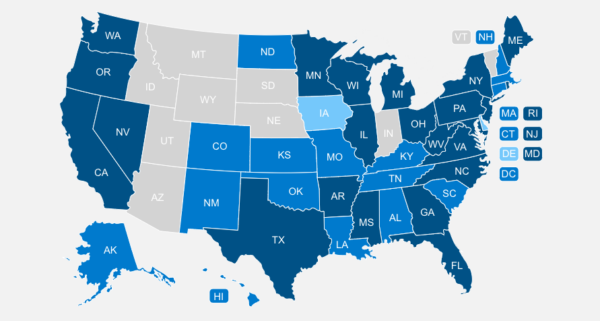

Cause Marketing and Commercial Co‑Venture by State: Essential Registration Requirements Guide
Cause-Marketing and Commercial Co-Venture in New York: Essential Registration Requirements Guide
At a Glance
New York does not require commercial co-venturers to register with the Attorney General’s office or file a surety bond. However, you must establish a written contract with your charity partner, maintain accurate records for three years, and provide detailed accounting within 90 days after your campaign ends. Transparent disclosure of donation amounts to consumers is mandatory throughout the campaign.
A commercial co-venture occurs when your business advertises that purchasing your product or service will benefit a charity. However, New York strictly regulates these arrangements to protect consumers and charitable organizations. Before launching your cause marketing campaign, you must understand specific registration requirements, contract filings, and reporting obligations mandated by New York state law.
Throughout this guide, you’ll discover the essential requirements for commercial co-venturers in New York. Specifically, we’ll explore initial registration processes, contract filing necessities, reporting timeframes, and the forms required by the New York Attorney General’s office. Additionally, we’ll highlight common compliance pitfalls that could cost your business significantly if overlooked.
Whether you’re planning your first charity partnership or refining your existing cause marketing strategy, this comprehensive guide will help you navigate New York’s commercial co-venture regulations with confidence.
Understanding Commercial Co-Ventures in New York
Commercial co-ventures represent a growing trend in cause-related marketing, yet understanding their legal framework in New York is essential for both businesses and nonprofits. These arrangements differ substantially from ordinary business partnerships, primarily because they involve public charitable solicitation.

What qualifies as a commercial co-venture
A commercial co-venture occurs when a for-profit business advertises that purchasing its products or services will benefit a charitable organization. Essentially, this happens whenever a business promises consumers that their purchase will trigger a donation to a specific cause. For instance, a restaurant stating that it will donate $1 to a food bank for every cup of coffee sold in November qualifies as a commercial co-venture. Similarly, a company that offers to donate 10¢ for every “like” on a social media site engages in a commercial co-venture as well.
These arrangements are sometimes referred to as “charitable sales promotions” or “cause marketing.” Approximately 24 states define and regulate commercial co-ventures, with New York having particularly specific requirements.
How New York defines and regulates co-venturers
According to New York Executive Law §171-a, a commercial co-venturer is defined as “any person who for profit is regularly and primarily engaged in trade or commerce other than in connection with the raising of funds or any other thing of value for a charitable organization and who advertises that the purchase or use of goods, services, entertainment, or any other thing of value will benefit a charitable organization.”
Unlike professional fundraisers, New York does not require commercial co-venturers to register with the Attorney General’s office. Nevertheless, the law mandates several important requirements:
- A written contract between the business and the charity is mandatory
- Accurate books and records must be maintained for at least three years after the end of the contract’s effective period
- Records must be available for inspection by the charitable organization and/or the Attorney General, and copies must be provided to the charity within seven days of its request
- An accounting must be provided to the charity within 90 days after the promotion ends
Furthermore, for promotions lasting longer than one year, the business must provide the charitable organization with an interim report at least annually.
Why these arrangements are legally significant
Commercial co-ventures carry substantial legal implications because they involve public statements about charitable contributions. Without proper compliance, your business could face penalties ranging from fines to potential criminal charges in certain states. Moreover, failure to meet reporting requirements can damage your company’s reputation and relationship with partner charities.
From the charity’s perspective, these arrangements must be carefully structured to avoid tax complications. The Internal Revenue Service may view improper endorsement of a business’s products as providing an impermissible private benefit, potentially jeopardizing the organization’s tax-exempt status. Additionally, poorly structured agreements could result in donation income being classified as Unrelated Business Taxable Income.
Beyond legal requirements, commercial co-ventures represent high-visibility partnerships. The public nature of these campaigns means that any missteps could lead to significant public relations damage, Attorney General enforcement actions, or even class action lawsuits. Consequently, ensuring proper documentation and compliance is not merely a legal formality but a business necessity.
Most importantly, the charity often bears the responsibility of educating their business partners about these regulations, since many companies are unaware that their charitable marketing agreements are subject to state laws. For organizations managing multi-state CCV campaigns, Labyrinth helps track varying requirements and reporting obligations across different jurisdictions.
Before You Begin: Pre-Campaign Requirements
Prior to launching your cause marketing campaign in New York, understanding the legal requirements is crucial to avoid penalties and protect both your business and the partnering charity. Preparing properly ensures your commercial co-venture complies with state regulations while maximizing the positive impact of your campaign.
Is registration required in New York?
Unlike several other states, New York does not require commercial co-venturers to register with the Attorney General’s office or file a surety bond. This is a significant advantage compared to states like Massachusetts, which mandates registration with the Attorney General and submission of the governing contract within 10 days of execution. Some states also require a surety bond, though registrants typically pay only a small percentage of the bond’s total value as a premium based on their creditworthiness. Although New York doesn’t require registration, you must still comply with other legal obligations to operate a compliant commercial co-venture.
First, ensure your partnering charity is properly registered with the New York Charities Bureau, as required by state law. Without this registration, your commercial co-venture may not be recognized as valid under state regulations. For nonprofits operating multi-state CCV campaigns, we help ensure proper charitable solicitation registration in all relevant jurisdictions for campaign validity.
Key elements of a written agreement
A written contract between your business and the charitable organization is mandatory under New York law before beginning any commercial co-venture. This requirement protects both parties and establishes clear expectations. The contract serves as the foundation for your partnership and must be maintained by both parties for three years following the campaign’s conclusion.
The agreement establishes the legal framework for your cause marketing campaign. While verbal agreements might seem sufficient, they don’t satisfy New York’s legal requirements and leave both parties vulnerable to misunderstandings and potential legal issues.
What to include in the contract
Your commercial co-venture contract must include these essential components:
- Names and addresses of both parties
- Beginning and expiration dates
- Clear description of services to be performed
- Detailed financial agreement outlining donation calculations
- Percentage or dollar amount of total funds to be donated
- Any fixed fees involved in the arrangement
Additionally, the New York Attorney General recommends including provisions that:
- Protect the charity’s intellectual property rights
- Specify that the charity retains ownership of its name and logo
- Allow the charity to review promotional materials using its name/logo
- Clarify that the charity is not required to advertise or endorse the business’s products
The contract should also address accounting requirements, stipulating that your business will provide detailed records within 90 days after the campaign ends, including the number of items sold, dollar amount of each sale, and amount paid to the charitable organization.
Common mistakes to avoid before launch
First, failing to secure a written contract is the most fundamental mistake. Despite its importance, many businesses overlook this requirement or rush through the contract creation process.
Second, unclear donation terms frequently lead to problems. Your advertising must disclose the specific amount per unit that will benefit the charity, expressed either as a dollar amount or percentage. If the exact amount isn’t known, you must include a reasonable estimate.
Third, overlooking potential tax implications can create unexpected complications. Poorly structured agreements may result in unrelated business taxable income (UBTI) for the charity, potentially jeopardizing their tax-exempt status. To avoid this, limit the charity’s active participation in organizing or promoting the campaign.
Fourth, many businesses neglect to include the New York Attorney General’s address in the contract’s cancelation notice provision, as required by state law. This oversight, though seemingly minor, can lead to compliance issues.
Lastly, failing to maintain proper records throughout the campaign frequently causes problems. New York law requires that accurate books and records be maintained for three years and be available to the charity, which must receive copies within seven days upon request, and available for inspection by the Attorney General.
During the Campaign: Transparency and Conduct
Transparency forms the foundation of every successful commercial co-venture in New York. Once your campaign launches, strict disclosure requirements take effect to ensure consumers understand exactly how their purchases benefit charitable organizations.
How to disclose donation amounts to consumers
New York law mandates that advertising for sales that will benefit a charitable organization set forth the anticipated portion of the sales price, anticipated percentage of the gross proceeds, or anticipated dollar amount per purchase that will benefit the charity (Executive Law §174‑c). Vague phrases like “a portion of proceeds” are inadequate and potentially misleading to consumers.
The BBB Wise Giving Alliance recommends including three key elements in your point-of-sale disclosures:
- The actual or anticipated portion benefiting the charity
- The campaign duration
- Any maximum or minimum donation amounts
A compliant disclosure might read: “5 cents will go to ABC Charity for every box of XYZ Cereal sold in October up to a maximum of $200,000”.

Clarifying ribbon and symbol usage
When using cause-related symbols such as pink ribbons, clear disclosure becomes even more crucial. Following a year-long review of nearly 150 “pink ribbon” campaigns, the New York Attorney General issued specific guidelines. Your disclosures must clearly state whether purchasing a product featuring a ribbon or symbol will trigger a charitable donation. This prevents consumer confusion about products that merely promote awareness versus those that generate actual donations.
Social media and website disclosure rules
Social media campaigns require identical transparency standards. All terms must be prominently displayed alongside any online marketing efforts. Your social media disclosures must include:
- Amount donated per consumer action
- Charity name receiving donations
- Campaign dates
- Any floor or cap on donation amounts
Furthermore, track donations in real-time so you can promptly end the campaign when caps are reached or clearly communicate that subsequent actions won’t generate additional donations.
Maintaining accurate records during the campaign
Throughout your commercial co-venture, you must maintain detailed and accurate records of all activities conducted under the charitable contract. New York Executive Law §173 requires these records remain available for inspection by the charitable organization and the Attorney General and that copies must be provided to the charity within seven days of its request.
After the Campaign: Reporting and Recordkeeping
Once your commercial co-venture campaign concludes, New York law mandates specific reporting and recordkeeping obligations to ensure transparency between your business and the partnering charity. These post-campaign requirements represent crucial compliance steps that protect both entities involved in the partnership.
What must be reported within 90 days
After your campaign ends, you must provide a comprehensive accounting to the charitable organization within 90 days. This report must contain three essential elements:
- The number of items sold through the promotion
- The dollar amount of each sale
- The amount paid or to be paid to the charitable organization
This financial report serves as official documentation of your campaign’s performance, offering the charity concrete verification that you’ve fulfilled the terms outlined in your contract. The report must be accurate and reflect exactly what was promised versus what was delivered, as the charity will use this information in its own required filings with the New York Attorney General’s office.
Annual reporting for long-term campaigns
For commercial co-ventures extending beyond one year, additional reporting requirements apply. In these cases, you must furnish the charitable organization with interim financial reports at least annually. These reports must contain the same detailed information required in the final accounting.
Given that many successful cause marketing campaigns evolve into ongoing partnerships, establishing regular reporting systems early helps maintain compliance throughout the relationship. Furthermore, charitable organizations must include information about all commercial co-venture agreements in their own annual financial reports to the Attorney General.
Record retention requirements and audits
Beyond reporting obligations, you must maintain accurate and current books and records for all activities conducted under any commercial co-venture contract for a minimum of three years following the contract’s expiration. These records serve as the foundation for any potential audits or inspections.
Both the charitable organization and the New York Attorney General maintain the right to examine these records. Upon request, you must make all books and records available within seven days. This rapid response requirement underscores the importance of maintaining organized, accessible documentation throughout the required retention period.
Proper record maintenance protects your business from potential disputes with either the partnering charity or regulatory authorities. Complete records generally include copies of all promotional materials, sales data, donation calculations, and evidence of payments made to the charitable organization.
Filing and Compliance Essentials
Managing CCV requirements can be complex, but specialized compliance support streamlines the process. Labyrinth supports businesses and nonprofits with state-specific CCV filings, compliant disclosure language, and contract guidance to ensure proper documentation throughout the process.
Where to file contracts and reports
Commercial co-venturer contracts are not filed with the Attorney General. True and correct copies must be kept on file by both the charitable organization and the commercial co‑venturer for three years after the solicitation terminates. Charitable organizations file their annual financial report (CHAR500) with the New York Attorney General’s Charities Bureau (518-776-2162, ag.ny.gov), and that filing must be postmarked by the 15th day of the 5th month after the organization’s accounting period ends, as outlined in the New York Charities Bureau CHAR500 instructions. If this date falls on a weekend or holiday, you may file on the next business day. The state automatically provides a six‑month extension for these filings without requiring a separate request.
True and correct copies of all contracts must be kept on file by both the charitable organization and the commercial co-venturer for three years after the solicitation terminates. These records must remain accessible for inspection upon request.
Forms required by the New York Attorney General
Commercial co-venturers don’t submit direct filings, but certainly affect what their charity partners must file. The charitable organization must report your partnership through Schedule 4a of the CHAR500 form. This disclosure includes:
- Names and addresses of all commercial co-venturers authorized to use its name
- Statement of financial terms and conditions of each contract
- Confirmation that the commercial co-venturer provided required accounting
Penalties for non-compliance
Failure to comply with New York’s commercial co-venture requirements can result in substantial penalties. Violations of Article 7-A regulations may trigger civil penalties of $1,000 per violation and up to $100 per day for continued non-compliance, according to the New York Charities Bureau CHAR500 instructions.
Additionally, under EPTL Section 8-1.4, non-compliant organizations face fines of $10 per day, up to a maximum of $1,000, for each filing failure.
Most seriously, willful violation of commercial co-venture statutes constitutes a misdemeanor under New York law. These penalties underscore the importance of meticulous compliance with all filing requirements throughout your cause marketing campaign.
Frequently Asked Questions

Conclusion
Commercial co-ventures offer powerful opportunities to align your business goals with charitable causes while potentially increasing consumer engagement. Therefore, understanding New York’s specific legal framework becomes essential before launching any cause marketing campaign.
Though New York differs from many states by not requiring initial registration or bonding of commercial co-venturers, you still must fulfill several critical obligations. First and foremost, securing a written contract with your charity partner protects both parties and establishes clear expectations regarding donation amounts, promotional materials, and financial terms. Additionally, maintaining transparent disclosures throughout your campaign ensures consumers understand exactly how their purchases benefit the charitable organization.
After your campaign concludes, timely and accurate reporting within 90 days demonstrates your commitment to ethical cause marketing. This accounting provides the charity with verification that you’ve fulfilled contractual obligations while supplying necessary information for their own regulatory filings.
Failure to meet these requirements carries significant consequences, ranging from civil penalties to potential misdemeanor charges under New York law. Consequently, establishing proper documentation and compliance systems from the outset protects your business reputation and preserves the integrity of your charitable partnerships.
Remember, successful commercial co-ventures balance marketing objectives with genuine charitable impact. Through careful adherence to New York’s contract, transparency, and reporting requirements, your cause marketing campaign can benefit your business, your charity partner, and most importantly, the causes they support. For organizations managing multi-state CCV campaigns, we help coordinate varying requirements and reporting obligations to ensure complete compliance across all operating jurisdictions.
