
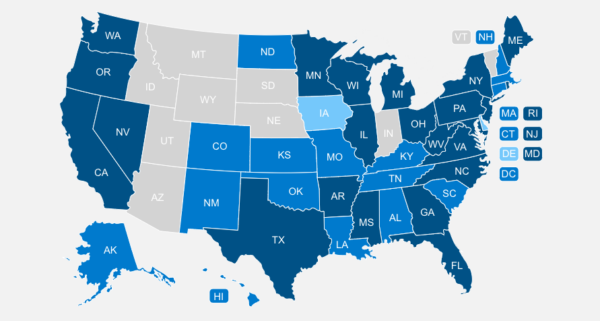

Cause Marketing and Commercial Co‑Venture by State: Essential Registration Requirements Guide
Cause-Marketing and Commercial Co-Venture in North Carolina: Essential Registration Requirements Guide
At a Glance
North Carolina does not require commercial co-venturers to register directly with the state, unlike many other jurisdictions. However, your charitable partner must typically obtain a solicitation license and file disclosure forms about your co-venture agreement. You’ll need written consent from the charity to use their name and must maintain detailed financial records for post-campaign review.
Are you considering a commercial co-venture to boost your business while supporting a worthy cause in North Carolina? When your company promises to donate a portion of sales to charity, you’re entering a regulated space that requires specific attention to compliance details.
Whether you’re planning your first charitable promotion or looking to improve your existing processes, understanding North Carolina’s specific requirements is crucial for success. This guide walks you through everything you need to know about operating as a commercial co-venturer in the state—from initial registration and contract filing to financial reporting obligations and renewal procedures. Importantly, North Carolina has its own unique set of rules that differ from other states, specifically outlined under NC General Statutes § 131F. By following these requirements correctly, you can ensure your partnership benefits both your business and your chosen charity while staying compliant with state regulations.
Who Qualifies as a Commercial Co-Venturer in North Carolina
Understanding exactly who qualifies as a commercial co-venturer in North Carolina requires examining the state’s specific legal definitions and regulatory framework. Before launching your charitable sales promotion, you need to determine if your business activities fall under this classification.

Definition under NC General Statutes § 131F
North Carolina law defines a “coventurer” as any person who, for compensation, conducts a charitable sales promotion or a sponsor sales promotion, other than in connection with the solicitation of contributions.
- A for-profit entity that doesn’t primarily raise funds
- Receives compensation for the promotional activity
- Conducts an advertising or sales campaign that benefits a charitable organization
A “charitable sales promotion” is further defined as an advertising or sales campaign that represents that the purchase or use of goods or services offered by a coventurer is to benefit a charitable organization. Importantly, the mere provision of advertising services alone to a charitable organization does not constitute a charitable sales promotion.
Examples of qualifying charitable sales promotions
- A retail store pledging to donate a percentage of purchase price to charity
- A business promising to donate a specific amount per unit sold to a charitable organization
- A for-profit company conducting a “share of revenue” arrangement with a nonprofit
- An event underwritten by a business that is advertised to benefit a charitable organization
These arrangements create a dual benefit: your business generates commercial goodwill and positive brand association, and the charitable organization receives financial support. Such partnerships have become increasingly popular as companies develop corporate social responsibility programs that align with customer values.
Distinction between CCVs and professional fundraisers
- Primary business purpose: Co-venturers are primarily engaged in regular commerce, not fundraising, as defined in the North Carolina Chapter 131F statutes.
- Regulatory treatment: Generally, co-venturers face less stringent requirements than professional fundraisers in most states
- Registration obligations: Unlike professional fundraisers, co-venturers aren’t required to register annually or post a surety bond in most states
Nevertheless, caution is warranted. Some states without specific “commercial co-venturer” definitions have attempted to regulate charitable sales promotions by broadly interpreting “professional fundraiser” statutes. Regulatory authorities in certain jurisdictions have argued that the goodwill and increased sales resulting from charitable promotions constitute “other consideration,” potentially classifying the sponsoring company as a professional fundraiser subject to stricter requirements.
In contrast to many other states, North Carolina does not require formal commercial co-venturer registration. Instead, the state focuses on regulating the relationship between the charity and co-venturer through disclosure requirements. Before beginning any charitable sales promotion, ensure you have the charitable organization’s written consent to use its name during the promotion. Additionally, a final accounting for each charitable sales promotion should be prepared and provided to the charitable organization upon request.
Initial Registration and Exemption Criteria
North Carolina’s approach to regulating commercial co-ventures differs significantly from many other states, primarily focusing on the charitable organization rather than the for-profit partner. Understanding these nuances ensures your charitable sales promotion remains compliant with state law.
No formal CCV registration required in NC
Unlike several other states that maintain strict registration requirements for commercial co-venturers, North Carolina does not require formal registration for businesses conducting charitable sales promotions. This represents a notable advantage for companies planning cause marketing campaigns in the state. Consequently, you can launch promotional campaigns with charitable partners without navigating complex co-venturer registration procedures.
Despite this regulatory leniency, remember that your charitable partner still faces specific obligations under state law. The absence of co-venturer registration doesn’t eliminate all compliance responsibilities in the commercial-charity relationship. Moreover, your contract with the charitable organization must still adhere to certain disclosure requirements covered in subsequent sections of this guide.
Charity registration requirements under § 131F-5
Although your business doesn’t need to register, the charitable organization partnering in your promotion typically must obtain a license through the North Carolina Secretary of State’s Charitable Solicitation Licensing Division (919-814-5400, sosnc.gov) unless specifically exempted. North Carolina General Statute § 131F-5 provides that charitable organizations, sponsors, or persons intending to solicit contributions in the state must file an application, obtain approval, and pay the applicable fee. The license must be renewed annually, and any changes to information from the original application are filed on or before the fifteenth day of the fifth calendar month after the close of each fiscal year in which the charitable organization solicited in North Carolina.
For nonprofits operating in multiple states through CCV arrangements, it’s important to note that some jurisdictions may also require active charitable solicitation registration where the CCV activity is considered solicitation.
Exemption for charities under $50,000 in contributions
Numerous charitable organizations are exempt from these registration requirements. Notably, any organization receiving less than $50,000 in contributions during any calendar year and not providing compensation to officers, trustees, organizers, incorporators, fund-raisers, or solicitors may qualify for exemption. Educational institutions that meet specified accreditation criteria, hospitals, religious organizations, and government agencies are also exempt from registration requirements.
To demonstrate eligibility for an exemption, the charitable organization may be asked to provide supporting documentation (for example, recent IRS filings or a current-year budget) to the licensing authority.
For organizations receiving between $5,000 and $50,000 annually, different fee structures may apply. Specifically, licensed charitable organizations receiving less than $5,000 in the last calendar or fiscal year are not required to pay a renewal fee.
Contract Disclosure and Filing Requirements
Contract disclosure remains a central element in North Carolina’s regulatory approach to commercial co-ventures, even as the state forgoes formal registration requirements for co-venturers themselves. The state’s focus lies primarily on documentation and transparency between charitable organizations and their business partners.
Fundraising Disclosure Form for Charities or Sponsors
In North Carolina, charities must submit a North Carolina Fund Raising Disclosure Form for each contract they maintain with commercial co-venturers. This document serves as the official record of the partnership between your business and the charitable organization. Essentially, while your company isn’t required to register directly, your charitable partner must disclose the relationship as part of their registration and renewal obligations.
The Fund Raising Disclosure Form requests information about both parties to the co-venture agreement, including identifying details and key dates related to the contract. Managing these disclosure requirements can be streamlined with proper preparation of required documentation and careful attention to compliance details.

Required contract details: projected sales and per-unit share
- Projected amounts of gross sales
- Projected sales figures for each vending unit
- The charitable organization’s share per unit
- The charitable organization’s projected total dollar share
These details ensure transparency about how much the charity can expect to receive from the promotion. Without these elements, your contract may not satisfy state requirements, potentially causing compliance issues for your charitable partner.
When and how to file the disclosure form
Timing is crucial when submitting the Fund Raising Disclosure Form. The charity must file this document at two specific points:
- During initial charitable registration
- With each charitable renewal filing
Unlike some states that require submission of the actual contract, North Carolina only requires the disclosure form itself. The form must be completed by the charitable organization but requires information from both parties to the agreement.
Once completed, the form is submitted to the North Carolina Secretary of State’s Charitable Solicitation Licensing Division. Currently, there is no agency fee associated with filing this disclosure form.
Financial Reporting and Recordkeeping Obligations
Proper financial reporting forms the backbone of compliant commercial co-ventures in North Carolina. After establishing your partnership and filing the appropriate contracts, your next obligation centers around accurate documentation and reporting.
IRS Form 990 or audited financials requirement
Financial transparency stands as a fundamental requirement for charitable organizations partnering with commercial co-venturers. As part of their solicitation licensing filings, charities submit either the appropriate IRS Form 990-series return or audited financial statements, depending on their circumstances.
Retention of records for post-campaign review
- Final accounting for each charitable sales promotion
- Documentation of gross receipts generated
- Calculation of the charity’s share per the contract terms
- Distribution records showing amounts paid to the charitable organization
Maintaining thorough records helps provide sufficient documentation should questions arise from regulatory authorities or the charitable partner regarding the promotion’s execution.
Disclosure of gross receipts and distribution breakdown
Upon request, commercial co-venturers should be prepared to provide detailed financial statements concerning the charitable sales promotion to the charitable organization or state authorities. This disclosure typically includes:
- The purpose for which funds were raised
- Total amount of all contributions raised
- Total costs and expenses incurred during the promotion
- Total amount of contributions dedicated to or disbursed for the stated purpose
The statement should clearly document how the charitable organization’s share was calculated according to the terms specified in your contract. For businesses managing multi-state CCV campaigns, organized preparation and tracking of these financial records across jurisdictions helps ensure accurate compliance reporting.
Annual Renewal and Extension Procedures
Maintaining compliance for your commercial co-venture in North Carolina requires attention to recurring deadlines and renewal procedures. Even though commercial co-venturers aren’t required to register directly with the state, understanding your charitable partner’s renewal obligations remains crucial for ongoing cause marketing campaigns.
Renewal deadline: 15th day of the 5th month after fiscal year-end
The timing of renewal submissions depends entirely on your nonprofit partner’s fiscal year. All registered charities in North Carolina must renew their solicitation license annually by the 15th day of the fifth month following the end of their fiscal year. For example, if your charitable partner operates on a calendar year ending December 31, their renewal deadline falls on May 15 of the following year.
This schedule aligns with federal tax filing requirements, creating consistency between state charitable solicitation renewals and IRS information returns. Renewal uses the same application form as the initial filing, with your charitable partner simply selecting the renewal option rather than completing a new registration.
Automatic 2-month extension and optional 4-month extension
North Carolina recognizes that charitable organizations sometimes need additional time to compile financial information. Accordingly, the state automatically grants a 60-day (two-month) extension to all organizations in good standing. This automatic extension requires no paperwork or formal request.
Should your charitable partner require additional time beyond the initial extension, they can request up to four more months by submitting IRS Form 8868 (Application for Extension of Time to File an Exempt Organization Return) before the automatic extension expires, potentially providing a total extension of six months. Your partner should provide proof of the IRS extension filing to the North Carolina Secretary of State’s office.
Late penalties: $25/month up to $900
Missing renewal deadlines can result in significant financial penalties. North Carolina imposes a late fee of $25.00 for each month or part of a month that passes after the due date (including any applicable extensions). Fortunately, the state caps these penalties at a maximum of $900.00. Throughout your commercial co-venture partnership, maintaining awareness of these timelines can help your charitable partner avoid unnecessary expenses.

Frequently Asked Questions
Commercial co-ventures offer a valuable opportunity for your business to contribute to charitable causes while enhancing your brand reputation in North Carolina. Unlike many states, North Carolina simplifies the process by not requiring direct registration from commercial co-venturers, making cause marketing partnerships accessible for businesses entering this space.
Nonetheless, your co-venture must still adhere to specific requirements. Ensure you have the charitable organization’s consent to use its name in any promotion, and maintain comprehensive financial records and timely accounting of campaign results upon request. These practices support transparency and accountability throughout your cause marketing efforts.
The contract between your business and the charitable organization stands as the cornerstone of compliance in North Carolina. Therefore, ensuring this agreement contains all required elements—including projected sales figures, per-unit charitable contributions, and total expected donations—protects both parties from potential regulatory issues. We support businesses with state-specific CCV compliance, including contract guidance and documentation organization to help streamline this process.
Though your business avoids direct registration requirements, understanding your charitable partner’s obligations remains essential for smooth operation. Their annual renewal deadlines, potential extension periods, and reporting requirements directly impact your joint promotional activities. Consequently, coordinating closely with your nonprofit partner about these timelines helps prevent disruptions to your cause marketing campaigns.
Financial transparency also plays a crucial role in successful commercial co-ventures. As a result, maintaining detailed records of all transactions, contributions, and disbursements safeguards your business against possible inquiries from either regulatory authorities or charitable partners. For multi-state campaigns, this becomes particularly important as CCV requirements vary significantly between jurisdictions.
Commercial co-ventures certainly create mutual benefits when executed properly. Your business gains enhanced consumer goodwill while providing meaningful support to worthy causes. However, this positive outcome depends entirely on careful adherence to North Carolina’s specific regulatory framework. After all, compliance not only protects your business reputation but also ensures your charitable partner continues receiving the support promised through your promotional efforts.
