
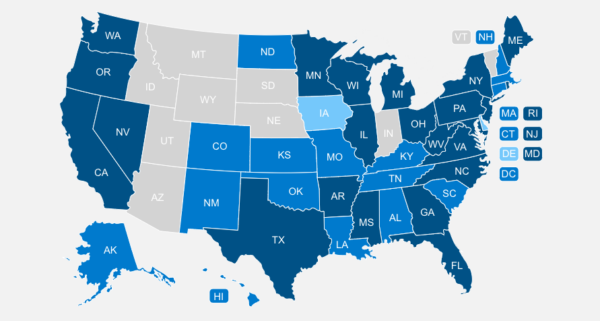

Cause Marketing and Commercial Co‑Venture by State: Essential Registration Requirements Guide
Cause-Marketing and Commercial Co-Venture in Oregon: Essential Registration Requirements Guide
At a Glance
Oregon does not require traditional registration for commercial co-venturers, unlike many other states. However, you must still obtain written consent from the nonprofit beneficiary before using its name in promotional campaigns and maintain detailed records. If requested, you must provide a final accounting within 20 days and retain these records for at least three years after the campaign concludes.
When your business promises to donate portions of sales to charity, you’re specifically entering into a commercial co-venture relationship that’s regulated under Oregon law. Before launching your campaign, you must understand the state’s documentation obligations, contract requirements, and financial reporting mandates. Additionally, you need to know about written consent procedures and record retention requirements that keep your co-venture compliant with Oregon regulations.
This guide walks you through everything you need to know about commercial co-venture requirements in Oregon, from your initial documentation to ongoing compliance obligations. Let’s dive into the essential steps you must take to successfully manage your cause marketing partnerships while staying on the right side of Oregon law.
Definition of a Commercial Co-Venturer in Oregon
Understanding what constitutes a commercial co-venture in Oregon requires examining the precise legal definition and recognizing how these entities differ from other fundraising organizations.

Oregon Revised Statutes § 128.801 Definition
According to Oregon law, a commercial co-venturer is legally defined as “any sole proprietorship, partnership, corporation or any other legal entity, organized for profit or formed as a nonprofit mutual benefit corporation, who is regularly and primarily engaged in trade or commerce in this state other than in conjunction with the raising of funds for nonprofit purposes and who conducts commercial fund raising solicitations on an infrequent basis.” This definition contains several key elements worth highlighting:
First, a commercial co-venturer must be a business entity that can take various legal forms—from sole proprietorships to corporations. Second, the entity must primarily engage in regular trade or commerce unrelated to fundraising activities. Finally, the entity conducts fundraising solicitations for nonprofit organizations only occasionally or infrequently.
Unlike some other states, Oregon does not currently impose a traditional registration requirement for commercial co-venturers. Nevertheless, these entities still need to comply with other regulations both before and after conducting fundraising campaigns.
The statute recognizes that businesses engaging in cause marketing—where companies advertise that purchases will benefit charitable organizations—are participating in a specific type of regulated relationship. These partnerships serve dual purposes: allowing businesses to align with customer values while providing financial support to nonprofits.
Distinction from Professional Fundraisers and Charities
Commercial co-venturers differ significantly from professional fundraising firms and commercial fundraising firms in several important ways. A professional fundraising firm is defined under ORS 128.801(5) as an entity that “for compensation or other consideration, manages or conducts the solicitation of funds, not including commercial fund raising solicitations, on behalf of any nonprofit organization”.
The primary distinction lies in the core business purpose. Commercial co-venturers are businesses whose main activities are unrelated to fundraising—they merely incorporate charitable components into their regular commercial operations occasionally. In contrast, professional fundraising firms specifically exist to manage fundraising campaigns for nonprofits as their primary service.
Furthermore, professional fundraising firms typically operate continuously in the fundraising space, whereas commercial co-venturers conduct such activities infrequently. This distinction matters because it affects the regulatory framework applied to each entity.
Oregon law also distinguishes commercial co-venturers from commercial fundraising firms, which are entities that “for compensation or other consideration regularly conducts commercial fund raising solicitations”. The key differentiator here is that commercial fundraising firms regularly engage in commercial fundraising activities as their primary business model.
Initial Registration Requirements for CCVs in Oregon
Navigating Oregon’s regulatory landscape for commercial co-ventures involves understanding what filing obligations exist—and notably, what doesn’t. Unlike many other states, Oregon takes a distinctive approach to commercial co-venture regulation.
When Registration is Required Under Oregon Law
Contrary to what you might expect, Oregon does not currently maintain a traditional registration requirement for commercial co-venturers at the state level. This represents a significant difference from numerous other states where formal registration is mandatory before launching cause marketing campaigns.
Despite the absence of a formal registration system, commercial co-venturers operating in Oregon aren’t entirely free from regulatory oversight. Instead, the state focuses on other aspects of compliance, including obtaining written consent from the nonprofit beneficiary to use its name in the promotion and maintaining/providing final accountings upon request.
Consequently, your business can generally proceed with cause marketing partnerships without completing an initial state registration process, allowing for a more streamlined entry into charitable promotions compared to states with more rigid registration frameworks.
Information Required in the Initial Filing
Since Oregon doesn’t require a traditional registration filing for commercial co-venturers, there is no standard application form or initial registration packet to submit. Moreover, this means you won’t need to provide basic business information, ownership details, or other documentation typically required in registration-heavy states.
However, this absence of formal registration doesn’t mean you can proceed without documentation. In fact, your primary focus should shift to proper written consent and clear agreements with your charitable partners, as these documents and the related financial records form the foundation of your compliance obligations in Oregon.
The key documentation you’ll need to maintain includes:
- A written consent from your nonprofit partner authorizing use of its name in the promotion
- A comprehensive written agreement with your nonprofit partner
- Records of all promotional materials used in the campaign
- Detailed financial records supporting the final accounting
Filing Method: Online vs. Mail
Given that Oregon doesn’t require initial registration for commercial co-venturers, there is no dedicated online portal or mail-in process specifically for CCV registration. If the Oregon Department of Justice requests records (for example, a final accounting) or if you choose to submit materials in connection with multistate campaigns, you should provide documents in the manner and within the time period specified by the requesting authority.
Surety Bond Requirements for CCVs
At present, Oregon law does not explicitly require commercial co-venturers to obtain a surety bond as part of their compliance obligations.
This absence of bonding requirements further underscores Oregon’s relatively streamlined approach to commercial co-venture regulation. Although a bond isn’t required, commercial co-venturers should remain vigilant about their financial obligations to charitable partners, as failure to properly account for and distribute promised donations could potentially lead to other legal consequences under state law.
Contract Filing Obligations Before Campaign Launch
Beyond initial registration requirements, proper contract documentation forms the backbone of commercial co-venture compliance in Oregon. Prior to launching any charitable promotion, businesses must understand what Oregon law does—and does not—require regarding documentation.
Timeline for Submitting Contracts to the Attorney General
Oregon law does not require commercial co-venturers to file their contracts with the Oregon Department of Justice (503-934-4400, doj.state.or.us) before a campaign launch. However, a commercial co-venturer must have the nonprofit beneficiary’s written consent to use the organization’s name in the promotion. If your campaign extends into other states, be aware that some jurisdictions do have advance filing requirements. For multi-state CCV campaigns, we help coordinate requirements across jurisdictions to ensure comprehensive compliance from the outset.

Required Contract Elements: Duration, Scope, and Beneficiary
Oregon law does not prescribe specific contract elements for commercial co-venturers. As a best practice, your agreement should clearly address:
- Campaign duration – Precise start and end dates of the promotion
- Scope of activities – Description of the products or services involved and how purchases trigger donations
- Beneficiary identification – Complete legal name and contact information of the charitable organization (and ensure written consent to use the name per ORS 128.856)
- Financial terms – Donation formula, minimum guarantees (if any), and maximum caps (if applicable)
- Geographic coverage – States or regions where the promotion will be active
- Cancelation provisions – Terms under which either party may terminate the agreement
These elements support transparency and sound recordkeeping for later accountings, but are not specified by Oregon statute for commercial co-venturers. When CCV activity spans multiple jurisdictions, ensuring contract language meets the disclosure standards required in each state helps maintain compliance throughout the campaign.
Electronic Submission Guidelines
Electronic submission is common in many jurisdictions. In Oregon, because there is no pre-filing requirement for commercial co-venturers, electronic delivery is relevant primarily when the Department of Justice or a nonprofit beneficiary requests documents, or when filing in other states. In those situations, submit materials in the format and by the means specified by the requesting authority.
Campaign Financial Reporting Requirements
What Must Be Included in the Final Accounting
Oregon law requires commercial co-venturers to keep a final accounting for each commercial fund raising solicitation and to provide that accounting within 20 days after it is requested by the Attorney General or the nonprofit beneficiary. The statute does not prescribe a specific format or list of line items; however, your records should substantiate amounts collected, expenses (if any), and the amounts paid to the charitable organization. Maintaining organized documentation throughout the campaign streamlines the preparation of accurate final accountings when requested.
Deadline for Submitting Financial Reports
There is no standing deadline to submit a financial report at the end of a campaign for commercial co-venturers in Oregon. Instead, a commercial co-venturer must provide the final accounting within 20 days after a request from the Attorney General or the nonprofit beneficiary.
Recordkeeping Duration and Format
Once your campaign concludes, proper record retention becomes your ongoing obligation. Under Oregon law, commercial co-venturers must keep a final accounting for each solicitation for a period of three years following the completion of the campaign and must provide it within 20 days upon request by the Attorney General or the beneficiary.
During this retention period, regulators or the beneficiary may review your documentation to verify compliance and confirm that promised donations were properly distributed. Maintaining organized digital or physical records throughout this period provides protection for both your business and the charitable organization, plus creates a historical record for future campaigns.
Annual Renewal and Ongoing Compliance
Renewal Form and Filing Instructions
Renewal procedures for commercial co-venturers differ from state to state, with Oregon emphasizing ongoing compliance rather than formal renewal. Presently, the Oregon Department of Justice oversees commercial co-venture activities primarily through statutory requirements such as written consent to use a charity’s name and the duty to maintain and provide accountings upon request.
For multi-state operations, remember that other jurisdictions have more structured renewal systems. These variations highlight the importance of tracking individual state requirements whenever your commercial co-venture extends beyond Oregon. For businesses operating CCV campaigns in multiple states, we help coordinate these diverse requirements to ensure comprehensive compliance across all jurisdictions.
To maintain compliance in Oregon:
- Obtain written consent from the nonprofit beneficiary before using its name in a promotion
- Maintain a final accounting for each solicitation for at least three years and provide it within 20 days when requested by the Attorney General or the beneficiary
- Keep accurate records that substantiate contributions received and amounts remitted
Annual Fee and Payment Methods
Currently, Oregon does not impose a specific annual renewal fee for commercial co-venturers. Notwithstanding, businesses must remain aware that fees vary substantially in other states where they might operate concurrent campaigns.
Consequences of Non-Compliance or Late Filing
Failure to meet Oregon’s statutory requirements can result in enforcement action. The Attorney General may obtain an injunction to halt solicitations until compliance is achieved. In addition, certain violations within this statutory scheme are classified as a Class A misdemeanor, including filing false or fraudulent statements or reports required by law.
Beyond legal consequences, non-compliance risks include:
- Damage to brand reputation
- Strained relationships with nonprofit partners
- Potential civil or criminal action against officers under applicable laws
- Revocation of solicitation privileges in other jurisdictions with more stringent regimes
Frequently Asked Questions

Conclusion
Understanding Oregon’s commercial co-venture requirements remains essential for any business planning to engage in cause marketing partnerships. Throughout this guide, we’ve examined how Oregon differs from many other states by not requiring traditional registration for commercial co-venturers. Nevertheless, compliance obligations still exist and demand careful attention.
First and foremost, your business must secure written consent from the nonprofit beneficiary before launching any campaign and maintain clear agreements and records that support your final accountings. Although formal registration isn’t required, you still need to keep a final accounting for each solicitation and provide it within 20 days upon request, and to retain those records for at least three years following completion of the campaign.
The consequences of non-compliance can be significant. The Attorney General can seek an injunction halting solicitations until compliance is restored, and certain violations are Class A misdemeanors. Therefore, adhering to Oregon’s requirements protects not only your legal standing but also your brand reputation and relationships with nonprofit partners.
For businesses operating across multiple states, be aware that requirements vary significantly by jurisdiction. While Oregon takes a relatively streamlined approach, other states impose more rigid registration frameworks with specific fees and renewal deadlines. Accordingly, we help businesses track individual state requirements and coordinate comprehensive compliance strategies for multi-state campaigns.
Despite the absence of traditional registration, Oregon’s focus on written consent and maintaining/providing final accountings creates a regulatory framework that ensures transparency and accountability. Following these guidelines diligently allows your business to conduct successful cause marketing campaigns while maintaining compliance with state regulations. Through proper preparation and record-keeping, your commercial co-venture can effectively support worthy causes while building positive brand associations in the marketplace.
