
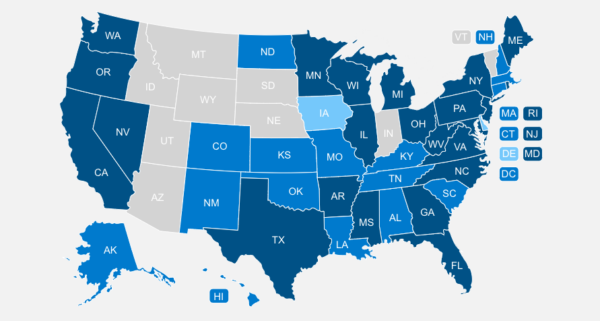

Cause Marketing and Commercial Co‑Venture by State: Essential Registration Requirements Guide
Cause-Marketing and Commercial Co-Venture in Pennsylvania: Essential Registration Requirements Guide
At a Glance
Pennsylvania does not require commercial co-venturers to register at the state level, unlike some other states. However, your charitable partner must maintain proper registration with the Bureau of Corporations and Charitable Organizations. While written contracts aren’t mandatory to file with the state, clear agreements and consumer disclosures remain essential for compliance.
Are you considering launching a commercial co-venture in Pennsylvania? These powerful business-charity partnerships can boost your brand image while supporting important causes. However, navigating Pennsylvania’s specific registration requirements can be challenging if you’re unprepared. Many businesses discover too late that their well-intentioned cause marketing campaigns don’t comply with state regulations, potentially leading to penalties and reputational damage.
Pennsylvania, like many states, has established specific guidelines governing how businesses can partner with charitable organizations. Accordingly, you’ll need to understand several key requirements, including initial registration procedures, contract filing obligations, financial reporting standards, and renewal processes. Additionally, knowing whether you qualify for registration exemptions can save you significant time and resources.
Throughout this guide, you’ll discover everything you need to know about commercial co-venture compliance in Pennsylvania. From understanding the legal definition under PA law to mastering the contractual obligations that protect both your business and charitable partners, this article provides a comprehensive roadmap to ensure your cause marketing campaigns remain both effective and compliant.
Understanding Commercial Co-Venturing in Pennsylvania
Commercial co-venturing represents a strategic partnership between businesses and charities that benefits both parties. Before launching such a campaign in Pennsylvania, you need to understand the specific legal framework that governs these arrangements.

Definition of a Commercial Co-Venturer under PA Law
Under Pennsylvania law, a commercial co-venturer is generally a for-profit entity that is regularly and primarily engaged in trade or commerce (other than fundraising) and that advertises that purchasing or using its goods or services will benefit a charitable organization. Essentially, this refers to a for-profit business that promotes how purchasing its products or services will benefit a charitable organization.
Unlike fundraising counsel or professional solicitors, commercial co-venturers maintain their primary business operations while temporarily partnering with charities. The key distinction lies in how they operate – they sell products or services at market value, with a portion of proceeds benefiting the charity.
Charity vs. Business: Who Needs to Register?
Pennsylvania does not currently require commercial co-venturers to register at the state level. This stands in contrast to states like Alabama, California, Massachusetts, and Maine, which mandate registration and payment of fees before conducting charitable sales promotions.
Nevertheless, charitable organizations themselves must maintain proper registration in Pennsylvania before participating in any co-venture. Furthermore, both parties should be aware that although the business partner may not need to register, the partnership still falls under regulatory oversight. Notably, nonprofits engaging in multi-state CCV campaigns may need to maintain charitable solicitation registrations in states where such activity is considered solicitation.
Many states beyond Pennsylvania regulate commercial co-ventures more strictly. Consequently, if your co-venture campaign extends beyond Pennsylvania’s borders, you may face additional registration requirements in those jurisdictions.
Common Examples of Co-Venture Campaigns
Commercial co-ventures take various forms in today’s marketplace. Some of the most common types include:
- Co-branded merchandise where products feature both the business and charity logos
- Portion-of-sales campaigns where businesses donate a percentage of each purchase
- Buy-one-give-one initiatives that donate a product for each one purchased
- Charity events sponsored by businesses
- Employee volunteer days that benefit charitable organizations
Though Pennsylvania’s regulatory approach is relatively relaxed compared to other states, commercial co-ventures still require careful planning. Even without formal registration requirements, businesses must ensure their campaigns include proper consumer disclosures and contract provisions to protect all parties involved.
Initial Registration Requirements for Co-Venturers
Navigating the registration landscape for commercial co-ventures in Pennsylvania requires understanding both what is required and what isn’t. The state’s approach differs from many others, making it vital to grasp the specific requirements that apply to your partnership.
Is Registration Mandatory in Pennsylvania?
Despite the regulatory framework surrounding charitable fundraising, Pennsylvania does not currently require commercial co-venturers to register at the state level. This stands in sharp contrast to other jurisdictions; only four states (Alabama, California, Maine, and Massachusetts) plus the District of Columbia mandate pre-registration by commercial co-venturers.
Yet, this doesn’t mean co-ventures operate without oversight. Rather, the regulatory burden falls primarily on the charitable organization partner. As a for-profit business engaging in a cause-related marketing campaign, you should understand that even without direct registration requirements, your activities remain subject to various contractual and financial reporting obligations. Labyrinth supports businesses and nonprofits with state-specific CCV filings, compliant disclosure language, and contract guidance to help navigate these requirements effectively.
Charitable Organization Registration via BCO-10
The charitable organizations you partner with must complete proper registration with Pennsylvania’s Bureau of Corporations and Charitable Organizations (717.783.1720; see the Pennsylvania charities program). This registration happens through Form BCO-10, the Charitable Organization Registration Statement, per the Pennsylvania BCO-10 instructions.
Timing matters significantly for charitable organizations. They must complete their initial registration before any paid individual begins soliciting contributions on their behalf or within 30 days of receiving more than $25,000 in gross contributions if they rely solely on volunteers.
The registration fees vary based on the organization’s annual contribution levels:
- $25,000 or less: $15 registration fee
- $25,001 to less than $100,000: $100 registration fee
- $100,000 to less than $500,000: $150 registration fee
- $500,000 or more: $250 registration fee
Moreover, financial statement requirements become more stringent as contribution amounts increase. Organizations receiving between $100,000 and $250,000 must submit compiled, reviewed, or audited financial statements, whereas those receiving $750,000 or more must file audited financial statements.
First-time registrants must also submit their incorporation documents, organizational charter, bylaws, and proof of tax-exempt status, as outlined by the Pennsylvania Department of State guidance for charities.
Commercial Co-Venturer Registration Exemptions
Given that Pennsylvania doesn’t require direct registration for commercial co-venturers, “exemptions” typically refer to which charitable organizations might be exempt from registration requirements—important knowledge for selecting appropriate charitable partners.
Several types of organizations may qualify for exemption from charitable registration requirements:
- Religious institutions primarily funded by grants, membership, or service fees
- Educational institutions with curricula approved by the Department of Education
- Hospitals and foundations regulated by the Department of Health or Public Welfare
- Small charities receiving $25,000 or less annually without compensated solicitors
- Public nonprofit libraries receiving state/municipal funding
- Senior centers and nursing homes conducting fundraising through unpaid individuals
Notwithstanding these exemptions, organizations exempted from registration may still need to file an Institutions of Purely Public Charity Registration Statement annually unless they meet specific additional criteria, per the Department of State’s charities guidance.
For your commercial co-venture campaign, selecting a properly registered charitable partner simplifies compliance. Therefore, verify your nonprofit partner’s registration status through the Bureau’s online system or by contacting them directly at 717.783.1720 or ST-CHARITY@pa.gov.
Contractual Obligations and Filing Procedures
The foundation of any successful commercial co-venture in Pennsylvania lies in proper documentation. Even as Pennsylvania offers more flexibility than some states regarding registration, strict contractual requirements still apply to protect all parties involved.
Written Agreement Considerations in Pennsylvania
Pennsylvania law imposes written contract requirements on professional fundraising counsel and professional solicitors that work with charities. Pennsylvania does not impose a separate statutory written-contract requirement specific to commercial co‑venturers. Nevertheless, having a clear written agreement between the business and the charitable organization is strongly advisable to define roles, financial terms, and disclosures.
If you engage a professional fundraising counsel or professional solicitor in connection with your campaign, Pennsylvania requires a written contract that meets statutory signature and content requirements before services begin (administered by the Department of State’s Bureau of Corporations and Charitable Organizations), as outlined in the Commonwealth’s charitable organizations guidance.

Key Clauses to Include in Co-Venture Contracts
While Pennsylvania does not review or approve commercial co‑venturer contracts, consider including provisions commonly required in Pennsylvania for contracts with professional fundraisers to promote clarity and consumer transparency, such as:
- The legal name and address of the charitable organization as registered with the Bureau (unless exempt from registration)
- A statement of the charitable purpose for which the solicitation campaign is being conducted
- A clear outline of the respective obligations of both parties
- A transparent statement of fees to be paid
- Effective and termination dates of the contract
- A statement that the commercial co-venturer will not have custody or control of contributions
- A statement that the charitable organization maintains control and approval over content and volume of solicitations
If you file a contract for a professional fundraiser in Pennsylvania, it must clearly state the date when services related to solicitation of contributions in Pennsylvania will commence (including month, day, and year).
Filing Contracts with the Bureau of Charitable Organizations
Pennsylvania does not require commercial co‑venturer contracts to be filed with or approved by the Bureau of Corporations and Charitable Organizations. The Charities Act’s 10‑working‑day pre‑filing and approval requirements apply to contracts with professional fundraising counsel and professional solicitors, not to commercial co‑venturer promotions.
Beyond Pennsylvania, some states impose additional filing requirements, including registration applications, solicitation notices, and filing fees prior to any commercial co-venture activity. Sixteen states, including neighboring New Jersey, require written contracts between parties, with varying specific provisions.
For record-keeping purposes, commercial co‑venturers should maintain adequate documentation for their promotions. Pennsylvania’s Charities Act prescribes recordkeeping for registered fundraising professionals; while no specific CCV record‑retention period is set in Pennsylvania law, retaining records for several years is a prudent practice.
Disclosure and Financial Reporting Requirements
Transparent financial disclosure forms the backbone of ethical commercial co-ventures in Pennsylvania. Beyond contractual requirements, your campaign must meet specific disclosure and reporting obligations to maintain compliance and consumer trust.
Disclosure of Donation Caps and Terms to Consumers
Consumer transparency stands as a critical component of commercial co-ventures. You must clearly disclose all material terms of the promotion to potential donors. For example, some promotions have faced regulatory scrutiny for failing to adequately disclose maximum donation caps.
Based on such precedents, commercial co-venturers must explicitly communicate any maximum donation limits in all promotional materials. Several states beyond Pennsylvania mandate specific disclosure requirements. New Jersey, for instance, requires revealing the exact dollar amount or percentage per unit benefiting the charity. Similarly, New York law demands that all advertising indicate the anticipated portion of sales price or percentage of proceeds the charitable organization will receive.
Final Accounting Obligations for Co-Venturers
Following a campaign’s completion, you must provide final accounting to your charitable partner. Various states maintain different reporting timeframes; some require retention of final accounting records for multiple years, while others mandate filing a closing statement within a set period after a contract ends.
For charitable organizations in Pennsylvania, reporting requirements escalate with contribution amounts:
- Organizations receiving $100,000 to $250,000 must submit compiled, reviewed, or audited financial statements
- Those receiving $250,000 to $750,000 must file reviewed or audited statements
- Organizations with contributions exceeding $750,000 must submit fully audited financial statements
Record Retention Periods and Audit Readiness
Proper record maintenance remains essential for potential audits or regulatory inquiries. Generally, businesses should retain commercial co-venture documentation for at least three years after campaign completion. For broader business records in Pennsylvania, consult the Pennsylvania Bulletin guidance on recordkeeping.
Importantly, electronic record-keeping systems should include adequate controls and appropriate testing procedures. Digital records must accurately reflect original information, remain tamper-resistant, and be reproducible in hard copy format if requested during examinations, consistent with the Commonwealth’s recordkeeping standards.
For charitable organizations facing audits, those receiving at least $250,000 in contributions generally undergo annual independent reviews by a certified public accountant. Organizations exceeding $750,000 typically complete annual independent audits to ensure financial statements adhere to GAAP.
Renewals, Updates, and Compliance Monitoring
After establishing your commercial co-venture partnership, several recurring compliance requirements demand attention. Staying on top of these obligations ensures your campaign remains in good standing with Pennsylvania regulators.
Annual Renewal of Charitable Registration
The charitable organization you partner with must renew their registration annually. Renewals are due by the 15th day of the 11th month after the organization’s fiscal year ends. The Bureau automatically sends renewal reminders to the email or postal address on file (see the Pennsylvania Register a Charity page). Renewal is completed using the same BCO-10 form as initial registration or through the Department of State’s online portal described in the guides on registering and renewing your charity.
Renewal fees vary based on contribution levels, ranging from $15 for organizations receiving $25,000 or less to $250 for those receiving over $500,000.
Updating Contracts or Campaign Terms
If your campaign uses a professional fundraising counsel or professional solicitor in Pennsylvania, updated contracts or addenda generally must be filed with the Bureau before changes take effect. Pennsylvania does not require commercial co‑venturer contracts to be filed.
Penalties for Non-Compliance in Pennsylvania
Failing to maintain proper compliance can result in substantial penalties. Organizations that miss renewal deadlines face late fees of $25 for each month after the due date, capped at $600. Beyond monetary penalties, non-compliance may lead to prohibition of fundraising activities. Subsequently, regulatory authorities can request detailed financial records at any time, making proper record-keeping essential for at least three years after campaign completion.
Frequently Asked Questions

Conclusion
Commercial co-ventures represent powerful partnerships that benefit both businesses and charitable organizations. Pennsylvania stands apart from many states with its relatively streamlined approach to regulation. Although commercial co-venturers need not register directly with the state, you must still navigate several critical compliance areas to ensure legal operation.
First and foremost, understand that your charitable partner bears the registration burden through Form BCO-10 filing with the Bureau of Corporations and Charitable Organizations. Therefore, verifying your nonprofit partner’s registration status becomes essential before launching any campaign. For nonprofits engaged in multi-state CCV campaigns, maintaining active charitable solicitation registrations in applicable states may also be required.
Despite this registration exemption, written contracts remain essential to a well-run promotion. While Pennsylvania does not require commercial co‑venturer contracts to be filed or approved, contracts with professional fundraising counsel or professional solicitors do have statutory filing and content requirements. Including clear provisions and ensuring consumer transparency will protect both your business reputation and the charitable mission you support.
Transparency forms another cornerstone of compliant co-ventures. You must clearly disclose all material terms to consumers, particularly any maximum donation caps. After campaign completion, proper financial accounting becomes necessary, with documentation retained for at least three years.
For ongoing campaigns, remember that charitable organizations must renew their registrations annually by the specified deadline. Failure to maintain compliance can result in substantial penalties, including monetary fines and prohibition of fundraising activities.
As you consider launching a commercial co-venture in Pennsylvania, this comprehensive approach to compliance will help ensure your cause marketing campaign achieves its dual goals of business promotion and charitable support while avoiding potential regulatory pitfalls. By following these guidelines and working with experienced compliance partners who understand both CCV requirements and the broader scope of nonprofit regulatory obligations, you can create meaningful partnerships that benefit communities while strengthening your brand.
