
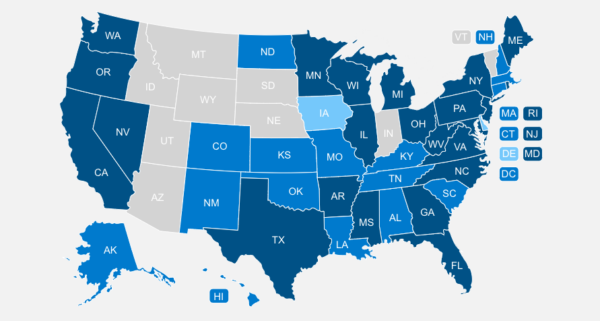

Cause Marketing and Commercial Co‑Venture by State: Essential Registration Requirements Guide
Cause-Marketing and Commercial Co-Venture in Rhode Island: Essential Registration Requirements Guide
At a Glance
Rhode Island does not currently impose traditional registration requirements for commercial co-venturers at the state level. However, these promotional campaigns may trigger other regulatory obligations depending on how state authorities classify your activities. The participating charity must register with the Department of Business Regulation if contributions exceed $25,000 annually and the organization does not qualify for specific exemptions.
Are you planning a commercial co-venture to boost your brand while supporting a good cause? Before you launch that charitable promotion in Rhode Island, you need to understand the specific registration requirements that apply to your campaign!
Commercial co-ventures in Rhode Island come with a unique set of regulatory obligations that differ from other states. When your business promises to donate a portion of sales to charity, you are not just creating a marketing opportunity—you are entering a regulated space that requires proper documentation and reporting.
Specifically, Rhode Island has established distinct rules governing initial registration, contract filing, reporting requirements, and renewal processes. Understanding these regulations is crucial to avoid penalties while maintaining transparency with both the state and your customers.
This guide will walk you through everything you need to know about Rhode Island’s commercial co-venture requirements—from determining if your promotion qualifies under state charitable solicitation law to navigating filings with the Rhode Island Department of Business Regulation charitable organizations page and fulfilling your ongoing compliance obligations.
What Qualifies as a Commercial Co-Venture in Rhode Island
Understanding whether your promotional campaign qualifies as a commercial co-venture in Rhode Island requires familiarity with state-specific regulations. Unlike traditional charitable fundraising, commercial co-ventures operate in a unique regulatory space that blends business promotion with charitable giving.

Definition under Rhode Island General Laws § 5-53.1
Rhode Island law does not explicitly define “commercial co-venturer” as a separate category in its statutes. Nevertheless, these arrangements fall under broader regulatory oversight. Generally speaking, a commercial co-venture occurs when a for-profit entity that does not typically raise funds promotes that the purchase or use of its goods or services will benefit a charitable organization or charitable purpose.
Despite lacking a specific statutory definition, Rhode Island regulators have taken notice of these arrangements. State authorities have informally indicated that sales promotions necessarily result in goodwill being afforded to the sponsoring company, as consumers often prefer purchases that benefit charitable organizations.
Importantly, Rhode Island does not currently impose a traditional registration requirement for commercial co-venturers at the state level, though they may need to comply with other regulations before and after fundraising events. This distinguishes Rhode Island from several other states that require some combination of registration, contract filing, surety bond posting, or campaign financial reporting for commercial co-venturers.
Examples of qualifying charitable sales promotions
Several common business arrangements typically qualify as commercial co-ventures. The most recognizable example involves retail stores that pledge to donate a percentage of the purchase price or a specific amount per unit sold to a charitable organization. Additionally, charitable events underwritten by businesses and advertised to benefit nonprofit organizations often constitute commercial co-ventures.
Furthermore, these arrangements can manifest as revenue-sharing contracts between nonprofits and for-profit companies. These partnerships serve dual purposes: the for-profit brand aligns itself more closely with customer interests while the charity benefits from financial support. Commercial co-ventures can also exist between two charitable nonprofits that jointly sell something and agree that a percentage of sales will benefit one or both organizations.
Distinction between CCVs and professional fundraisers
The distinction between commercial co-venturers and professional fundraisers is particularly significant in Rhode Island. A “professional fundraiser” is any person who directly or indirectly for compensation plans, manages, conducts, or assists with solicitation for charitable purposes.
Notably, Rhode Island regulators have sometimes applied a broad interpretation to this definition. They have suggested that since sales promotions generate goodwill and increased sales for sponsoring companies, these benefits can constitute “other consideration” under the law, potentially rendering the sponsoring company a professional fund raiser/solicitor subject to more stringent requirements.
This interpretation differs from “fundraising counsel” classification, which applies to persons who consult with charitable organizations about solicitations but do not have access to contributions or directly solicit. As such, understanding which category your campaign falls into is essential for compliance purposes.
Therefore, even though Rhode Island does not explicitly require commercial co-venturer registration, your promotion might still trigger other regulatory obligations depending on how state authorities classify your activities.
Who Must Register: Triggers and Exemptions
Navigating Rhode Island’s commercial co-venture registration requirements starts with understanding exactly who must register. The state has established thresholds and exemptions that determine your filing obligations.
Gross revenue threshold: $25,000 exemption rule
The primary trigger for registration in Rhode Island is the anticipated contribution amount. Any charitable organization that does not intend to solicit and receive—and does not actually raise or receive—contributions exceeding $25,000 during a fiscal year may be exempt from registration. This exemption applies under two key conditions:
- None of the organization’s fundraising functions are carried out by professional fundraisers
- No part of the organization’s assets or income goes to any officer, director, member, trustee, partner, or other organization member
For commercial co-ventures, this means partnerships with charities that stay below this threshold may avoid registration requirements. However, once a promotion’s projected contributions push past $25,000, registration becomes mandatory within 30 days.
Importantly, certain contributions do not count toward this threshold, including those received from corporations, charitable foundations, government agencies, registered federated funds, community appeals, or United Way organizations.
Exempt organizations under DBR guidelines
Rhode Island law exempts several types of organizations from registration requirements altogether, regardless of contribution amounts. Commercial co-ventures involving these exempt entities benefit from streamlined compliance. For a state resource, see the Rhode Island Secretary of State nonprofit guidance. Key exempt categories include:
- Educational institutions and parent-teacher associations
- Religious organizations and their affiliated institutions
- Veteran’s organizations and their auxiliaries
- Volunteer fire and rescue associations
- Organizations soliciting solely from their own membership
- Public libraries and free public art museums
- Historical societies organized under Rhode Island law
- Nonprofit and charitable hospitals
- Land trusts organized under Rhode Island state law
When a ‘Donate Now’ button triggers registration
Online fundraising can trigger registration obligations depending on the state and the nature of the activity. The Charleston Principles are nonbinding guidance rather than law, and states apply their own charitable solicitation statutes. In practice, assess whether you specifically target Rhode Island residents, receive contributions from Rhode Island on a repeated or ongoing basis, or otherwise conduct solicitation activities in the state. When in doubt, review the DBR charitable organizations page to determine whether registration is required for your online efforts.
Initial Registration Process with the DBR
Once you have determined that registration is needed for your commercial co-venture, completing the proper application with Rhode Island’s Department of Business Regulation becomes your next crucial step. The state has established procedures that must be followed precisely to ensure compliance.
Required forms: Charitable Organization Application
For commercial co-ventures in Rhode Island, the DBR requires completion of a charitable organization registration prior to any solicitation activities in the state. Registration is done through the state’s online system. When preparing your application, gather these essential pieces of information first:
- Employer Identification Number (EIN)
- Name and address of the person with custody of the organization’s financial records (if no office is maintained)
- List of other states where your organization has a license or is registered
- Disclosure of whether any government agency or court has enjoined the applicant, officers, directors, members, trustees, or senior-level executives from soliciting contributions
Failure to submit complete information will result in your application being returned, potentially delaying your commercial co-venture campaign.
Filing method: Online filing through the state portal
Rhode Island has modernized its filing system by eliminating paper submissions for charitable organization registration. Submit your application online via the DBR charitable organizations page. For online submissions, you will pay an additional processing fee of approximately $3.98 beyond the standard registration fee. The electronic system streamlines the process but requires all supporting documentation to be uploaded in digital format.
Remember that after submission, the typical processing time ranges from 2–3 weeks. Plan your commercial co-venture timeline accordingly, allowing sufficient lead time for approval before launching your campaign.

Signature requirements: Authorized attestation and ongoing notices
An authorized representative must attest to the filing when submitting online. Beyond the initial filing, you must notify the DBR within 20 days of any material changes to the information provided in your application. If your campaign involves a professional fundraiser, copies of fundraising contracts must be submitted to the Department within 10 days after execution, as required under Rhode Island charitable solicitation law.
Fee structure: $90 registration fee
The standard registration fee for Rhode Island charitable organization applications is $90. For online submissions, expect to pay an additional processing fee of approximately $3.98.
Upon successful application review, the DBR will issue written approval that includes an expiration date for your registration. This notification is crucial as it establishes your renewal timeline. Mark this date in your compliance calendar, as renewal filings are due annually by the registration anniversary date.
Unlike some states, Rhode Island does not require separate fees for commercial co-venture contracts beyond the initial registration fee. Organizations must still submit any required professional fundraising contracts and agreements as part of their compliance obligations.
Contract Filing and Disclosure Obligations
When to file: After execution, if applicable
In Rhode Island, professional fundraiser contracts must be submitted to the Department of Business Regulation within 10 days after execution. There is no separate, statewide commercial co-venturer registration or CCV-specific contract filing requirement. Subsequently, any material changes to the information provided in a charity’s registration must be reported to the Department within 20 days of the change, as outlined in the Rhode Island charitable solicitation regulations.
Contract content
Agreements should clearly describe the terms of the campaign (for example, campaign dates, the amount or percentage to be donated, and how and when funds will be remitted). DBR may review copies of agreements that are required to be filed (such as professional fundraiser contracts). Ensuring contracts include proper disclosure language and meet state standards helps protect both parties and provides transparency to consumers.
Recordkeeping and public access
Both parties should maintain appropriate records of fundraising activities for a reasonable period and expect that filings made with DBR may be subject to public disclosure under applicable state public records laws.
Finally, charities may need reports or documentation from their partners (for example, sales figures supporting remittances) to complete their own state reporting. Keeping comprehensive records throughout the campaign supports both compliance efforts and builds trust with consumers who want assurance their purchases genuinely benefit the stated cause.
Annual Renewal and Financial Reporting Requirements
Renewal timeline: Annually by your anniversary date
Your charitable registration must be renewed annually by the registration anniversary date. Rhode Island offers potential extensions—you can request a six-month extension beyond the original due date by submitting IRS Form 8868 or a written extension request.
Financial documents
Submit the organization’s most recent IRS Form 990 with your renewal. Depending on revenue, the state may require compiled or audited financial statements; check current DBR requirements and thresholds. If financials are not available during renewal, you may upload an IRS Form 8868 temporarily in place of these documents.
Consequences of non-compliance or late filing
Failing to meet renewal requirements carries significant penalties. Rhode Island assesses late fees of $20 per month per filing per year. As soon as you fall behind, these penalties compound—a registration out of compliance for three years could face up to $1,440 in late fees.
Conclusion
Navigating Rhode Island’s commercial co-venture requirements demands careful attention to detail and proactive compliance management. Throughout this guide, you have learned how the state regulates charitable promotions despite lacking an explicit “commercial co-venturer” definition in its statutes.
First and foremost, understanding whether your promotion qualifies for registration remains essential. The $25,000 gross revenue threshold serves as a key determining factor, alongside various organizational exemptions established by the Department of Business Regulation. Additionally, online fundraising components can trigger registration requirements depending on your activities in the state.
The initial registration process requires thorough preparation. You must register your charitable organization through digital channels only, along with the $90 registration fee. An authorized representative must attest to the filing, and you must notify DBR of material changes within 20 days. If a professional fundraiser is involved, file copies of those contracts within 10 days of execution.
Renewal obligations continue after your initial registration. Your filings are due annually by your anniversary date, accompanied by appropriate financial documentation. The consequences of non-compliance prove severe—substantial late fees accumulate monthly, while continued violations may result in additional enforcement.
Commercial co-ventures offer valuable opportunities to promote your brand while supporting worthwhile causes. However, these benefits depend entirely on your ability to meet Rhode Island’s regulatory requirements. With proper registration, contract filing when required, financial reporting, and timely renewals, you can confidently launch campaigns knowing your compliance obligations are met.
For organizations running CCV campaigns across multiple states, Labyrinth helps track varying requirements, notices, and reporting obligations. We assist with organizing contracts, filing materials, and post-campaign records, helping partners stay compliant and audit-ready. For more than 35 years, we have been the trusted partner for nonprofits nationwide. Our team combines deep regulatory knowledge with personalized service, helping organizations of every size register, renew, and maintain compliance in all jurisdictions. With Labyrinth, you can fundraise confidently knowing your organization is fully compliant so you can focus on your mission.

Frequently Asked Questions
