
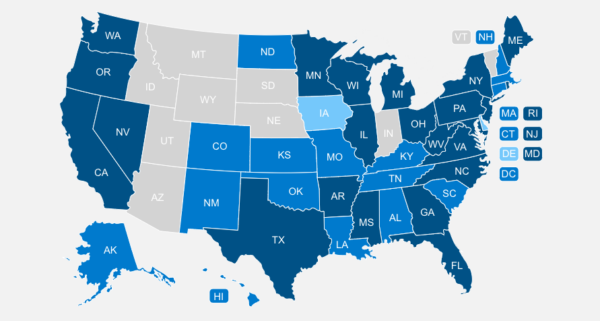

Cause Marketing and Commercial Co‑Venture by State: Essential Registration Requirements Guide
Cause-Marketing and Commercial Co-Venture in Tennessee: Essential Registration Requirements Guide
At a Glance
Tennessee does not require separate registration for commercial co-venturers, unlike many other states. However, you must establish a written agreement with your charity partner and file a Notice of Charitable Sales Promotion with the Secretary of State before launching your campaign. All records must be maintained for three years after the promotion ends, and violations can result in penalties up to $5,000 per infraction.
Are you considering a commercial co-venture to boost your brand while supporting a good cause? When businesses partner with charities for promotional campaigns, they create powerful marketing opportunities that benefit everyone involved. However, navigating the legal requirements for these partnerships in Tennessee requires careful attention to specific regulations.
Before launching your cause-related marketing campaign in Tennessee, you need to understand the filing obligations, agreement requirements, and compliance protocols that apply to commercial co-venturers. Unlike some states, Tennessee has its own distinct approach to regulating these business-charity partnerships. Additionally, proper documentation and timely submissions to the Secretary of State are essential to avoid potential penalties that could derail your charitable sales promotion.
This guide will walk you through everything you need to know about commercial co-venture requirements in Tennessee, including the necessary agreements, filing deadlines, recordkeeping practices, and enforcement provisions that shape your compliance responsibilities.
Definition and Scope of Commercial Co-Venturer in Tennessee
Tennessee law provides a clear framework for understanding who qualifies as a commercial co-venturer and what responsibilities these entities have when partnering with charitable organizations. Understanding these definitions is essential for proper compliance with state regulations.

Legal Definition under Tenn. Code § 48-101-501(b)
Tennessee specifically defines a commercial co-venturer through a three-part test established in the state code. According to Tenn. Code § 48-101-501(b), a commercial co-venturer is any entity that meets all of the following criteria:
- Is organized for profit
- Is regularly and primarily engaged in trade or commerce, other than in connection with soliciting for charitable organizations
- Conducts an advertised charitable sales promotion for a specified limited period of time
This definition distinguishes businesses that occasionally run charitable promotions from organizations whose primary purpose is fundraising. Notably, a company must satisfy all three elements to be classified as a commercial co-venturer under Tennessee law. The time-limited nature of the promotion is particularly significant, as it separates these campaigns from ongoing charitable giving programs.
What Qualifies as a Charitable Sales Promotion
The Tennessee Code further clarifies that a “charitable sales promotion” represents an advertising or sales activity conducted by a person who represents that the purchase or use of goods or services will benefit, in whole or in part, a charitable organization or purpose.
For instance, when a retail store advertises that a percentage of each sale will go toward supporting a local charity, this constitutes a charitable sales promotion. Importantly, the law makes a clear distinction regarding advertising services: merely providing advertising services to a charitable organization, either for compensation or as a donation, does not by itself constitute a charitable sales promotion.
The key element here is the direct connection between consumer purchases and charitable contributions. Furthermore, these promotions must be conducted on behalf of properly registered charitable organizations, as no commercial co-venturer can legally conduct a charitable sales promotion in Tennessee for an unregistered charity.
Distinction Between CCVs and Professional Fundraisers
Commercial co-venturers differ fundamentally from professional fundraisers in several important ways. First of all, commercial co-venturers are primarily engaged in their own regular trade or commerce, whereas professional fundraisers primarily solicit funds for charitable organizations.
- Its primary business is retail sales
- The charitable component is secondary to its main operations
- The promotion runs for a specific, limited time
Professional fundraisers, conversely, are specifically hired to raise funds as their primary activity. In Tennessee, this distinction affects registration requirements. Unlike some states, Tennessee does not require commercial co-venturers to register separately with the state. Instead, the responsibility falls primarily on the charitable organization to file the proper documentation regarding the co-venture relationship.
Despite these differences, both entities must maintain proper documentation and adhere to state regulations governing charitable solicitations.
Initial Registration and Agreement Requirements
Establishing proper documentation forms the backbone of any commercial co-venture relationship in Tennessee. The state requires specific written agreements between businesses and charities but takes a different approach to registration compared to many other states.
Written Agreement Signed by Two Charity Officers
Prior to launching any charitable sales promotion in Tennessee, commercial co-venturers must establish a formal written agreement with the charitable organization they intend to support. Tennessee law requires that a written agreement be in place between the commercial co-venturer and the charitable organization. This agreement should be properly authorized by the parties.
The signature requirement aligns with Tennessee’s broader approach to charitable oversight, as even general charity registrations and renewals must be signed by two authorized officers, one of whom must be the Chief Fiscal Officer, as noted in the Tennessee Secretary of State charities FAQs.
Required Agreement Details: Start Date, Parties, Purpose
Although Tennessee law does not prescribe an exhaustive list of contractual terms in this guide, agreements typically identify the parties, describe the charitable sales promotion, and state when the promotion will occur. Including additional terms such as duration, financial terms, marketing approvals, intellectual property permissions, and recordkeeping responsibilities can help clarify the parties’ obligations.
Remember that once executed, this agreement serves as the foundation for your subsequent filing obligations with the Secretary of State.
No Separate CCV Registration Required in Tennessee
One significant distinction between Tennessee and several other states is that Tennessee does not require commercial co-venturers to register separately with the state. Unlike professional fundraisers who typically must obtain licenses, a commercial co-venturer can operate in Tennessee without obtaining a specific license or registration in that capacity.
Nevertheless, this does not mean there are no filing requirements whatsoever. Tennessee provides a Notice of Charitable Sales Promotion form for notifying the Secretary of State before a promotion. Review the current form instructions to determine who must submit and what documents must accompany the notice.
Moreover, the law stipulates that no commercial co-venturer can conduct a charitable sales promotion on behalf of a charitable organization unless that organization is duly registered or granted the appropriate exemption. Consequently, it remains critically important to verify your charity partner’s registration status before proceeding with any promotion.
This streamlined approach to commercial co-venturer regulation makes Tennessee somewhat more business-friendly than states requiring direct registration, allowing companies to focus more on proper documentation and timely notice filings rather than registration procedures.
Filing Obligations Before Campaign Launch
Once your agreement is established, proper filing with Tennessee authorities becomes the next critical step. Understanding exactly what to submit, when to submit it, and how to ensure compliance will protect both your business and the charitable organization from potential penalties.
Notice of Charitable Sales Promotion Form Submission
Beyond having a properly executed agreement, Tennessee provides a formal Notice of Charitable Sales Promotion form to the Secretary of State. This form (SS-6086) is used to notify state authorities about your upcoming charitable sales promotion. See the Tennessee Secretary of State charitable forms page for current materials.
- A copy of the commercial co-venture contract or agreement that governs the promotion
- Details about the charitable sales promotion, including parties involved and timing
Consult the current SS-6086 instructions for signature and submission requirements.

Filing Deadline: Prior to Campaign Start
Timing is important when it comes to Tennessee’s filing requirements. File the Notice of Charitable Sales Promotion and accompanying agreement with the Secretary of State before the start of any charitable sales promotion in Tennessee. Refer to the current form instructions and statute for exact timing and any advance notice requirements.
Failing to meet applicable requirements can result in consequences under the Charitable Solicitations Act. Building sufficient lead time into your promotional calendar is essential to ensure all documentation is properly prepared and submitted within the required timeframe.
Where and How to File with the Secretary of State
File the required documentation with the Tennessee Secretary of State as directed on the form. Submission options may include mail or electronic delivery based on current instructions.
Questions about the filing process or requirements can be directed to the Division at (615) 741-2555.
Remember that all documentation must be complete and accurate, as the Secretary of State has enforcement authority over these filings. The state provides specific forms for these submissions to standardize the process and ensure all necessary information is captured.
Recordkeeping and Post-Campaign Compliance
After fulfilling initial filing requirements, Tennessee law outlines specific recordkeeping obligations that continue well past the end of your charitable sales promotion.
Retention of Records for Minimum Three Years
First and foremost, Tennessee requires commercial co-venturers to maintain comprehensive documentation related to each charitable sales promotion. You must keep all records connected to your charitable sales promotion for a minimum of three years after the end date of the promotion. This requirement ensures accountability and transparency in how funds were collected and distributed to charitable organizations.
The three-year retention period applies to various documents, including:
- Copies of promotional materials
- Financial records showing amounts collected
- Records of disbursements to the charity
- Correspondence related to the promotion
The law explicitly states that these records must be made available to the division upon request. This enables state authorities to conduct investigations or audits if questions arise about the promotion’s execution or financial aspects.
No Post-Campaign Financial Report Required
Unlike several other states, Tennessee does not list a specific post-campaign financial report form for commercial co-venturers on the Secretary of State’s forms page. Still, the absence of a mandatory filing doesn’t diminish your responsibility to maintain accurate financial documentation. Though you won’t need to submit formal reports after the campaign concludes, your records remain subject to examination by state authorities if requested.
Best Practices for Internal Documentation
Altogether, maintaining organized records serves both compliance purposes and business interests. Consider implementing these documentation practices:
- Create dedicated folders (physical or digital) for each charitable promotion
- Establish a clear tracking system for donations collected and disbursed
- Retain copies of all marketing materials showing the promotional claims
- Document all communications with the charitable organization
- Maintain receipts for all donations made to the charity
- Keep signed copies of all agreements and filings
Similarly to requirements for charitable organizations themselves, which must maintain fiscal records and solicitation campaign records, commercial co-venturers benefit from systematic documentation practices. These records not only satisfy legal obligations but also provide protection should questions arise about the promotion’s execution or financial handling.
Penalties and Enforcement Provisions
Failing to comply with Tennessee’s commercial co-venture regulations carries significant legal risks. The state has established a robust framework of enforcement mechanisms and penalties designed to protect charities and consumers alike. Understanding these provisions is crucial for any business engaged in charitable sales promotions.
Authority of Secretary of State to Enjoin Activities
The Tennessee Secretary of State has authority to enforce the Charitable Solicitations Act and may take action to address noncompliance. The office may also compel production of documents and other materials relevant to an investigation (see the Tennessee Secretary of State charities FAQs).
Given that the Secretary’s office oversees all charitable solicitations in Tennessee, they serve as the primary enforcement agency for ensuring compliance with commercial co-venture regulations. Their oversight extends throughout the duration of charitable sales promotions and for years afterward, corresponding with the three-year record retention requirement.
Consequences of Non-Compliance with Filing Rules
The penalties for violating Tennessee’s commercial co-venture regulations can be severe. Civil penalties of up to $5,000 may be imposed for each violation of the Charitable Solicitations Act. More serious consequences exist for willful violations, which can result in a first willful violation constituting a Class B misdemeanor and second or subsequent willful violations escalating to Class E felony charges (see the Tennessee Secretary of State charities FAQs).
In real-world enforcement, non-compliance can lead to business disruption and reputation damage.
Conclusion
Commercial co-ventures in Tennessee present businesses with valuable opportunities to support charitable causes while boosting brand visibility. However, success ultimately depends on strict adherence to state regulations that can vary significantly across jurisdictions. Managing CCV requirements across multiple states can be complex, but expert guidance helps streamline the process through proper preparation of required filings, review of contract elements, and coordination of state-specific requirements.
Tennessee stands apart from many states by not requiring separate registration for commercial co-venturers, though written agreements remain mandatory. These agreements should clearly outline the promotion’s start date, parties involved, and purpose. Additionally, the state makes available a Notice of Charitable Sales Promotion to be filed before campaign launch.
While post-campaign financial reports aren’t listed as a requirement, you must still maintain comprehensive records for three years after the promotion ends. This documentation serves both compliance purposes and provides protection should questions arise about your charitable sales promotion.
The consequences of non-compliance can be severe, ranging from civil penalties up to $5,000 per violation to criminal charges for willful violations. Therefore, understanding and following Tennessee’s specific requirements becomes essential before launching any cause-related marketing campaign. When navigating these complex regulations, having access to experienced specialists who understand multi-state rules can help ensure accuracy and timeliness in meeting all requirements.
Throughout this process, remember that charitable organizations must be registered or exempt to benefit from a promotion. For nonprofits planning multi-state CCV campaigns, it’s important to understand that such activity may trigger charitable solicitation registration requirements in certain jurisdictions. Nevertheless, as a commercial co-venturer, you share accountability for ensuring all requirements are met. Proper planning, thorough documentation, and timely submissions will help you avoid potential penalties while successfully executing charitable promotions that benefit both your business and worthy causes.
Before launching any charitable sales promotion in Tennessee, take time to verify your charity partner’s registration status, establish clear agreements, and build sufficient lead time into your promotional calendar. Thus, you’ll create a foundation for successful commercial co-ventures that comply with all state regulations while making a positive impact.

Frequently Asked Questions
