
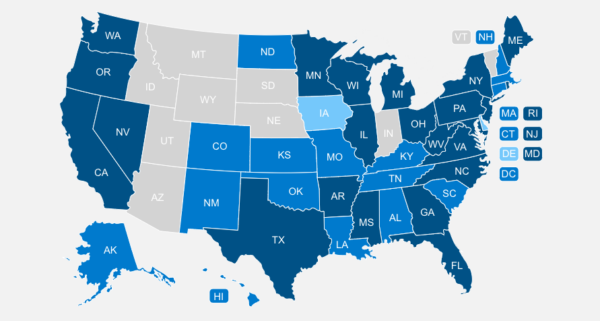

Cause Marketing and Commercial Co‑Venture by State: Essential Registration Requirements Guide
Cause-Marketing and Commercial Co-Venture in Texas: Essential Registration Requirements Guide
At a Glance
Texas does not require traditional state-level registration for most commercial co-venturers, unlike many other states. However, specific entities like veterans organizations using solicitors must register with the Texas Secretary of State and maintain a surety bond.
Are you planning to boost your business through a commercial co-venture with a charity in Texas? You need to know the state-specific registration requirements before launching your campaign! Commercial co-ventures—promotions where businesses promise to donate a portion of sales to charities—are subject to specific regulations in Texas. These partnerships can be incredibly effective marketing tools, but they also come with legal responsibilities that vary by state.
Additionally, businesses must understand the financial reporting obligations, renewal procedures, and potential exemptions available under Texas law. Failing to comply with these regulations can result in penalties and enforcement actions from the Texas Attorney General’s office. Therefore, understanding the legal framework is essential before entering into any charitable sales promotion in the Lone Star State. Managing these requirements can be complex, but Labyrinth supports businesses and nonprofits with state-specific CCV filings, compliant disclosure language, and contract guidance to streamline compliance across jurisdictions.
This guide walks you through everything you need to know about commercial co-venture requirements in Texas—from qualifying as a co-venturer to maintaining proper documentation and fulfilling your ongoing obligations to both the state and your charitable partners.
Definition of Commercial Co-Venture under Texas Law
Understanding what constitutes a commercial co-venture in Texas requires examining both general industry definitions and state-specific regulations. Unlike many other states, Texas takes a somewhat unique approach to regulating these charitable marketing partnerships.

What qualifies as a commercial co-venture in Texas
A commercial co-venture occurs when a for-profit business partners with a charitable organization and advertises that purchases of goods or services will benefit that charity. In most states, including Texas, a commercial co-venturer is defined as a person or entity regularly and primarily engaged in commerce who conducts a charitable sales promotion.
Commercial co-ventures are frequently referred to as “charitable sales promotions” or “cause-related marketing” arrangements. The fundamental element that distinguishes a commercial co-venture is the representation to consumers that their purchase will trigger a donation to a charitable organization.
Notably, Texas does not currently maintain a traditional registration requirement for commercial co-venturers at the state level, though businesses may need to comply with other regulations before and after fundraising events. This differs from states like Massachusetts, which requires co-venturers to register with the Attorney General, file a surety bond, and submit contracts before commencing promotions.
Examples of charitable sales promotions
Charitable sales promotions appear in various formats across the business landscape. Some common examples include:
- A local restaurant donating proceeds from every meal sold during a weekend event
- A national brand donating a specific dollar amount for each product sold during a promotional period
- The long-running partnership between Apple and (RED), where Apple sells red products and donates a portion of proceeds to the charitable organization
The origin of the term “cause-related marketing” is often attributed to American Express and its 1983 Statue of Liberty Restoration project, though records of cause marketing programs date back to at least 1976 with Marriott and the March of Dimes.
Distinction between co-venturers and corporate sponsors
Commercial co-venturers should not be confused with corporate sponsors. The primary distinction lies in how the charitable component is structured.
In a commercial co-venture, the for-profit entity explicitly advertises that purchasing their products or services will directly benefit a charitable organization. Consequently, the arrangement is subject to specific regulations even in Texas, despite the absence of formal registration requirements.
Conversely, corporate sponsorships typically involve a business providing direct support to a charitable organization or event without tying consumer purchases to donations. This distinction is important because different legal and tax implications apply to each arrangement.
Furthermore, approximately twenty-two states have laws specifically regulating commercial co-venturers, and all fifty states have some form of laws pertaining to these arrangements. Even in states without specific commercial co-venturer definitions, some regulators have attempted to regulate these promotions by interpreting other statutory definitions broadly.
When structuring a commercial co-venture in Texas, the most fundamental requirement—regardless of state-specific regulations—is that any arrangement must be detailed in a written contract. Despite Texas not requiring formal registration, maintaining proper documentation and clear public disclosures remains essential for legal compliance.
Initial Registration Requirements for Co-Venturers
Texas takes a unique approach to commercial co-venture regulations compared to many other states. While approximately 22 states have specific registration requirements for commercial co-venturers, the Lone Star State follows a different regulatory path.
When registration is required under Texas Occupations Code §1804
In contrast to states like Massachusetts, where commercial co-venturers must register with the Attorney General, file a surety bond, and submit contracts before commencing promotions, Texas does not currently mandate traditional registration for commercial co-venturers at the state level.
Nevertheless, Texas does require registration for specific categories of charitable solicitors. Under the Texas Occupations Code §1804, veterans organizations using veterans organization solicitors must register with the Secretary of State. This requirement extends to:
- Veterans organizations that employ solicitors for fundraising
- The solicitors themselves who represent these organizations
For such organizations, registration is mandatory prior to beginning any solicitation activities. The organization must file a registration statement and maintain a surety bond as outlined in Section 1804.101. Moreover, individuals acting as veterans organization solicitors must file their own registration statement and maintain a separate surety bond under Section 1804.102.
Similarly, Texas law requires registration for certain law enforcement related organizations that solicit by telephone, public safety organizations and their solicitors, and veterans organizations with their solicitors (see the Texas Attorney General’s charitable registrations guidance).
Required forms and documentation for initial filing
For veterans organizations required to register, the registration statement must include:
- Contact information for all solicitors representing the organization
- Names and details of beneficiary organizations or funds
- Information about tax-exempt status
- Names of veterans serving on the board of directors
- Membership statistics regarding veteran participation
- Details of local chapters or member groups
- The most recently filed IRS Form 990
- Surety bond information
Subsequently, these organizations must submit a $150 registration fee along with the original copy of the required surety bond. For veterans organization solicitors, the registration fee is substantially higher at $500, plus the required surety bond.
Once issued, registration certificates remain valid for one year from the date of issuance. Afterward, organizations must file renewal registration statements and pay the applicable fees annually to maintain compliance.
Exemptions from registration for certain entities
Importantly, most charitable or nonprofit organizations in Texas are not required to register with the state (see the Texas Attorney General’s charitable registrations guidance).
As a result, in the specific context of commercial co-ventures, an entity may qualify for an exemption if it meets certain criteria under Texas law. For instance, if the commercial co-venturer doesn’t receive any proceeds from the sales of goods or services benefitting the charitable organization, and instead all proceeds go directly to the charity, then the entity is not considered a commercial co-venturer and state laws would not apply.
Additionally, entities where a person acts on behalf of the issuer may be exempt from dealer registration if they meet three criteria: (1) the person wasn’t hired specifically to offer or sell securities; (2) any securities activities are incidental to their primary non-securities work; and (3) compensation is entirely based on non-securities duties (see the Texas State Securities Board exemptions from registration).
Contract Filing and Disclosure Obligations
Commercial co-ventures in Texas require careful attention to contractual obligations, even though the state takes a different approach compared to others regarding registration requirements.
Written agreement requirements under Texas law
Written agreements are a widely used best practice for any commercial co-venture partnership, and many states require them. Texas does not have a statute that specifically requires or prescribes the contents of commercial co-venture contracts, but campaigns that reach other states must follow those jurisdictions’ contract rules and disclosures. When campaigns span multiple jurisdictions, Labyrinth helps track varying requirements, notices, and reporting obligations to ensure comprehensive compliance.
Given that all 50 states have laws pertaining to commercial co-venture arrangements, your written agreement must comply with Texas-specific standards alongside general best practices. Many states control the contents of the contract between co-venturers and charities, so structuring these documents properly becomes crucial even in states with fewer formal requirements.
Filing deadlines for co-venture contracts
Currently, Texas does not impose specific filing deadlines for commercial co-venture contracts unlike states such as Massachusetts, which requires filing within 10 days of executing the contract and before beginning any sales promotion.
Still, whenever engaging in a commercial co-venture, you should:
- Complete and execute your written agreement before launching any charitable sales promotion
- Keep copies of all documentation readily accessible for potential review
- Consider the timing requirements that may apply if your promotion crosses state lines

Required contract terms: duration, scope, and financial terms
Your commercial co-venture agreement should clearly address several key components to ensure compliance with Texas law:
First, outline the promotional campaign’s duration—whether it’s a weekend event, month-long initiative, or ongoing program. Second, define the scope by specifying which products or services are included in the promotion and the geographical areas where it applies. Finally, explicitly state the financial terms, including the exact amount or percentage of sales that will benefit the charitable organization.
The contract should ideally be signed by authorized representatives from both organizations. Certain states even require signatures from two officers of the charitable organization alongside the organization’s registration number, which represents a best practice even in Texas.
Disclosure obligations to the public and state agencies
Public disclosure represents another critical obligation for commercial co-venturers operating in Texas. Many states dictate specific disclosures required in advertisements for charitable sales promotions. Following these guidelines helps ensure transparency with consumers. We assist with organizing contracts, filing materials, and post-campaign records, helping partners stay compliant and audit-ready with proper disclosure language for promotional materials.
For instance, your promotional materials should clearly communicate:
- The exact amount or percentage of each purchase that benefits the charity
- The duration of the campaign
- Any minimum or maximum donation amounts
Additionally, maintain accurate records of all sales during the promotion period. Typically, these records should be kept for at least three years after the completion of the promotion. Furthermore, upon request, you may need to provide accounting information from the charitable sales promotion to state authorities.
Annual Reporting and Renewal Procedures
Maintaining compliance as a commercial co-venturer involves ongoing obligations beyond initial registration. Yet, the exact requirements vary across jurisdictions, with some states imposing more rigorous procedures than others.
Annual renewal form and deadline
Unlike states such as Alabama, California, or Massachusetts, Texas does not currently mandate formal annual renewal specifically for commercial co-venturers. However, for entities that do operate in states requiring renewal, deadlines typically fall on specific annual dates or coincide with the anniversary of initial registration. For example, Alabama requires renewal by September 30th annually with a fee of $100, California by January 15th with a $500 fee, and Massachusetts by December 31st with a $200 fee.
For Texas-based co-venturers operating multi-state campaigns, tracking these varying requirements becomes essential. Many campaigns span multiple jurisdictions, and we help coordinate varying requirements, notices, and reporting obligations to ensure timely filings across all applicable states. Many Texas entities must also file the annual Franchise Tax Report, which is due May 15 (or the next business day if May 15 falls on a weekend or holiday); see the Texas Comptroller’s franchise tax guidance.
Required financial disclosures and sales data
After concluding a charitable sales promotion, co-venturers often must provide financial statements to their charity partners. These reports typically detail the total revenues generated, expenses incurred, and charitable contributions made during the promotion period.
Several states mandate joint financial reports following the conclusion of charitable sales promotions. Depending on the jurisdiction, these reports may need to be filed within a set number of days after a campaign ends and must comprehensively document the financial outcomes of the promotion.
Recordkeeping requirements for co-venturers
Proper documentation remains vital even without formal state filings. Indeed, some jurisdictions explicitly require co-venturers to maintain records of charitable sales for three years following the completion of any promotion. This documentation should include:
- Copies of all promotional materials and advertisements
- Detailed sales records related to the charitable promotion
- Financial calculations showing donation amounts
- Receipts of payments made to charitable organizations
Consequences of failing to renew registration
Non-compliance with registration and renewal requirements carries significant risks. Penalties may include:
- Civil and criminal penalties
- Publicly announced cease and desist orders
- Forced return of charitable donations
- Loss of ability to raise funds in a state
Beyond monetary penalties, failure to comply can potentially damage your company’s reputation and relationship with charitable partners. In certain cases, officers and directors may face personal liability for violations.
Undeniably, the more damaging consequences include taxation of all charitable donations received and potential civil and criminal prosecution of officers and directors. Therefore, vigilant attention to compliance requirements across all operating jurisdictions remains critical for commercial co-venturers.
Legal Risks and Enforcement Actions
Non-compliance with commercial co-venture regulations carries significant legal consequences for businesses operating in Texas. Considering the potential impact on both your business operations and reputation, understanding these risks becomes essential before launching any charitable sales promotion.
Penalties for non-compliance with Texas co-venture laws
Because Texas does not have a CCV-specific registration statute, penalties depend on which Texas laws are implicated by a campaign. For example, the Attorney General may audit veterans organizations and veterans organization solicitors and seek injunctive relief and civil penalties of up to $10,000 per violation under the Veterans Solicitation Act (Texas Occupations Code §§ 1804.201–.204). Public safety organizations and their solicitors are subject to similar enforcement, including injunctive relief and civil penalties (e.g., up to $2,500 for a single violation or up to $10,000 for all violations) under the Public Safety Solicitation Act (Texas Occupations Code §§ 1803.151–.154).
Examples of enforcement actions by the Texas Attorney General
The Texas Attorney General actively monitors compliance with state regulations. Recently, the office issued enforcement notices to over one hundred companies for failing to register under Texas’s data broker law; see the Texas Attorney General enforcement notice. Companies operating non-compliant commercial co-ventures may face public enforcement actions, including formal cease and desist orders that demand immediate dispersal of all charitable assets to the intended organizations.
How to respond to a compliance audit or investigation
Should your business face a compliance audit or investigation, take these immediate steps:
- Gather complete documentation, including all contracts, promotional materials, and financial records
- Consult with legal counsel specializing in Texas charitable promotion regulations
- Implement prompt remedial measures to address identified issues
- Consider voluntary disclosure if violations are discovered internally
Importantly, maintaining meticulous records proves crucial—all commercial co-venturers should preserve documentation of charitable sales promotions for at least three years following campaign completion. This documentation serves as your primary defense during regulatory scrutiny.
Conclusion
Understanding Texas commercial co-venture requirements remains essential before launching any charitable sales promotion. Throughout this guide, we’ve examined how Texas differs from other states regarding these partnerships. Unlike twenty-two states with formal registration systems, Texas takes a more streamlined approach, yet still demands careful attention to compliance details.
First and foremost, proper documentation serves as your foundation for legal compliance. Although Texas doesn’t require traditional registration for most commercial co-venturers, written agreements between your business and charitable partners are absolutely necessary. These contracts should clearly outline promotion duration, donation percentages, and all financial terms before any campaign begins.
Additionally, transparent public disclosures about your charitable promotion protect both consumers and your business reputation. Your marketing materials must accurately represent how purchases will benefit the charitable organization, including specific amounts or percentages donated.
Despite fewer formal filing requirements, record-keeping proves crucial for Texas co-venturers. Therefore, maintain comprehensive documentation of all promotional activities for at least three years following your campaign. These records become invaluable during any potential compliance audit or investigation.
Penalties for non-compliance can be severe, as evidenced by Texas Attorney General enforcement actions. Consequently, businesses face substantial financial sanctions, potential cease and desist orders, and even possible criminal charges for violations. For businesses running multi-state campaigns or seeking to ensure complete compliance, Labyrinth supports businesses and nonprofits with state-specific CCV filings, compliant disclosure language, and contract guidance across all jurisdictions.
Before embarking on a charitable sales promotion in Texas, consider consulting with legal counsel familiar with state-specific regulations. This precautionary step helps ensure your commercial co-venture complies with all applicable laws while effectively benefiting both your business and charitable partners. Remember that requirements vary significantly between states, making multi-state campaigns particularly complex from a compliance perspective.
Commercial co-ventures undoubtedly offer powerful marketing opportunities while supporting worthy causes. Nevertheless, their success depends on careful planning, meticulous documentation, and unwavering commitment to meeting all legal obligations under Texas law.

Frequently Asked Questions
