
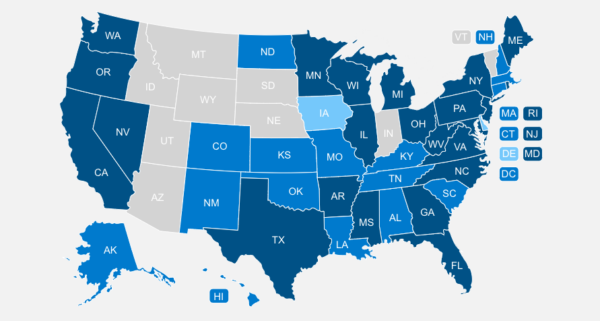

Cause Marketing and Commercial Co‑Venture by State: Essential Registration Requirements Guide
Cause-Marketing and Commercial Co-Venture in Utah: Essential Registration Requirements Guide
At a Glance
Utah does not require commercial co-venturers to register separately with state authorities or file agreements before launching charitable sales promotions. The primary legal requirement is proper advertising disclosure that clearly states the exact dollar amount or percentage per unit that will benefit the charitable organization.
Out-of-state nonprofits not registered to do business in Utah are exempt from charitable solicitation registration, while Utah-based nonprofits must submit Form 990 documentation with their corporate filings.
Understanding Charitable Sales Promotions in Utah
Commercial co-ventures in Utah operate under specific legal frameworks that define their nature and requirements. These business-charity partnerships must adhere to certain rules outlined in the state’s commercial solicitation laws, which have undergone notable changes recently.

Definition of ‘Charitable Sales Promotion’ under Utah Code § 13-22
The Utah Code precisely defines a charitable sales promotion as “an advertising or sales campaign, conducted by a commercial co-venturer, which represents that the purchase or use of goods or services offered by the commercial co-venturer will benefit, in whole or in part, a charitable organization or purpose” (Utah Code § 13-22-2). This legal definition establishes the foundation for all regulatory requirements governing such promotions throughout the state.
The core element of this definition centers on the representation that purchases or use of specific products or services will support a charitable cause. Additionally, Utah law requires commercial co-venturers to disclose in each advertisement the exact dollar amount or percentage per unit that will benefit the charitable organization or purpose (Utah Code § 13-22-22). This transparency requirement ensures consumers know precisely how their purchases translate to charitable support.
Distinction Between Charity and Commercial Co-Venturer
Understanding the different roles in a charitable sales promotion is essential for proper compliance. A commercial co-venturer differs fundamentally from a charity in that it is primarily engaged in trade or commerce unrelated to fundraising. Essentially, these are for-profit businesses that incorporate charitable giving into their sales strategy.
Unlike professional fundraisers who must submit extensive documentation before commencing campaigns, commercial co-venturers face different requirements. Under Utah Code § 13-22-24, professional fundraisers must provide projected expenses and revenue, bank account information, solicitation scripts, and other materials. Conversely, commercial co-venturers primarily need to focus on proper advertising disclosure.
Moreover, it’s important to distinguish that the charity benefits from the promotion but isn’t conducting it directly—the commercial entity manages the promotion while committing to donate a portion of proceeds.
Scope of Activities Considered a Sales Promotion
Commercial co-ventures encompass a broad range of business activities. These typically include:
- Share of revenue agreements where businesses donate a percentage of sales
- Event underwriting where businesses sponsor charitable events
- Product-linked donations where purchases trigger specific contributions
These arrangements are commonly memorialized in writing as a best practice. Under Utah law, the express statutory requirement for commercial co‑venturers is the advertising disclosure described in Utah Code § 13‑22‑22.
Commercial co-ventures remain distinct from fundraising campaigns conducted by professional fundraisers, which face more rigorous documentation requirements. For businesses planning promotional partnerships with charities, this distinction matters significantly as it affects obligations and administrative procedures.
Initial Registration Requirements for Utah-Based and Foreign Nonprofits
Recent changes to Utah’s charitable solicitation laws have created important distinctions in registration requirements for organizations involved in commercial co-ventures. These changes simplify procedures for many entities operating in the state.
No Registration Required for Non-Utah Charities
Utah has implemented a significant registration exemption that affects many commercial co-venture partnerships. Out-of-state nonprofits not registered as foreign entities in Utah are exempt from separate charitable solicitation registration. Domestic nonprofit corporations and foreign nonprofit corporations that “do business” in Utah register the nonprofit entity with the Division of Corporations and Commercial Code (DCCC) and handle annual reporting through that agency (Utah Division of Consumer Protection charities guidance).
According to state guidance, charitable organizations are no longer required to register with the Division of Consumer Protection prior to soliciting contributions in Utah. Instead, corporate registration with DCCC applies to nonprofits incorporated in Utah and to foreign nonprofit corporations that register to conduct business in Utah (Utah DCP charities guidance).
For commercial co-venturers, this distinction is crucial when selecting charity partners, as it affects the administrative requirements for your cause marketing campaigns. Partnerships with non-Utah charities not registered to do business in Utah may now proceed without a separate charitable solicitation registration. Additionally, when nonprofit partners need charitable solicitation registration in other states for multi-state CCV campaigns, understanding these requirements becomes part of comprehensive planning.
Form 990 Filing for Utah-Incorporated Nonprofits
Despite registration exemptions for out-of-state organizations not registered to do business in Utah, Utah-based nonprofits and foreign nonprofits registered to do business in Utah face specific filing obligations that affect commercial co-venture partnerships. Effective January 1, 2025, nonprofit corporations incorporated in Utah or registered as foreign nonprofit corporations must upload unredacted copies of their IRS Form 990, 990‑EZ, 990‑N, or 990‑PF as part of their corporate registration and annual report filings with DCCC (Utah DCP charities guidance).
The Form 990 submission details include:
- Upload the most recently filed Form 990 when you file your Annual Report/Renewal (for existing entities), or during initial entity registration if registering a nonprofit entity with DCCC (Utah DCP charities guidance)
- New nonprofits without a filed Form 990 in the first year of operation will upload the Form 990 when filing the first Annual Report/Renewal (Utah DCP charities guidance)
- Do not upload Form 990 Schedule B or Form 8879, and avoid including sensitive information (e.g., Social Security Numbers or PINs) (Utah DCP charities guidance)
For commercial co-venturers partnering with Utah-based charities, verifying that your nonprofit partners remain compliant with these filing requirements helps ensure your cause marketing campaigns proceed without regulatory complications.
Corporate Registration vs. Charitable Solicitation Registration
Utah has fundamentally restructured how it regulates charitable activities. Under the new framework, the primary regulatory focus has shifted from charitable solicitation registration to corporate registration requirements.
The Division of Consumer Protection no longer issues charitable registrations for any organizations (Utah DCP charities guidance). Instead, filing requirements for charitable organizations are now administered by the Division of Corporations and Commercial Code. This streamlined approach eliminates the previous application-based charitable registration with DCP.
Nevertheless, commercial co-venturers should note that the Division of Consumer Protection still enforces Utah’s Charitable Solicitations Act, including issuing fines for noncompliance (Utah DCP charities guidance). This creates a dual regulatory system where registration happens through one division but enforcement through another.
For commercial co-ventures, understanding these distinctions helps ensure proper adherence to regulations while avoiding unnecessary administrative burdens when structuring cause marketing partnerships in Utah.
Contract Filing and Documentation Obligations
Utah’s approach to commercial co-venture documentation emphasizes accountability while minimizing pre-launch administrative burdens. The state’s regulations focus more on maintaining proper documentation than on extensive pre-filing requirements, creating a streamlined yet responsible framework for businesses and nonprofits.
No Pre-Filing of CCV Agreements Required
Utah law does not require pre-filing of commercial co-venture agreements with state authorities. The governing statute for charitable sales promotions centers on advertising disclosure to consumers, not on pre-campaign contract filings (Utah Code § 13‑22‑22). This approach simplifies procedures for businesses seeking to launch promotional campaigns without lengthy pre-approval processes.

Recommended Contract Elements for Internal Operations
Even without mandatory pre-filing, having a comprehensive written agreement between the commercial co-venturer and charity is a strong best practice. While not prescribed by statute for commercial sales promotions, a written agreement helps both parties align expectations and can facilitate a prompt response if the Division of Consumer Protection requests information in an audit or investigation under Utah Code § 13‑22‑3.
For maximum protection, your commercial co-venture contract could include:
- Specific description of goods or services being offered
- Clear explanation of how the charity’s name will be used
- Precise campaign dates and geographic scope
- Concrete amount to be donated (e.g., $0.10 per item sold or 1% of net sales)
- Minimum/maximum donation amounts if applicable
- Provisions for final accounting
- Responsibilities of each party
Such specificity not only supports transparency but also builds consumer trust in your promotion. When structuring multi-state campaigns, experienced providers can help prepare contract elements that meet various state disclosure standards while maintaining operational efficiency.
Retention of Agreements for Audit Readiness
Utah law does not set a specific record-retention period for commercial co‑venture charitable sales promotions. However, the Division of Consumer Protection has authority to audit and investigate and may require production of materials relevant to an investigation (Utah Code § 13‑22‑3). Maintaining thorough documentation (e.g., promotional materials, sales data, donation calculations, and proof of payments) can facilitate efficient responses to any regulatory inquiries.
Annual Reporting and Financial Disclosure Rules
Adherence to Utah’s annual reporting requirements has been streamlined through recent legislative changes. These modifications affect how commercial co-ventures handle their financial disclosure obligations throughout their charitable partnerships.
Form 990 Submission as Part of Corporate Filings
Utah’s Charitable Solicitation Act guidance establishes new filing protocols for nonprofits. Domestic nonprofit corporations and foreign nonprofit corporations registered to do business in Utah must submit unredacted copies of their IRS Form 990 as part of their corporate registration and annual reporting obligations (Utah DCP charities guidance). Upload the most recent Form 990 with your Annual Report/Renewal in the DCCC portal.
Schedule B Exclusion in Utah Filings
While Utah requires unredacted Form 990 submissions, there’s a notable exception. Organizations should not submit Schedule B with their filings (Utah DCP charities guidance). This exclusion is significant because Schedule B lists individual contributors who donate over specified thresholds.
No Post-Promotion Financial Report Required
Commercial co-venturers benefit from Utah’s pragmatic approach to post-campaign reporting. Utah Code § 13‑22‑22 focuses on advertising disclosure and does not mandate submission of post-promotion financial reports detailing revenue generated and contributions made from cause marketing campaigns.
Electronic filing options are available through the online portal provided by the Utah Division of Corporations and Commercial Code (Utah Division of Corporations renewal process).
Exemptions, Limitations, and Enforcement Considerations
Utah’s regulatory framework features several notable exemptions plus robust enforcement mechanisms for those engaged in commercial co-ventures. Understanding these provisions helps businesses avoid potential pitfalls.
Exemption for Non-Utah Charities Not Registered to Do Business
A key exemption exists for out-of-state charitable organizations. Under current Utah guidance, charitable organizations incorporated outside Utah are not required to register a separate charitable solicitation with the Division of Consumer Protection. However, domestic nonprofits and foreign nonprofits that register to do business in Utah must complete corporate registration and associated annual report filings with DCCC (Utah DCP charities guidance).
This stands in contrast to traditional multi-state requirements faced by commercial co-venturers. Importantly, this exemption does not eliminate the need for proper documentation and disclosure in advertisements.
Clarification on Political Organizations
Utah law explicitly excludes political organizations from the definition of charitable organizations (Utah Code § 13‑22‑2). The statute defines political organizations as “any party, committee, fund, or other organization organized and operated primarily for directly or indirectly accepting contributions or making expenditures for an exempt function” (Utah Code § 13‑22‑2).
These exempt functions include activities attempting to influence selection, nomination, election, or appointment of individuals to government offices. Commercial co-venturers should verify their nonprofit partners’ classification regarding these provisions.
Penalties for Misrepresentation or Non-Compliance
The Division of Consumer Protection maintains robust enforcement authority regarding commercial co-ventures. For violations of Utah’s charitable solicitation laws, the director may impose administrative fines up to $2,500 per violation (Utah Code § 13‑22‑3). Additionally, violating an administrative or court order can result in civil penalties up to $5,000 per violation (Utah Code § 13‑22‑3).
Prohibited acts that trigger enforcement include:
- Stating or implying that registration constitutes state endorsement
- Making false statements or omitting material facts in promotional materials
- Violating any requirement under the charitable solicitation chapter
- Failing to comply with division orders (Utah Code § 13‑22‑3)
Beyond state penalties, failing to maintain proper procedures can damage business reputation and consumer trust. The Division retains authority to audit and investigate suspected violations, plus it can seek court injunctions against non-compliant practices (Utah Code § 13‑22‑3). Given these consequences, maintaining proper documentation throughout commercial co-venture partnerships remains essential.
Conclusion
Utah stands apart from many states through its streamlined approach to commercial co-venture regulations. These changes benefit businesses and nonprofits alike by reducing administrative burdens while maintaining necessary consumer protections.
First and foremost, understanding the distinction between Utah-based and out-of-state charitable organizations remains essential for proper adherence to regulations. Foreign nonprofits without Utah business registration now handle corporate registration only if they register to do business in the state. Conversely, Utah-incorporated nonprofits and foreign nonprofits registered to do business in Utah must submit Form 990 documentation as part of their annual corporate filings.
Equally important, written agreements between commercial co-venturers and charitable organizations continue as a fundamental best practice even though Utah law focuses on advertisement disclosure rather than pre-filing obligations. Your business should maintain comprehensive documentation including specific donation terms, campaign dates, and promotional materials. Maintaining records supports readiness for potential regulatory inquiries under the Division’s investigative authority.
The shift from charitable solicitation registration to corporate registration simplifies procedures significantly. Nevertheless, advertising disclosure obligations remain strictly enforced, requiring transparent communication about exact donation amounts or percentages benefiting charitable causes. Professional guidance can help ensure these disclosures meet state standards while supporting effective campaign messaging.
Failure to comply with these regulations could result in substantial penalties up to $2,500 per violation. Therefore, thorough understanding of your specific obligations based on your nonprofit partner’s classification and registration status proves crucial for successful cause marketing campaigns.
Commercial co-ventures offer valuable opportunities to enhance your brand while supporting worthy causes. By following Utah’s specific requirements for documentation, disclosure, and record-keeping, your business can confidently engage in charitable promotions that benefit both your company and the community. This balanced regulatory approach ultimately fosters greater participation in cause-related marketing while protecting consumer interests through appropriate transparency and accountability. For businesses managing multi-state campaigns or seeking guidance on complex requirements, partnering with experienced specialists can provide valuable support in navigating these obligations efficiently.

Frequently Asked Questions
