
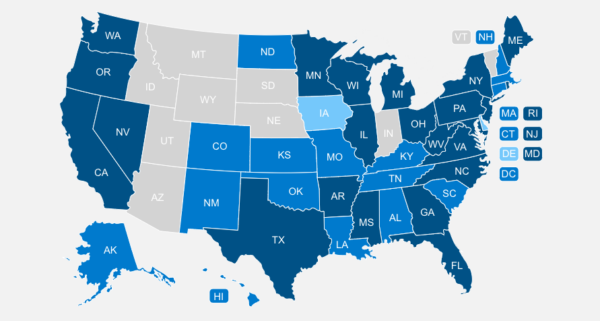

Cause Marketing and Commercial Co‑Venture by State: Essential Registration Requirements Guide
Cause-Marketing and Commercial Co-Venture in Vermont: Essential Registration Requirements Guide
At a Glance
Vermont does not require commercial co-venturers to register with state agencies, post bonds, or file promotion contracts before launching charitable sales promotions. However, businesses must still use written agreements with charitable partners and provide clear disclosures to consumers about the charity’s name, donation amounts, and any maximum caps. Vermont’s approach is among the least burdensome in the United States for businesses wanting to support charitable causes through their commercial activities.
What Is a Commercial Co-Venture?
Are you planning to partner your business with a charity for a sales promotion? A commercial co-venture can boost your brand image while supporting a worthy cause! When your business promises to donate a portion of sales to a charitable organization, you’re entering the world of commercial co-ventures—a powerful marketing strategy that benefits everyone involved.

Fortunately, if you’re operating in Vermont, you’ll find the state has relatively straightforward requirements compared to others. However, understanding these requirements is still crucial to ensure your promotion runs smoothly and legally. Vermont law has specific guidelines about what qualifies as a charitable sales promotion, what disclosures you need to make, and how to properly document your partnership with the nonprofit organization.
In this guide, you’ll discover everything you need to know about commercial co-venture requirements in Vermont. We’ll walk through the definition of a commercial co-venturer, explain the necessary agreements with charities, outline disclosure requirements, and compare Vermont’s approach with other states. Whether you’re a small business or a large corporation, this information will help you navigate the process confidently and legally.
What Qualifies as a Charitable Sales Promotion in Vermont
Vermont law provides specific parameters for what constitutes a charitable sales promotion. Understanding these qualifications ensures your business follows proper guidelines when partnering with nonprofit organizations for fundraising campaigns.
Definition of ‘Charitable Sales Promotion’ under Vermont Law
Under Vermont law, charitable sales promotions involve advertising or sales campaigns in which a business represents that consumer purchases will benefit a charitable purpose. For the exact statutory definitions and any exceptions, consult current Vermont statutes (9 V.S.A. Chapter 63).
Specifically, these are advertising or sales campaigns where businesses promise that a portion of each purchase will support a charitable cause. The key element is the representation to consumers that their purchases will trigger donations to charity.
Vermont also uses the term “commercial co-venturer” to describe for‑profit businesses that engage in such promotions in connection with their regular trade or commerce. For the precise definition, refer to the statute.
Exclusions: When a Promotion Does Not Qualify
Not all charity-related promotions qualify as charitable sales promotions under Vermont law. Certain campaigns are excluded by statute. Examples that may be excluded include:
- Promotions where the entire amount paid benefits a charitable organization or purpose
- Campaigns in which the business does not generate a net profit from the promotion
- Promotions that do not involve the sale or lease of goods or services
Always review the current statutory language to determine whether an exclusion applies.
Examples of Common Commercial Co-Venture Campaigns
Commercial co-ventures take various forms throughout the marketplace. One classic example is percentage-based donations, such as when a local brewery donates $1.00 per drink sold during a specific month to a charity (see SRH Law overview of commercial co‑venturers). These time-limited campaigns directly tie consumer purchases to charitable contributions.
Another notable example is the AmazonSmile program, where Amazon donates 0.5% of eligible purchase prices to a customer’s selected charitable organization (see SRH Law overview of commercial co‑venturers). Although ongoing rather than time-limited, this represents a typical commercial co-venture structure.
Additionally, checkout donation campaigns have become increasingly common. These include “round-up-your-total” or “donate-your-change” initiatives at retail establishments where customers are asked to contribute at the point of sale (see SRH Law overview of commercial co‑venturers). Though structurally different from traditional commercial co-ventures, these campaigns also fall under charitable sales promotion regulations in many jurisdictions.
The earliest documented cause-related marketing campaign dates back to the early 1980s when American Express coined the term during their fundraising effort for the Statue of Liberty restoration, raising approximately $1.70 million (see SRH Law overview of commercial co‑venturers). This pioneering campaign established the model many businesses follow today.
Understanding the Role of a Commercial Co-Venturer
Commercial entities that partner with charities often take on specific legal roles with corresponding obligations. Understanding these distinctions helps ensure proper compliance with Vermont’s charitable promotion laws.
Definition of a Commercial Co-Venturer
Under Vermont law, a commercial co‑venturer generally refers to a for‑profit person or entity regularly and primarily engaged in trade or commerce that represents to the public that a portion of purchases or use of goods/services will benefit a charitable organization or purpose. For the exact statutory definition, consult Vermont law.
In practical terms, a commercial co-venturer (CCV) is a for-profit business that temporarily incorporates charitable giving into its marketing strategy. Unlike organizations whose primary purpose is fundraising, CCVs are businesses first—retail stores, manufacturers, service providers—that create limited-time promotions where consumer purchases trigger donations to charity (see Perlman & Perlman overview of charitable fundraising compliance).
Distinction Between CCVs and Professional Fundraisers
The key difference between commercial co-venturers and professional fundraisers lies in their primary business focus:
Professional fundraisers specifically operate to raise money for charitable organizations as their main business activity. In contrast, commercial co-venturers are businesses whose core operations are unrelated to fundraising—they simply incorporate charitable giving into their marketing temporarily (see California Attorney General guidance on professional fundraisers).
Professional fundraisers typically must register in most states and face stricter regulations since fundraising is their primary business. Meanwhile, commercial co-venturers face fewer registration requirements in many jurisdictions, including Vermont (see SRH Law overview of commercial co‑venturers).
Furthermore, CCVs generally maintain control over their promotion and simply donate a portion of proceeds, whereas professional fundraisers often directly solicit funds on behalf of charities, sometimes receiving compensation based on the amount raised (see Alabama Attorney General licensing and registration guidance).
Legal Implications of Acting as a CCV in Vermont
Operating as a commercial co-venturer in Vermont carries several legal responsibilities:
Written Agreements: Use a written contract with the charitable organization to document the arrangement, responsibilities, and financial terms. A written agreement supports compliance, and some states require specific terms.
Recordkeeping Obligations: Vermont law includes recordkeeping provisions for charitable sales promotions. Businesses should maintain records sufficient to demonstrate compliance with applicable requirements and the disclosed terms of a charitable sales promotion.
Disclosure Requirements: Vermont law requires clear and conspicuous disclosures when representing that purchases will benefit a charitable cause. Common elements include identifying the benefiting charity, the amount or percentage donated (and how amounts are calculated for aggregate campaigns), and any maximum cap. Place disclosures near the representation. Consult the statute for exact requirements.
Managing CCV requirements across multiple states can be complex. Labyrinth supports businesses and nonprofits with state-specific CCV filings, compliant disclosure language, and contract guidance. Many campaigns span multiple jurisdictions, and we help track varying requirements, notices, and reporting obligations.
Notably, unlike several other states, Vermont does not require commercial co-venturers to:
- Register with state agencies
- File promotion contracts with regulatory bodies
- Post bonds
- Submit campaign financial reports (see Harbor Compliance summary of CCV registration)
This regulatory approach makes Vermont considerably less burdensome for businesses wanting to support charitable causes through their commercial activities (see SRH Law overview of commercial co‑venturers). Nevertheless, if your promotion extends beyond Vermont’s borders, you may need to comply with more stringent requirements in other states, as several states mandate registration, contract filing, bonding, or financial reporting for CCVs.
Consequently, understanding your role as a commercial co-venturer and the corresponding legal obligations remains essential for running compliant charitable promotions in Vermont and beyond.
Disclosure Requirements for Vermont-Based Promotions
Transparency forms the cornerstone of Vermont’s approach to regulating charitable sales promotions. Every commercial co-venture should properly disclose key information to consumers so they understand how their purchases benefit charitable organizations.
Mandatory Disclosures: Charity Name and Donation Amount
Vermont law requires clear and conspicuous disclosures when representing that purchases will benefit a charitable cause. In practice, disclosures should identify the benefiting charitable organization or purpose and state the amount per unit or the percentage of the purchase price that will benefit the charity. If the donation is based on aggregate purchases, explain how the donation will be calculated. If a maximum donation applies, disclose that cap. Consult current statute for the precise disclosure items and phrasing.
For promotions based on aggregate purchases rather than per-unit sales, explaining both the amount that will be donated and how that amount will be calculated helps prevent consumer confusion about how collective purchasing translates into charitable support.

Stating the Maximum Donation Cap
If your campaign caps total donations, clearly disclose the maximum amount that will benefit the charitable organization. Failing to disclose a cap could mislead consumers who might continue making purchases believing they’re generating additional charitable contributions after the cap has been reached.
For instance, a disclosure might state: “5 cents will go to ABC Charity for every box of XYZ Cereal sold in October up to a maximum of $200,000.” This clearly communicates both the per-unit donation and the overall limitation.
Best Practice: Including Promotion Dates
Even though Vermont statutes don’t explicitly require it, including the timeframe of your promotion represents a best practice that benefits both your business and consumers (see SRH Law overview of commercial co‑venturers). Clearly stating when the promotion begins and ends helps customers understand the window of opportunity during which their purchases will trigger donations.
This practice aligns with the BBB Wise Giving Alliance’s Standards for Charity Accountability, which recommends disclosing “the duration of the campaign (e.g., the month of October)” (see Cogency Global primer on charitable sales promotions). Moreover, the guidelines developed following New York’s review of cause marketing campaigns specifically emphasize the importance of clearly describing the promotion, including its timeframe (see Cogency Global primer on charitable sales promotions).
Placement of Disclosures in Advertisements
Required disclosures should appear in close proximity to any representation about the charitable sales promotion and be presented in a clear and conspicuous manner so consumers can easily find and understand the terms without searching through fine print or navigating to different pages. Consult the Vermont statute for exact placement and content requirements.
Importantly, if your promotion extends beyond Vermont’s borders, particularly online, you may face additional requirements (see SRH Law overview of commercial co‑venturers). At least eleven states require similar point-of-sale or solicitation disclosures as part of commercial co-ventures (see Cogency Global primer on charitable sales promotions). Therefore, designing your promotional materials to meet the most stringent state requirements can simplify compliance across multiple jurisdictions.
Recordkeeping and Agreements with Charities
Formal documentation serves as the backbone of any successful commercial co-venture in Vermont. Despite having fewer registration requirements than other states, proper documentation remains vital for legal protection and transparency.
Written Agreement with the Charity: What to Include
Use a written contract with the charitable organization to outline the responsibilities of both parties and protect everyone involved. Your agreement should address:
- Names and addresses of both parties
- Beginning and end dates of the promotion
- Clear description of services to be performed
- Financial details including percentage or dollar amount going to charity
- Any fixed fees or expenses related to the campaign
- Accounting and reporting timeframes
The level of detail in these agreements varies by state, and certain states may require specific contract terms. In some jurisdictions, state filings can be avoided or simplified by including particular language. As a result, careful attention to contract details can simplify compliance across multiple jurisdictions. Labyrinth assists with organizing contracts, filing materials, and post-campaign records, helping partners stay compliant and audit-ready.
Permission to Use Charity Name and Branding
Prior to launching any promotion, securing explicit permission to use the charity’s name and branding is essential (see SRH Law overview of commercial co‑venturers). This authorization should be clearly documented in your written agreement.
The contract should specify:
- Which charity marks and logos you may use
- How these assets may appear in promotional materials
- Quality control rights over the use of charitable marks
- Duration of permission to use charity branding
This protection ensures both parties maintain control over their respective brand identities and prevents unauthorized or inappropriate use of charitable names and symbols.
Maintaining Proof of Donation Fulfillment
Beyond the initial agreement, businesses should maintain records sufficient to demonstrate compliance with applicable law and the disclosed terms of the charitable sales promotion. Maintaining detailed records protects your business from potential disputes or investigations regarding promotion fulfillment.
In some states, commercial co‑venturers must provide an accounting to charities after a sales promotion. The required timelines and contents vary by jurisdiction. Verify current law in each state before launching a campaign that extends beyond Vermont. Additionally, when CCV activity involves multi-state campaigns, nonprofit partners may need to consider whether such activity affects their charitable solicitation registration obligations in certain jurisdictions.
How Vermont Compares to Other States
The regulatory landscape for commercial co-ventures varies dramatically across the United States. In comparison to many other jurisdictions, Vermont stands out for its straightforward approach to these charitable partnerships.
No Registration Requirement for CCVs in Vermont
Vermont takes a notably hands-off approach to regulating commercial co-ventures. Indeed, the state does not require businesses to register as commercial co-venturers before launching charitable sales promotions (see Harbor Compliance summary of CCV registration). This absence of registration requirements means companies can initiate cause-related marketing campaigns without navigating complex bureaucratic processes or paying registration fees.
Beyond registration exemptions, Vermont does not impose separate state-level CCV bonding, contract filing, or promotion financial reporting requirements.
States That Require Bonding or Pre-Registration
In contrast, certain states impose significantly stricter requirements on commercial co‑venturers. Based on current summaries, Alabama, California, Massachusetts, Mississippi, and South Carolina require registration before launching charitable promotions. In addition, Massachusetts requires a surety bond for commercial co‑venturers (see Harbor Compliance summary of CCV registration). Registrants typically pay only a portion of the bond’s total value—often just a small percentage—based on creditworthiness, similar to an insurance premium.
Increasingly, businesses must consider these varying requirements when planning multi-state promotions. Some states also require post‑promotion financial reporting, wherein commercial co‑venturers must document campaign results and donation amounts. Requirements vary by jurisdiction.
Why Vermont is Considered Less Burdensome
Certainly, Vermont ranks among the states with friendlier regulatory environments for charitable activities (see Philanthropy Roundtable index of charity regulations). Without registration fees, bonding requirements, or mandatory reporting specific to CCVs, Vermont minimizes compliance costs for businesses wishing to support causes through commercial co-ventures (see SRH Law overview of commercial co‑venturers).
- Small businesses with limited legal resources
- First-time charitable promotions
- Companies testing cause marketing concepts
Ultimately, over thirty states have some laws governing commercial co-ventures (see Grellas Shah overview of CCV laws), yet Vermont’s regulatory framework remains among the least restrictive. This balance allows for consumer protection through disclosure requirements while avoiding excessive administrative burdens that might discourage businesses from partnering with charitable organizations.
Conclusion
Commercial co-ventures offer a powerful way for businesses to support charitable causes while enhancing brand image. Throughout this guide, you’ve learned that Vermont maintains a notably business-friendly approach to regulating these partnerships. Unlike states such as Massachusetts, South Carolina, or California, Vermont doesn’t require CCV registration before launching your charitable promotion.
Nevertheless, certain fundamental requirements still apply to your Vermont-based commercial co-venture. Use a written agreement with your partner charity to clearly outline all aspects of the promotion. Additionally, provide clear and conspicuous disclosures to consumers about the charity’s name, donation amounts per purchase, how donations are calculated, and any maximum caps on total contributions. Present these disclosures prominently wherever you advertise the charitable aspect of your sales and consult the current Vermont statute for exact requirements.
Though Vermont exempts you from many administrative burdens, maintaining detailed records remains essential. These records serve as proof that you fulfilled all promised donations and adhered to the terms disclosed to consumers. This documentation protects both your business and the charitable organization should questions arise about the promotion.
Before launching any multi-state promotion, remember that regulatory requirements vary significantly across state lines. While Vermont offers a straightforward path, extending your campaign beyond its borders might trigger registration, bonding, or reporting obligations elsewhere. Labyrinth helps track varying requirements, notices, and reporting obligations across multiple jurisdictions.
Commercial co-ventures, when executed properly, benefit everyone involved—your business gains positive brand associations, charities receive needed funding, and consumers feel good about their purchases making a difference. Thanks to Vermont’s streamlined requirements, you can focus more on creating meaningful charitable partnerships and less on navigating complex regulatory hurdles.

Frequently Asked Questions
