
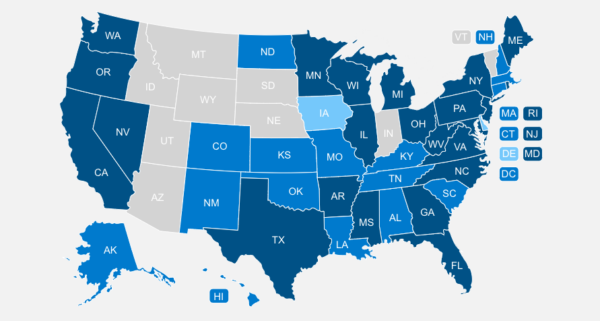

Cause Marketing and Commercial Co‑Venture by State: Essential Registration Requirements Guide
Cause-Marketing and Commercial Co-Venture in Virginia: Essential Registration Requirements Guide
At a Glance
Virginia commercial co-ventures do not require direct registration with the state, but your charitable partner must be properly registered or exempt under Virginia law. You must establish a written contract signed by an authorized representative from your company and two officers from the charitable organization before launching any promotional campaign. All records related to the charitable sales promotion must be maintained for three years after the campaign ends and remain available for inspection by the Commissioner upon request.
Are you considering a commercial co-venture to boost your business while supporting a charitable cause? These promotional partnerships can be powerful marketing tools, but navigating Virginia’s registration requirements is crucial for legal compliance.
Commercial co-ventures in Virginia come with specific regulatory obligations that you need to understand before launching your campaign. From initial registration processes to contract requirements, the state has established clear guidelines to protect both charities and consumers. Additionally, you’ll need to manage ongoing reporting requirements, maintain proper documentation, and submit accurate financial disclosures as applicable throughout your partnership.
This comprehensive guide breaks down everything you need to know about Virginia’s commercial co-venture requirements, helping you establish compliant charitable promotions while avoiding potential penalties. Whether you’re preparing your first cause marketing campaign or improving your existing compliance procedures, you’ll find the essential information to successfully navigate Virginia’s regulatory landscape.
Understanding Commercial Co-Ventures Under Virginia Law
Virginia law establishes specific guidelines for businesses engaging in charitable promotions. Understanding these regulations helps ensure your commercial co-venture remains compliant with state requirements.

Definition of Commercial Co-Venturer in Virginia Code § 57-48
The Virginia Code precisely defines a commercial co-venturer as an entity that meets three distinct criteria. First, the entity must be organized for profit. Second, it must be regularly and primarily engaged in trade or commerce outside of charitable fundraising. Third, it must conduct an advertised charitable sales promotion for a specified limited period, as defined in Virginia Code § 57-48.
This legal framework distinguishes commercial co-ventures from other forms of cause marketing by emphasizing the temporary nature of the promotion and the primary business purpose of the entity involved. Essentially, your business must be a for-profit company whose main operations exist outside of fundraising activities.
Difference Between CCVs and Charitable Solicitors
Commercial co-venturers differ significantly from charitable solicitors in both purpose and operation. The primary distinction lies in the business model. As a commercial co-venturer, you operate a for-profit business that temporarily partners with a charity, whereas charitable solicitors directly request contributions for charitable purposes, as outlined in the VDACS OCA-102 Registration Statement.
- Direct oral or written requests
- Media announcements about charitable campaigns
- Distribution of publications seeking public support
- Sale of items where charitable purposes are the primary appeal
Unlike professional fundraisers who may register in multiple states, your commercial co-venture requirements typically focus on the states where your promotion runs.
When a CCV Triggers Registration Requirements
Commercial co-ventures trigger key requirements in Virginia when specific conditions are met. First and foremost, the charitable organization you partner with must be duly registered or have appropriate exempt status under Virginia law. Prior to launching any promotional campaign, you must have a written agreement with the charitable organization, signed by an authorized representative of your company and two officers from the charitable organization. Additionally, you must maintain all records related to the charitable sales promotion for three years after the campaign ends, and those records must remain available for inspection by the Commissioner upon request. See Virginia Code § 57-61.2.
Though Virginia doesn’t require commercial co-venturers to register directly, you must nonetheless ensure your charitable partner meets all state requirements. Managing CCV compliance across multiple jurisdictions can be complex, but we help streamline the process by preparing required filings, organizing contract elements, and ensuring disclosures meet state standards.
Exemption Criteria and Form 100 Filing
Certain charitable organizations in Virginia qualify for exemption from the standard registration requirements that typically apply to commercial co-venture partnerships. Understanding these exemptions helps both nonprofits and for-profit businesses determine their filing obligations.
Organizations Automatically Exempt from Registration
Virginia law automatically exempts several types of organizations from registration requirements for charitable solicitations. These include:
- Churches and church associations primarily focused on non-secular purposes, provided no income benefits individuals, per Virginia Code § 57-48
- Political parties or committees required to report contributions to the Virginia State Board of Elections, per Virginia Code § 57-48
- Authorized individuals soliciting solely on behalf of a registered or exempt charity, per Virginia Code § 57-48
- Charitable organizations that do not intend to solicit and receive more than $5,000 during a calendar year and meet the volunteer-only conditions set by statute, per Virginia Code § 57-60
This automatic exemption status means these organizations can partner with commercial co-venturers without completing the standard registration process. Nevertheless, other disclosure and contract requirements generally remain in effect for the commercial co-venture itself.
How to File Form 100 for Exemption
If your charitable partner does not qualify for automatic exemption yet meets other exemption criteria, Form 100 provides the pathway for obtaining exempt status. The application process typically includes:
- Completing the Virginia Exemption Application for a Charitable or Civic Organization (Form 100)
- Selecting the appropriate exemption category from options including educational institutions and their foundations; solicitations not exceeding $5,000 (with specific conditions); membership solicitation only; and solicitations confined to five or fewer contiguous cities and counties, as described in Virginia Code § 57-60
After completing the form with organizational details and exemption justification, an authorized representative must sign the application. Next, submit the form along with a $10.00 filing fee payable to the “Treasurer of Virginia,” as authorized by Virginia Code § 57-60. Applications are processed by the Virginia Department of Agriculture and Consumer Services.
Required Attachments for Exemption Categories
Every Form 100 application requires specific supporting documentation regardless of which exemption category applies. See 2VAC5-610-40 (VDACS Charitable Solicitations Regulations). Mandatory attachments include:
- Completed remittance form with $10.00 filing fee
- List of current officers, directors, trustees, and principal salaried executive staff with names and addresses
- Previous fiscal year’s financial documentation in one of these formats:
- Signed Form 990, 990-EZ, or 990-PF (e-filing receipt acceptable in lieu of signature)
- Audited financial statements
- For organizations qualifying for Form 990-N, a balance sheet and income/expense statement verified under oath by the treasurer (Form 990-N itself is not acceptable)
- Certificate of incorporation, articles of incorporation, and amendments if incorporated
- Bylaws and amendments
- IRS determination letter and subsequent modifications if tax-exempt
- For pending tax exemption, a copy of the completed IRS application
Specific exemption categories may require further documentation. For instance, educational institutions may provide accreditation certificates, while organizations claiming exemption based on solicitations under $5,000 often submit board-approved budgets and treasurer’s reports for the previous three years.
Initial Registration Process Using Form 102
Registering a commercial co-venture partnership in Virginia requires careful attention to document preparation and submission protocols. For charitable organizations involved in commercial co-ventures, Form OCA/OCRP-102 serves as the primary registration statement used by the state.
Filing Form OCA/OCRP-102: Required Signatures and Format
The registration process begins with proper completion of Form 102, which demands precise formatting and authorized signatures. Notably, two different officers must sign this registration form—specifically, the chief fiscal officer (or treasurer) and the president (or another authorized officer if the president is unavailable), per Virginia Code § 57-49 and the VDACS OCA-102 Registration Statement. These signatures must be original wet ink signatures rather than photocopies or electronic versions, and the original signature page must be filed with the Office of Charitable and Regulatory Programs.
Your organization cannot legally solicit contributions in Virginia until properly registered, as required by Virginia Code § 57-49. Timely submission is crucial before launching any promotional campaigns.
List of Required Attachments: IRS Form 990, Articles, Bylaws
Several mandatory attachments must accompany your Form 102 submission. Include a remittance form and check made payable to “Treasurer of Virginia,” along with a current list of names, titles, and addresses for all officers, directors, trustees, and principal salaried executive staff, as outlined by VDACS OCA-102 instructions. Financial documentation generally includes the most recently completed IRS Form 990, 990-PF, or 990-EZ with all schedules (except Schedule B) and attachments. If electronically filed with the IRS, include the IRS e-file signature authorization. Other essential attachments include the certificate and articles of incorporation with any amendments, organization bylaws, and the IRS determination letter confirming tax-exempt status (or the pending IRS application).
Initial Registration Fee Structure Based on Contributions
The fee structure for initial registration follows a tiered system based on contribution history, as set by Virginia Code § 57-49:
- $100.00 initial registration fee for first-time registrants
- $30.00 if gross contributions don’t exceed $25,000
- $50.00 if gross contributions exceed $25,000 but don’t exceed $50,000
- $100.00 if gross contributions exceed $50,000 but don’t exceed $100,000
- $200.00 if gross contributions exceed $100,000 but don’t exceed $500,000
- $250.00 if gross contributions exceed $500,000 but don’t exceed $1 million
- $325.00 if gross contributions exceed $1 million
Organizations with no prior financial history only pay the $100.00 initial registration fee without additional annual fees.

Common Mistakes in Initial Registration
Several pitfalls commonly appear during the registration process. First, incorrectly identifying authorized officers who must sign filings can lead to immediate rejection. Other common errors include submitting photocopies instead of original signed documents, using outdated officer information instead of current leadership data, missing required attachments or submitting incomplete financial records, incorrectly calculating fee amounts based on contribution levels, and failing to maintain proper records for the required three-year period.
We help prepare required filings accurately and ensure all documentation meets state standards, reducing administrative burden and preventing delays.
Contract Filing and Disclosure Requirements
Every commercial co-venture relationship requires specific documentation for legal compliance. Understanding contract requirements and disclosure rules helps protect both businesses and their charitable partners.
Mandatory Contract Clauses for CCVs
Commercial co-ventures must establish a written agreement with the partnering charitable organization, signed by an authorized representative of your company and two officers from the charitable organization, as required by Virginia Code § 57-61.2.
- Description of goods or services involved in the promotion
- Dollar amount or percentage per unit that benefits the charity
- Geographic scope of the campaign
- Start and end dates of the promotion
- How the charity’s name will be used in marketing materials
- Any maximum or minimum donation amounts
- Schedule for transferring donations to the charity
These provisions help ensure transparency and create clear accountability between both parties throughout the duration of the promotional campaign.
Filing Timeline
Virginia law does not require commercial co-venturers to file their contract with the state before starting a charitable sales promotion. The 10-day pre-campaign filing requirement applies to professional solicitors (who must file their contract and solicitation notice) under Virginia Code § 57-61(D), not to commercial co-venturers. Filing requirements vary by state. We can help coordinate multi-state requirements and track state-specific filing obligations to ensure proper compliance across all jurisdictions.
Disclosure of Donation Amounts in Advertisements
In Virginia, § 57-61.2 does not prescribe CCV-specific advertising disclosures; however, general solicitation disclosure rules apply to charities, including use of the primary registered name and required return-envelope information. Review 2VAC5-610-35 solicitation disclosure rules for applicable requirements.
Recordkeeping Requirements: 3-Year Minimum
Commercial co-venturers must maintain all records related to the charitable sales promotion for a minimum of three years after the campaign ends, and those records must remain available for the Commissioner to inspect upon request, per Virginia Code § 57-61.2.
Proper documentation should include:
- Original signed contracts
- Advertising materials showing any required disclosures
- Financial records tracking sales and donations
- Communication records with the charitable organization
Consistent record maintenance allows you to demonstrate compliance should questions arise about your campaign’s execution or financial arrangements.
Annual Renewal and Financial Reporting Obligations
Maintaining your commercial co-venture partnership involves ongoing compliance with Virginia’s financial reporting regulations. Understanding these requirements helps preserve your legal status throughout the relationship.
Renewal Due Date: 15th Day of 5th Month After Fiscal Year End
Once registered, charitable organizations must submit annual renewal documentation on or before the 15th day of the fifth calendar month following their fiscal year end. For example, organizations with a December 31 fiscal year end must file by May 15 of the following year. See Virginia Code § 57-49.
Required Financial Documents: Form 990 or Treasurer’s Report
Complete renewal submissions generally include a signed IRS Form 990, 990-PF, or 990-EZ with required schedules; a current list of officers, directors, trustees, and principal executive staff; and professional fundraising contracts if applicable. Organizations eligible to file IRS Form 990-N must still submit a balance sheet and income statement verified under oath by the treasurer, per Virginia Code § 57-49.
Extension Requests and Late Fees
To avoid penalties, you may request an extension in writing before the original filing deadline; extensions are granted at the Commissioner’s discretion, per Virginia Code § 57-49. Check current OCRP instructions for acceptable submission methods and timelines.
When to Refile Initial Registration After Lapse
Upon registration lapse without a timely extension request, you must complete an entirely new initial registration, including all original documentation and payment of applicable fees, as required by Virginia Code § 57-49.
Frequently Asked Questions

Conclusion
Navigating Virginia’s commercial co-venture requirements demands careful attention to detail and thorough understanding of state regulations. Throughout this guide, you’ve learned about the distinct legal definition that separates commercial co-venturers from charitable solicitors under Virginia Code § 57-48. Additionally, you now understand when registration requirements trigger and how to ensure your charitable partner meets necessary qualifications.
Proper documentation stands as the cornerstone of compliant commercial co-ventures. Therefore, maintaining original contracts, financial records, and promotional materials for the mandatory three-year period protects your business from potential regulatory issues. Likewise, ensure any required filings (for example, those applicable to professional solicitors) are made on time to prevent unexpected legal complications.
Financial transparency remains important for successful cause marketing campaigns. Clear consumer-facing information in advertisements may be required in some jurisdictions; review applicable laws. Likewise, timely submission of annual renewals by the 15th day of the fifth month following your fiscal year end helps avoid lapses in registration.
Commercial co-ventures offer powerful marketing opportunities while supporting worthy causes, but only when executed within Virginia’s regulatory framework. Managing CCV requirements across multiple jurisdictions can be complex, but Labyrinth helps streamline the process by preparing required CCV filings, organizing contract elements, and ensuring disclosures meet state standards. For nonprofits, CCV activity may affect charitable solicitation registration obligations in states where such activity is considered solicitation—an important consideration for multi-state campaigns.
With comprehensive compliance support and expert guidance on registration processes, contract requirements, and ongoing obligations, you can confidently launch charitable promotions that benefit both your business and nonprofit partners while staying firmly within legal boundaries.
