
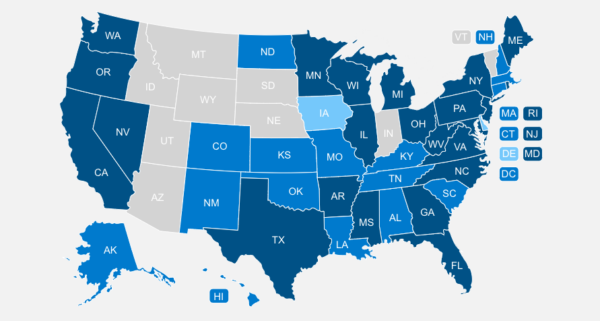

Cause Marketing and Commercial Co‑Venture by State: Essential Registration Requirements Guide
Cause-Marketing and Commercial Co-Venture in Washington: Essential Registration Requirements Guide
At a Glance
Washington does not require commercial co-venturers to register with the state, but businesses must ensure their charity partners are properly registered with the Washington Secretary of State’s Charities Program. Written agreements between businesses and charities remain mandatory, along with transparent advertising disclosures and proper financial recordkeeping. Companies must remit donated funds within established timeframes and maintain detailed records for at least three years.
Planning a commercial co-venture with a charity in Washington requires more than just good intentions! When your business partners with a nonprofit for a promotion where you donate a portion of sales to charity, you’re entering a regulated space with specific legal requirements.
Before launching your cause marketing campaign in Washington, you need to understand the registration process, contract filing requirements, and financial reporting obligations. Many businesses are surprised to discover that commercial co-ventures are subject to state oversight, with potential penalties for non-compliance. Washington has established specific guidelines to ensure transparency for consumers and protection for charities.
Throughout this guide, you’ll discover everything you need to know about registering as a commercial co-venturer in Washington, including the required documentation, contract elements, advertising disclosure rules, and ongoing reporting responsibilities. Following these requirements not only keeps you legally compliant but also builds consumer trust in your charitable promotions. Managing these complex requirements becomes more straightforward with expert guidance on state CCV regulations, filings, and disclosure preparation.
How Do Charity Registration Requirements Work in Washington?
For businesses establishing commercial co-ventures in Washington, understanding the charity registration process is crucial. The charity you partner with must meet specific registration requirements with the Washington Secretary of State Charities Program before any fundraising activity begins.

Uniform Registration Statement (URS) Usage
Charities operating in Washington have the option to use either the state-specific registration form or the Unified Registration Statement (URS). The URS simplifies registration across multiple states, reducing redundancy and administrative work for nonprofits that fundraise in several jurisdictions. However, if using the URS, organizations must additionally file the Washington State Unified Registration Addendum. This approach streamlines compliance while ensuring Washington-specific requirements are met.
Notably, charities seeking registration must submit their forms prior to soliciting any donations in the state. The standard filing fee for initial charity registration is $60, which can be submitted online through the Corporations & Charities Filing System (CCFS).
Required Attachments: IRS Letter, Form 990, Financials
Every charity registration in Washington requires specific documentation. The most essential attachments include:
- IRS determination letter confirming tax-exempt status
- List of officers and directors
- Professional fundraising contracts (if applicable)
- List of other states where the organization is registered to solicit
Washington law (RCW 19.09.541) implements a tiered financial reporting system based on annual gross revenue. Organizations with less than $1 million in annual gross revenue (averaged over three years) must meet basic reporting requirements. Those with $1–3 million in average annual gross revenue must make their most recent federal tax form (990, 990-EZ, 990-PF, or 990-T) available to the public and the Secretary of State upon request. Charities with over $3 million in average annual gross revenue must submit an independent audit of their financial records with their registration submission.
For group exemptions, organizations should submit a letter from the central organization confirming their relationship, along with the central organization’s IRS determination letter, consistent with the Washington charity renewal instructions (PDF).
Renewal Timelines for Multi-Year Promotions
Charitable registrations in Washington require annual renewal to remain active. These renewals must be submitted within 11 months after the end of the organization’s fiscal year (for example, if a charity’s fiscal year ends December 31, the renewal deadline would be November 30 of the following year). The renewal fee is $40, with a late fee of $50 if submitted after the deadline. The state does not offer extensions for charitable registration deadlines.
During renewal, charities must update any changes in organizational leadership, contact information, and submit current financial reports. For detailed instructions, see the Secretary of State’s guidance to renew or update a charity or nonprofit. The Charities Program also sends courtesy notifications prior to registration expiration.
Businesses planning commercial co-ventures should verify their charity partners’ registration status and renewal timelines to ensure continuous compliance throughout the promotional period. This verification helps avoid disruptions to cause marketing campaigns due to registration lapses. When CCV activity triggers charitable solicitation requirements in multiple states, nonprofits may need additional charitable solicitation registrations to maintain compliance across all jurisdictions where the campaign operates.
What Written Agreement Requirements Apply to Commercial Co-Venturers?
A legally binding written agreement forms the cornerstone of any commercial co-venture relationship in Washington. Unlike some states that require registration of commercial co-venturers, Washington focuses instead on ensuring proper documentation exists between businesses and charitable organizations.
Promotion Scope: Dates, Geography, and Product Details
Every commercial co-venture agreement must clearly define the promotion’s parameters. Specifically, the contract should identify the beginning and ending dates of the charitable sales promotion. This timeline becomes especially important as some promotions extend beyond a single year, requiring annual reporting to the charity. Moreover, the agreement should outline the geographic area where the promotion will take place.
The contract must also include a clear description of the goods or services being offered in the promotion. This should encompass an estimate of the quantity of products to be sold during the campaign period. These specifics help establish transparent expectations between both parties and provide crucial information for required public disclosures.
Accounting and Payment Terms in Agreements
Financial transparency stands as a fundamental requirement in commercial co-venture agreements. The contract must specify exactly how donations will be calculated—whether as a percentage of sales, a fixed dollar amount per unit, or another measurable method. Vague phrases like “a portion of proceeds” should be avoided as they lack the specificity typically expected under state regulations.
- A clear schedule for when funds will be transferred to the charity (generally within 30–90 days after the end of the promotion)
- Requirements for separate accounting for promotion proceeds
- Provisions for interim reporting for promotions lasting longer than one year
- Final accounting requirements, including details on units sold and amounts accrued
Washington allows for flexibility in payment timing, though best practices suggest remitting funds within 30 days of receipt, even though many states permit up to 90 days.
Charity Logo Usage and Approval Clauses
Intellectual property protection remains essential in these partnerships. The agreement must specify how the charity’s name, logo, and other brand elements will be used in promotional materials. Generally, all uses should require advance review and approval by the charitable organization.
The contract should explicitly state that the charity retains ownership of its name and logo, with permission granted exclusively for the specific cause marketing campaign. This prevents unauthorized usage beyond the agreed-upon promotion scope. Additionally, the agreement should clarify that the partnership does not constitute an endorsement of the business’s products or services by the charity.
Donor Receipt Responsibilities and Data Sharing
The agreement should clearly designate which party bears responsibility for providing receipts to donors when applicable. If the charity must issue receipts, the contract needs to establish how the business will share donor information, including names, addresses, and donation amounts.
Data sharing provisions should address confidentiality concerns and compliance with applicable privacy regulations. Furthermore, if the campaign might impact the charity’s existing donor relationships, the agreement should include provisions preventing the business from soliciting contributions directly from the charity’s established donors without prior permission.
What Are Washington State Filing Requirements for Co-Venturers?
Unlike many other states, Washington does not currently require formal registration for commercial co-venturers at the state level. Nevertheless, businesses engaging in charitable sales promotions must still adhere to specific requirements and regulations governing such partnerships.
Initial Registration as a Commercial Co-Venturer
Despite the absence of a traditional registration requirement, commercial co-venturers operating in Washington should still maintain proper documentation of their charitable activities. The Charitable Solicitations Act (RCW 19.09) provides the legal framework that governs charitable solicitations in the state. Although Washington exempts commercial co-venturers from formal registration, it still considers charitable sales promotions as a form of charitable solicitation, which means partner charities must be properly registered.
Even without registration requirements, businesses should prepare essential documentation, including:
- Identification of all principal parties involved in the co-venture
- Business addresses and contact information
- Any relevant industry licenses or permits that apply to the promotion

Contract Filing Before Promotion Launch
Although Washington doesn’t require filing commercial co-venture contracts with state authorities, businesses should still establish proper documentation before launching any promotion. The Charitable Solicitations Act emphasizes transparency in charitable solicitations. Accordingly, keeping detailed records of all promotion elements is essential for compliance with potential audit requests. Commercial co-venturers should maintain records of their charitable sales promotions for at least three years after completion. Proper preparation and organization of required documents helps ensure accuracy and completeness for regulatory review.
Proof of Registration and Renewal Obligations
Even though Washington doesn’t require direct registration for commercial co-venturers, businesses must verify their partner charity’s registration status with the Washington Secretary of State’s Charities Program. The commercial co-venturer should obtain documentation from their charity partner confirming proper registration before beginning any promotional activities.
For promotions spanning multiple years, businesses should implement a verification process to confirm their charity partners maintain current registrations throughout the campaign period. Initially, this involves checking the charity’s registration status before launching the promotion, subsequently verifying renewal status annually throughout the partnership duration.
Surety Bond Requirements in Select States
Although Washington doesn’t mandate surety bonds for commercial co-venturers, businesses operating campaigns across multiple states should be aware that some jurisdictions do impose such requirements. These bonds can function as financial security, ensuring that if a business fails to properly remit funds to the charity as promised, the bond can be used to compensate the charitable organization.
How Do Advertising and Disclosure Rules Work?
Transparency in advertising forms the backbone of trustworthy commercial co-ventures in Washington state. Once you’ve established your partnership with a charity, proper disclosure in all promotional materials becomes your next compliance priority.
Minimum Font Size and Placement Rules
First and foremost, Washington regulations require that disclosures in all public-facing promotional materials be clear and conspicuous. While some states mandate specific font sizes, Washington focuses on ensuring that the required information is presented in a way that is easy for consumers to notice and understand, as reflected in RCW 19.09.100 solicitation disclosure requirements. The key is that disclosures must not be hidden or obscured in fine print.
Required Disclosure Elements: Amount, Dates, Limits
The content of your disclosures is equally important as their presentation. Washington follows widely accepted practices that require specific information about how a customer’s purchase will benefit the nonprofit organization. Vague statements like “a portion of proceeds will be donated” fail to meet disclosure expectations.
- The specific percentage or dollar amount per purchase being donated
- The duration of the campaign with explicit start and end dates
- Any maximum donation cap or guaranteed minimum contribution
Clearly identifying the charity benefiting from the campaign is essential. This information should be prominently displayed at the point of solicitation to ensure consumers understand precisely how their purchases impact the charitable cause.
Tax Deductibility Statements for Consumers
As a result of common consumer misconceptions, your commercial co-venture promotions should include clear statements about tax implications. Consumer purchases within a commercial co-venture typically do not qualify as charitable contributions for tax deduction purposes, since the business—not the consumer—is making the donation.
If your promotion includes direct consumer donations beyond product purchases, separate tax deductibility statements should clarify which portions qualify as charitable contributions. Primarily, only direct gifts to qualified 501(c)(3) organizations generate tax benefits for donors.
Providing accurate information helps prevent consumer confusion and builds credibility for both your business and the partner charity. Clear tax statements protect consumers from potentially making incorrect tax deduction claims based on misunderstandings about the nature of commercial co-ventures.
What Are the Annual Reporting and Recordkeeping Obligations?
Proper recordkeeping and timely reporting form the final pillars of compliance for commercial co-ventures in Washington. After launching your promotion and implementing proper disclosures, your focus must shift to maintaining accurate financial records and meeting reporting deadlines.
Separate Accounting for Each Promotion
Commercial co-venturers must maintain distinct accounting records for each charitable sales promotion. This separation ensures transparency and accountability for both the business and charity partner. First, establish dedicated accounting systems to track revenue generated from promotional activities separate from regular business income. Commercial co-venturers should retain all records pertaining to charitable sales promotions for at least three years after completion.
Your financial records should include:
- Gross receipts from promotional sales
- Expenses attributed to the campaign
- Net proceeds allocated to the charity
- Transaction dates and payment records
These detailed records become particularly important if state regulators request verification of the promotion’s financial aspects.
Deadline for Remitting Funds to Charity
Timely transfer of funds to your charitable partner remains a critical obligation. Primarily, commercial co-venturers should remit donations within established timeframes—typically within 90 days of campaign completion. For promotions lasting longer than one year, an accounting should be provided to the charity at least quarterly.
Under the written agreement established at the outset, your business must adhere to the payment schedule defined therein. Some states mandate even shorter remittance periods—often within 30 days after month-end in which donations were collected. Hence, your financial systems must facilitate prompt tracking and transfer of funds.
Annual Activity Reports: Revenue and Distribution Breakdown
Beyond internal recordkeeping, commercial co-ventures often necessitate formal reporting to both charity partners and state authorities. Upon completion of each promotion, businesses should provide a final accounting to their charitable partners within 90 days detailing:
- Total units sold during the promotional period
- Gross revenue generated from the campaign
- Expenses incurred (if deducted before calculating donation)
- Final donation amount transferred to the charity
For multi-year campaigns, an accounting should be provided to the charity annually. While some states have specific governmental filing deadlines for these reports, Washington does not require the co-venturer to file a copy with the Secretary of State; the accounting is provided directly to the charity partner.
Frequently Asked Questions

Conclusion
Navigating Washington’s commercial co-venture regulations might seem complex at first, yet compliance ensures your charitable promotions operate both legally and ethically. Throughout this guide, you’ve learned that Washington takes a somewhat different approach than many other states by focusing primarily on charity registration rather than commercial co-venturer registration.
Therefore, your primary responsibility involves verifying your nonprofit partner’s registration status with the Washington Secretary of State’s Charities Program before launching any promotion. Although formal co-venturer registration isn’t required, detailed written agreements remain essential to document your partnership properly. These agreements should clearly outline promotion dates, geographic scope, product details, financial terms, and logo usage rights.
Additionally, your advertising materials must feature transparent disclosures about donation amounts, campaign dates, and any maximum contribution limits. Washington law requires that these disclosures be clear and conspicuous for consumer clarity.
After your promotion launches, you must maintain separate accounting records for each charitable campaign, generally keeping these records for at least three years. Timely fund transfers to your charity partner—typically within 90 days of campaign completion—demonstrate good faith and regulatory compliance.
Ultimately, understanding and following Washington’s commercial co-venture requirements not only helps you avoid potential penalties but also builds consumer trust and strengthens your relationship with charitable partners. This trust forms the foundation for successful cause marketing campaigns that benefit both your business and important charitable missions throughout Washington. Labyrinth supports businesses with state-specific CCV compliance, multi-state requirement coordination, and documentation organization to help partners launch campaigns confidently while meeting all regulatory obligations accurately and on time.
