
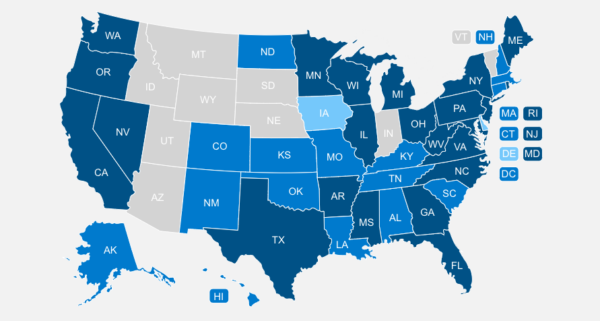

Cause Marketing and Commercial Co‑Venture by State: Essential Registration Requirements Guide
Cause-Marketing and Commercial Co-Venture in West Virginia: Essential Registration Requirements Guide
At a Glance
West Virginia does not require specific commercial co-venturer registration at the state level. However, businesses must obtain general business registration with the West Virginia State Tax Department before conducting any promotional campaigns that benefit charities. While formal CCV registration is not mandated, your activities may still be subject to other regulations governing charitable promotions in the state.
When you launch a commercial co-venture in West Virginia, navigating the state’s specific requirements is crucial for success.
Before you announce that a portion of your sales will benefit a charity, you need to understand West Virginia’s distinct registration and reporting obligations. Unlike some states, West Virginia regulates charitable solicitations but does not have a dedicated, state-level commercial co‑venturer registration program. Depending on how your arrangement is structured, requirements applicable to charitable organizations or to professional fund‑raising counsel/solicitors may still apply (for example, filing certain solicitation contracts or maintaining records). Managing these CCV requirements can be complex, but experienced partners like Labyrinth help streamline the process by preparing required filings, reviewing contract elements, and ensuring disclosures meet state standards.
Throughout this guide, you’ll discover everything you need to know about qualifying as a commercial co-venturer in West Virginia, initial registration steps, contract requirements before promotion begins, necessary financial disclosures after your campaign, and ongoing compliance obligations. Whether you’re planning your first cause marketing campaign or looking to ensure your existing partnerships are fully compliant, this comprehensive breakdown will help you navigate West Virginia’s commercial co-venture landscape with confidence.
Who Qualifies as a Commercial Co-Venturer in West Virginia
Understanding exactly who qualifies as a commercial co-venturer in West Virginia requires examining both what the state explicitly defines and what it doesn’t. For businesses planning charitable promotions, knowing where your activities fit within state regulations is essential for proper compliance.

Definition under West Virginia Charitable Solicitation Act
The West Virginia Charitable Solicitation Act does not specifically define commercial co-venturers in its statutory language. West Virginia does not have a traditional registration requirement for commercial co-ventures at the state level. This doesn’t mean these activities are unregulated, however.
In the absence of a specific West Virginia definition, we can look at how commercial co-venturers are generally defined in charitable solicitation laws. Essentially, a commercial co-venturer is typically considered to be a person or entity primarily engaged in commerce rather than charitable fundraising, who conducts promotional campaigns that benefit charitable organizations.
These commercial entities engage in what’s commonly called “cause marketing” – business activities where a portion of proceeds benefits a charity. Examples include:
- A retailer donating a percentage of sales to a nonprofit
- A business sponsoring a charitable event
- A company promoting products with messaging that purchases will benefit a specific cause
Although West Virginia doesn’t explicitly require registration for commercial co-venturers, you may still need to follow other regulations before and after conducting fundraising events. This makes it crucial to understand how the state distinguishes between different types of fundraising entities.
Distinction from professional fundraisers and fundraising counsel
To determine if your business qualifies as a commercial co-venturer rather than another type of fundraising entity, it’s important to understand how West Virginia defines other fundraising roles. West Virginia law clearly defines terms in the definitions in West Virginia Code §29-19-5, including “professional fund-raising counsel” and “professional solicitor.”
Commercial co-venturers differ from these entities in several key ways:
- Primary business purpose – Commercial co-venturers are primarily engaged in regular commerce, not fundraising
- Relationship structure – They conduct promotional activities that benefit charities as a secondary aspect of their primary business
- Regulatory burden – They typically face less regulation than professional fundraisers or solicitors
For this reason, if you operate a business that occasionally runs promotions benefiting charities—rather than being primarily in the business of fundraising—you likely qualify as a commercial co-venturer in West Virginia.
Even though formal registration isn’t required, commercial co-venturers still need to be aware of potential contract requirements, financial disclosures, and other regulations that may apply to their charitable promotions within the state.
Initial Registration Requirements for CCVs
The registration landscape for commercial co-ventures in West Virginia differs considerably from many other states, presenting both simplifications and potential complexities for businesses planning charitable promotions.
Is registration mandatory for all CCVs?
West Virginia does not currently require specific commercial co-venturer registration at the state level. This stands in contrast to states like Alabama, Massachusetts, or California that mandate dedicated CCV registrations. Nevertheless, this absence of specific CCV registration does not equate to a complete lack of regulatory oversight.
Despite lacking a traditional CCV registration requirement, companies planning commercial co-ventures in West Virginia must still obtain a general business registration certificate from the West Virginia State Tax Department’s business registration. This requirement applies to “every individual or business entity” before engaging in any business activity within the state. Furthermore, your charitable partner may need to disclose information about your co-venture in their own regulatory filings.
Required forms and documentation
Since West Virginia does not mandate specific CCV registration, no specialized forms exist for commercial co-venturers. Instead, businesses must focus on fulfilling general business registration requirements that include:
- Business Registration Application (BUS-APP) with the West Virginia State Tax Department
- Federal Employer Identification Number (EIN) from the IRS (required before registering online) via the West Virginia One Stop Business Portal
- If your business structure is a Corporation, LLC, LP, LLP, or Voluntary Association, you must additionally register with WorkForce West Virginia
Additionally, depending on your business structure and whether you have employees, you may need to obtain workers’ compensation coverage as mandated by state guidance in the Start a Business resources.
Filing location and method
West Virginia offers two primary methods for completing your business registration:
- Online filing – The fastest and most convenient approach is through the One Stop Business Portal. This digital method allows payment via debit or credit card and can simultaneously complete your registration with the West Virginia Secretary of State (if applicable), the West Virginia State Tax Department, and WorkForce West Virginia (Unemployment Compensation).
- Paper registration – If you prefer traditional methods, you can complete paper applications by contacting each state agency separately based on your business structure and the type of business you conduct. See the Register Your Business overview for agency details.
Bonding requirements, if any
Based on available information, West Virginia does not impose bonding requirements on commercial co-venturers. It’s worth noting that while traditional CCV-specific requirements are not present, your business remains subject to other regulations governing charitable promotions in the state. Moreover, you should ensure that any charitable organization you partner with has properly registered with the Secretary of State if required, as most charities intending to receive contributions from the public in West Virginia must file an annual registration statement unless they meet specific exemptions. See the West Virginia charitable registration form (CHR-1).
Contract Filing and Pre-Promotion Obligations
Setting up proper contracts forms the foundation of any successful commercial co-venture in West Virginia. Beyond registration requirements, the contractual relationship between your business and charitable partner requires careful attention to ensure compliance with state regulations.
Written contract requirement with charitable organization
While a written agreement with your charitable partner is a best practice for any campaign, West Virginia law does not prescribe CCV‑specific contract requirements. However, if a professional fund‑raising counsel or professional solicitor is involved, state law requires a written contract with the charitable organization and requires that contract to be filed with the Secretary of State within 10 days after execution. See the One Stop Business Portal guidance and the contract filing requirements in West Virginia Code §29-19-7.

Mandatory contract provisions under West Virginia law
For contracts between charitable organizations and professional fund‑raising counsel or professional solicitors, West Virginia law requires that the statement clearly provide the amount, percentage, or other method of compensation to be received and that the contract be filed with the Secretary of State. See West Virginia Code §29-19-7. The statute does not set CCV‑specific mandatory contract clauses.
Timeline for contract submission before campaign launch
West Virginia does not set a CCV‑specific contract‑filing timeline. When a professional solicitor or professional fund‑raising counsel is involved, the written contract must be filed with the Secretary of State within 10 days after the parties enter into the agreement. See West Virginia Code §29-19-7.
Post-Promotion Reporting and Financial Disclosures
After concluding your charitable promotion, your post-campaign obligations as a commercial co-venturer require careful attention. While West Virginia’s requirements differ from many states, maintaining proper financial documentation remains essential for regulatory compliance.
Final accounting requirements for CCVs
Unlike some states that mandate submission of detailed final accounting statements to regulatory authorities, West Virginia presently lacks specific post-campaign financial reporting requirements for commercial co-venturers at the state level. However, charitable organizations must, as part of their registration, file documents reflecting final settlement amounts for solicitation contracts with professional fund‑raising counsel or professional solicitors, or, for multi‑year contracts, file annual totals raised and expenses incurred for the fiscal year. See West Virginia Code §29-19-7.
Nonetheless, maintaining accurate financial records of your promotion remains a fundamental obligation. These records should typically include:
- Total contributions collected during the promotion
- Expenses incurred in conducting the campaign
- Final amount distributed to the charitable organization
- Method and timing of fund distribution
Commercial co-venturers should provide their charitable partners with a complete accounting of the promotion’s financial results. Subsequently, this documentation may be necessary for the charity’s own reporting obligations to state authorities.
Retention period for financial records
West Virginia law requires charitable organizations, professional fund‑raising counsel, and professional solicitors to keep true fiscal records and retain them for at least three years after the end of the period of registration to which they relate. See the record-keeping requirements in West Virginia Code §29-19-11. The statute does not prescribe a CCV‑specific records‑retention period, but maintaining records for at least three years aligns with common practice.
Does West Virginia require campaign-specific financial reports?
Currently, West Virginia does not explicitly require commercial co-venturers to file campaign-specific financial reports with state authorities. While state‑mandated financial reporting may not be required, commercial co-venturers should remain prepared to provide financial records upon request. The West Virginia Secretary of State or Attorney General may request documentation regarding charitable promotions conducted within the state.
Ultimately, responsible record-keeping serves both compliance purposes and builds trust with charitable partners and consumers. By maintaining comprehensive financial documentation of your promotional campaigns, you demonstrate accountability regardless of specific state filing requirements.
Annual Renewal and Ongoing Compliance
Renewal process for CCV registration
Most businesses must file an Annual Report and pay the annual report fee by June 30 each year to maintain compliance with the Secretary of State. See West Virginia annual report requirements and West Virginia Code §59-1-2a. This report updates administrative office information including officers, addresses, and other business details. Importantly, this form doesn’t include financial reporting, which may be required separately.
For charities partnering with commercial co-venturers, a separate charitable registration must be renewed annually pursuant to the West Virginia Charitable Solicitation Act (definitions in §29-19-5). Nonprofit partners may also need to maintain active charitable solicitation registration when CCV activity is considered solicitation in their jurisdiction.
Changes in contract or campaign details
Whenever you modify campaign details or create new charitable partnerships, updated contract documentation should be maintained. Address changes, agent for service of process, or officer changes must be reported through the annual report filing. See West Virginia business changes and amendments. No other amendments to a business may be made via annual report.
Penalties for non-compliance or late filings
Late registration penalties for charitable filings accumulate at $25 per month for each month the filing is late (maximum $500 annually). See the West Virginia Charitable Solicitation Act (definitions and filing requirements). Additionally, businesses that miss the June 30 annual report deadline face a $50 administrative late fee under West Virginia Code §59-1-2a.
More serious violations of the Charitable Solicitation Act are misdemeanors. Upon first conviction, penalties include a fine of $100 to $500 or imprisonment up to six months (or both); for a second or subsequent conviction, $500 to $1,000 or imprisonment up to one year (or both). See penalties in West Virginia Code §29-19-15.
Conclusion
Commercial co-ventures in West Virginia present unique opportunities for businesses looking to partner with charitable organizations while also following distinct regulatory requirements. Throughout this guide, you’ve learned that West Virginia differs significantly from other states by not requiring specific commercial co-venturer registration. Nevertheless, general business registration with the West Virginia State Tax Department remains mandatory before launching any cause marketing campaign.
Proper documentation stands as the cornerstone of compliant commercial co-ventures. Your written contract with the charitable partner should detail financial arrangements, campaign timelines, and cancellation rights. Although West Virginia doesn’t specify CCV contract submission deadlines, when a professional solicitor or professional fund‑raising counsel is involved, the written contract must be filed with the Secretary of State within 10 days of execution. Expert guidance on state CCV requirements and organized preparation of required documents can help ensure accuracy and compliance.
Financial accountability certainly matters even without state-mandated reporting requirements. You should maintain comprehensive records of all contributions collected, expenses incurred, and funds distributed to your charitable partner. These records prove essential should regulatory authorities request documentation or if your charitable partner needs information for their own compliance obligations.
Ongoing compliance requires attention to annual filing deadlines and prompt reporting of any business changes. Late filings carry financial penalties that accumulate monthly, potentially reaching $500 annually for charitable filings, and a separate $50 administrative late fee applies for delinquent business annual reports due by June 30. Serious violations of the Charitable Solicitation Act may result in fines or imprisonment.
Accordingly, your success as a commercial co-venturer depends on understanding these regulatory nuances while maintaining transparent relationships with both charitable partners and consumers. Though West Virginia offers a somewhat simplified regulatory framework compared to states with more rigorous requirements, adhering to proper business practices safeguards your reputation and ensures your charitable contributions achieve their intended impact.
Remember that regulations may change over time. Therefore, checking with appropriate state agencies before launching new campaigns ensures you remain compliant with current requirements while maximizing the positive impact of your charitable marketing efforts.

Frequently Asked Questions
